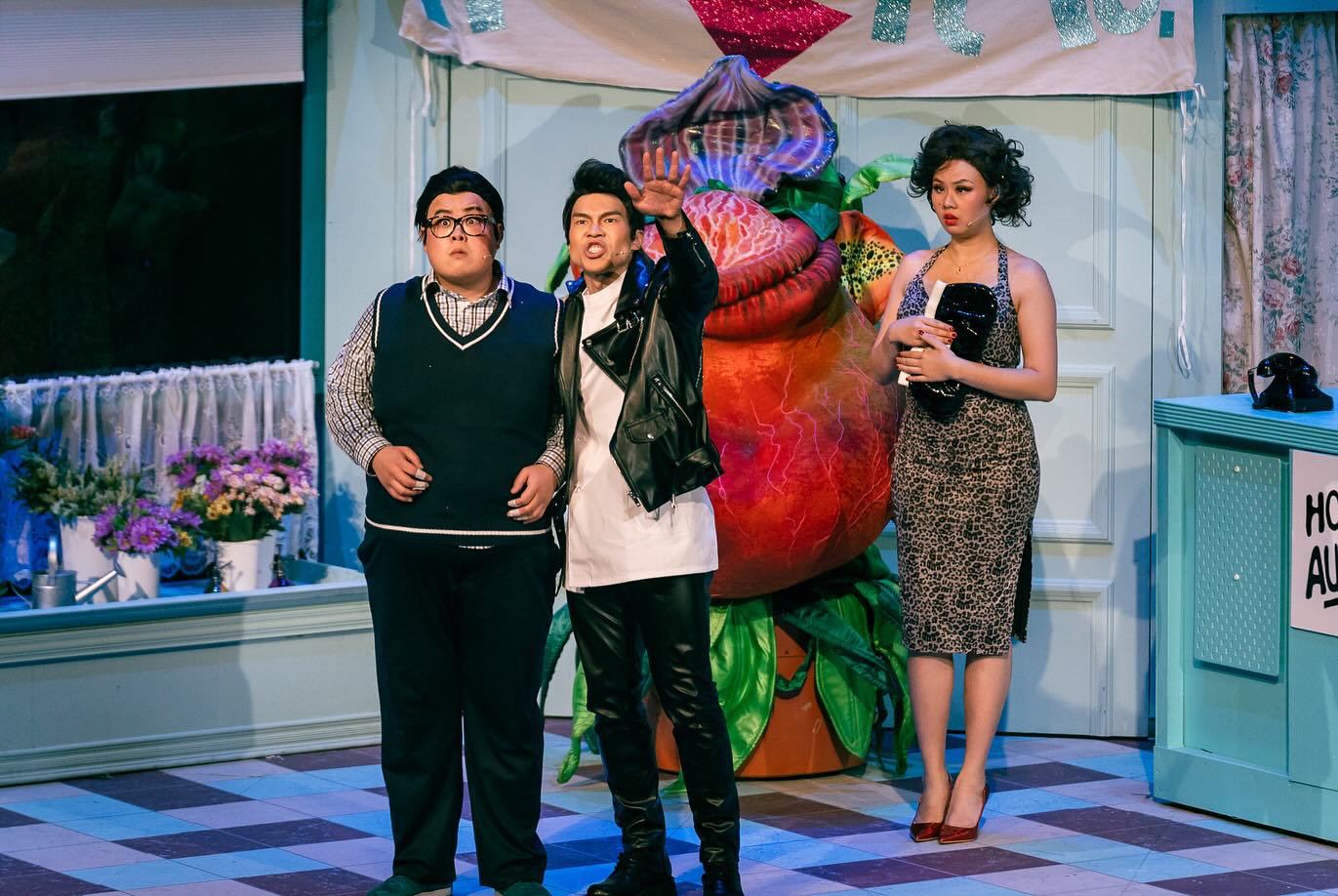
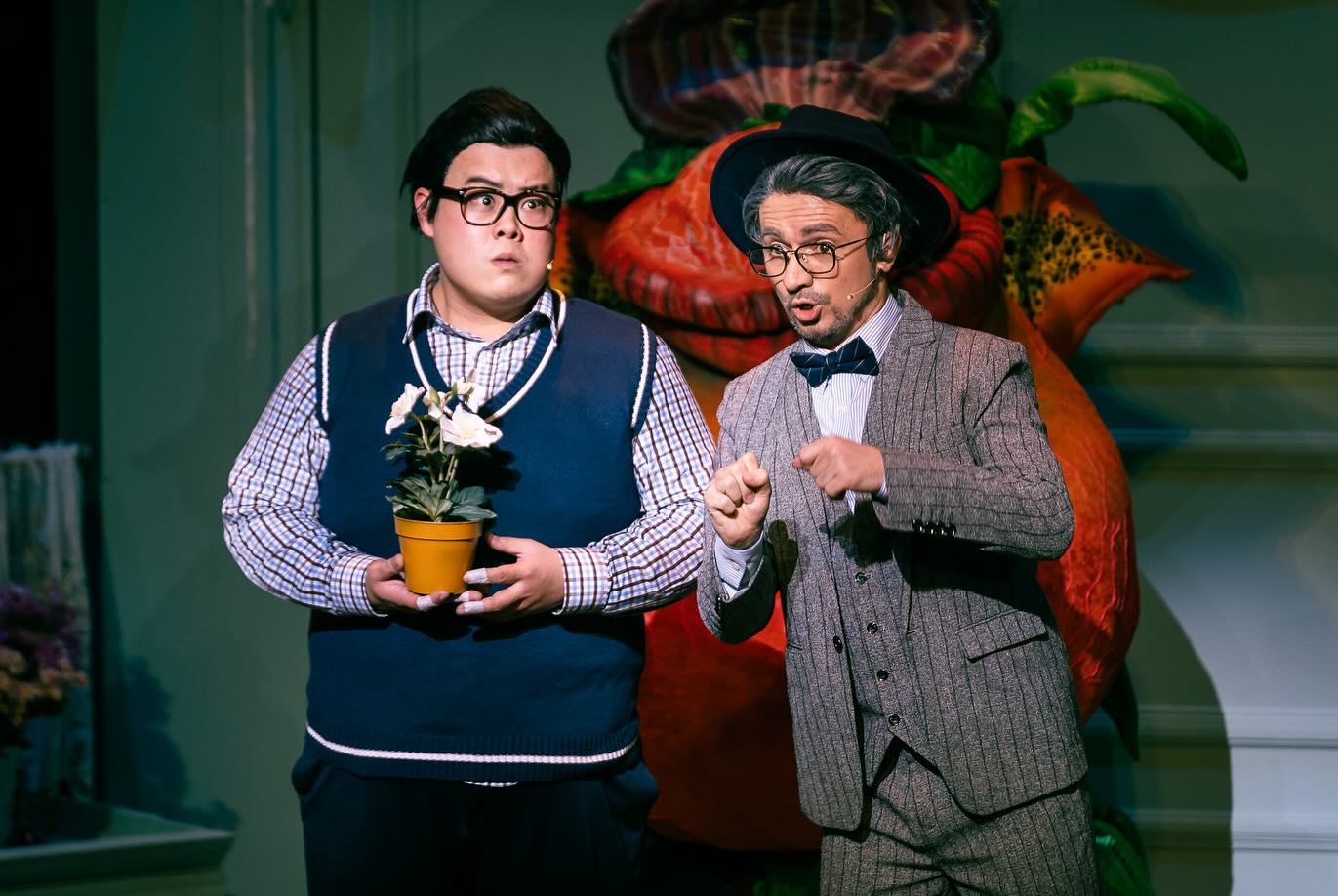
[Theatre Review] Little Shop of Horrors by Sing’Theatre: Bloomin’ Entertaining

Photo: Poh Yu Khing / Sing’Theatre

Photo: Poh Yu Khing / Sing’Theatre

Theatre review: Stellar vocals and comedic timing in Little Shop Of Horrors by Charmaine Lim, The Straits Times Life!

Sing’theatre’s Little Shop of Horrors delivers a gritty charm and stellar performances by Xiao Xing Wan, TimeOut

‘Little Shop of Horrors’ review: Audience will eat up every note of this musical by Sing’Theatre by Beverly Anne Devakishen, SG Magazine

Sing’theatre’s ‘Little Shop of Horrors’ is a Musical Feast by Derrick Lim, The Flying Inkpot

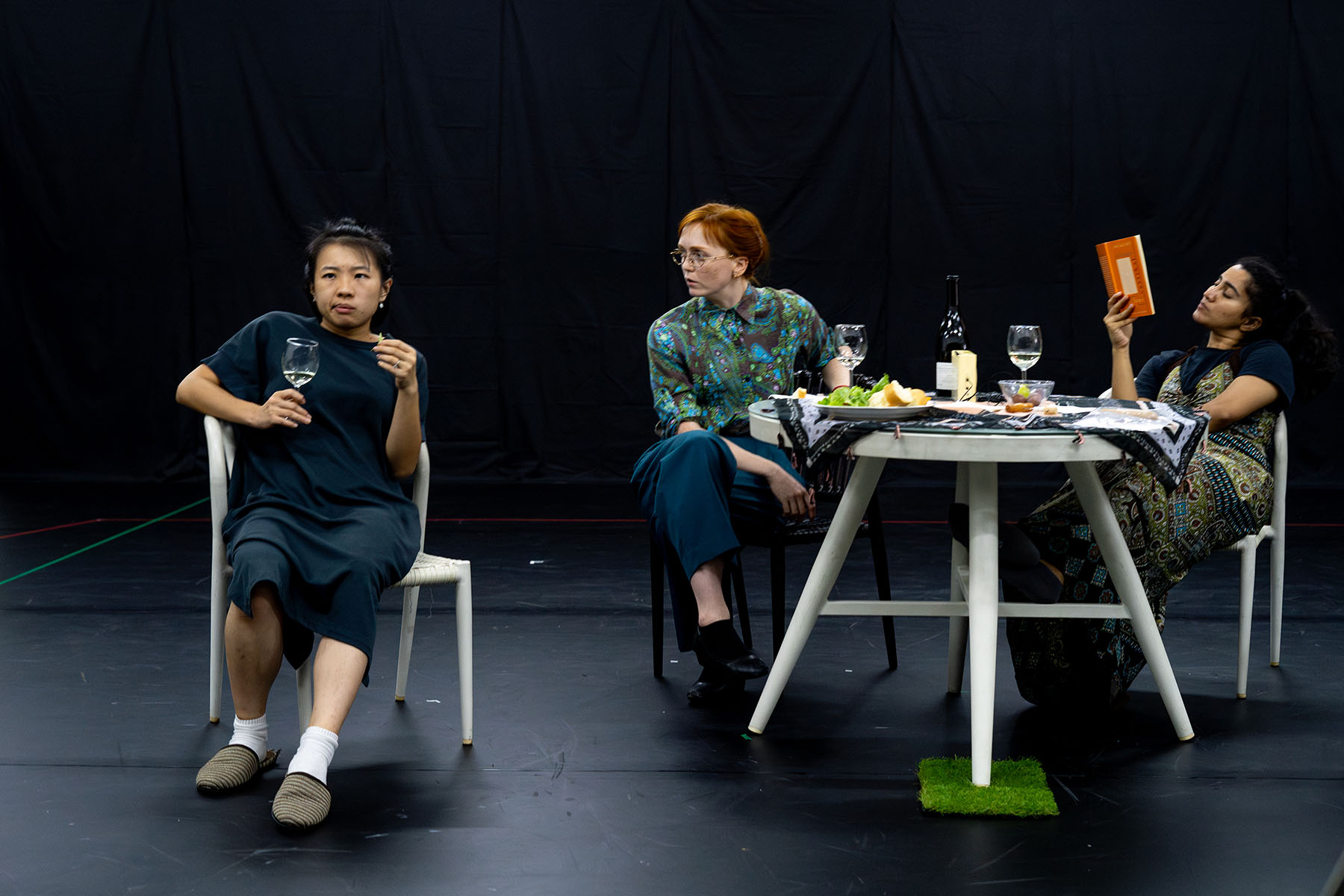
[Interview] Playwright-Composer weish and Director Huzir Sulaiman on Secondary: The Musical

weish: In response to our trailer someone had joked, “Ah, the weish chord”! That really tickled me. But if it was any indication that there is something signature to my sound in the ears of others, I am glad. The show is a mix of spoken scenes—naturalistic and otherwiseand 15 original songs. I have had the pleasure of working with Ian Lee and Daniel Alex Chia from independent music label PK Records as my arrangers and producers, and they’ve breathed new life into the music in ways that balance my own sensibilities. The music is quite alternative and unconventional to the musical theatre style, but still accessible, and very lyric-driven. Genres range from folk to hip-hop to electronic, but what I hope ties them together is a rawness of emotion and sincerity. And, perhaps, a “weish chord”…

Photo: Daryl Eng / Courtesy of Checkpoint Theatre


Catch It!

[Interview] Director Aarne Neeme and ITI Students on the Upcoming Double Bill Showcase

Courtesy of Intercultural Theatre Institute

Courtesy of Intercultural Theatre Institute

Courtesy of Intercultural Theatre Institute

Choy Chee Yew and Abinaya Jothi: There was a great deal of learning and unlearning simultaneously. Not to be overly fixated on what we have trained in, but to trust our instincts, have fun, and use what we have learned to guide us back when we get carried away. We believe the previous final year production, The Chair, taught us that regardless of genre or style, theatre conveys the stories of human beings, and audiences should see that rather than ensembles of actors “demonstrating” their abilities.


[Theatre Review] The Chair by ITI: Not at the Edge of One’s Seat

A woman demands justice from the mayor as her husband holds her back / Photo: Bernie Ng

Tensions run high between the mayor and James’s mother / Photo: Bernie Ng

The butcher mulls on the grave task ahead / Photo: Bernie Ng

Other Reviews

“Review: ‘The Chair’ by Intercultural Theatre Institute explores the death penalty, justice and grief in a twisted small town” by Yaiza Canapoli, SG Magazine

Review: The Chair by ITI 2023 Graduating Cohort by Philippe Pang

★★★☆☆ Review: The Chair by Intercultural Theatre Institute by Bakchormeeboy

[Interview] Pulling Up a Chair with Li Xie and ITI Students

Digital Programme of The Chair

[Interview] Pulling Up a Chair with Li Xie and ITI Students

Courtesy of Intercultural Theatre Institute

Choy Chee Yew: We trained intermittently in Biomechanics over the past three years and the production was an opportunity to put the training into practice. The principles of Biomechanics are actually applicable in all aspects of theatre-making, but as our training wasn’t continuous, it was noticeable that the principles were not as ingrained in some of our bodies as they should.

The rehearsal process made it clear that certain misconceptions of Biomechanics needed to be debunked. As a training system, it adopts certain stylised approaches to impart its principles, especially the etudes. However, this doesn’t mean that an actor trained in Biomechanics has to perform in a stylised manner like an etude. Even in a realistic play, the principles of biomechanics are still as relevant; precision, rhythm, clarity, efficiency, and the conscious use of the whole body in expressing intention.

During the devising process, there were many uncertainties, such as the understanding of the characters’ intentions and how to best use a very bare stage. At times, this resulted in a lack of clarity in what we were trying to express. We were constantly reminded to return to our truthful instincts to approach the character, and then to use the training principles we’ve learnt to deliver in the clearest and most efficient way.


[Theatre Review] The Tug and Tussle of Relationships in Tender Submission by Checkpoint Theatre

Photo: Joseph Nair / Courtesy of Checkpoint Theatre

Unlike Brown Boys Don’t Tell Jokes, which takes us on explosive highs and lows, Lucas Ho’s Tender Submission—as the title suggests—is dramatically meek. But the unearthing of human frailties and desires in the context of faith and marriage is no less affecting. 

Failure to understand and articulate one’s needs / Photo: Joseph Nair / Courtesy of Checkpoint Theatre

Neo Swee Lin and Lim Kay Siu play out every push and pull of a relationship / Photo: Joseph Nair

“Theatre review: Stellar acting in Tender Submission, but it preaches to the choir” by Shawn Hoo, The Straits Times Life

“Review: ‘Tender Submission’ delves deep into the heart of faith and marriage” by Yaiza Canopoli, SG Magazine

“Review: Azura Farid on Tender Submission by Lucas Ho (Checkpoint Theatre)” by Azura Farid, Critics Circle Blog

“‘Tender Submission’ by Checkpoint Theatre” by Corrie Tan, the intimate critic

Tender Submission by Naeem Kapadia, CrystalWords

“Theatre Review: Tender Submission, An Original Singaporean Story That Probes Deeply Into Relationship And Religion” by Xushuang Chen, Weekender

“In Praise of Growing Through Checkpoint Theatre’s Tender Submission: A Review” by Charmaine Tan, Men’s Folio

“Review: Tender Submission by Checkpoint Theatre” by Bakchormeeboy

[Interview] Lucas Ho talks about his latest play, Tender Submission

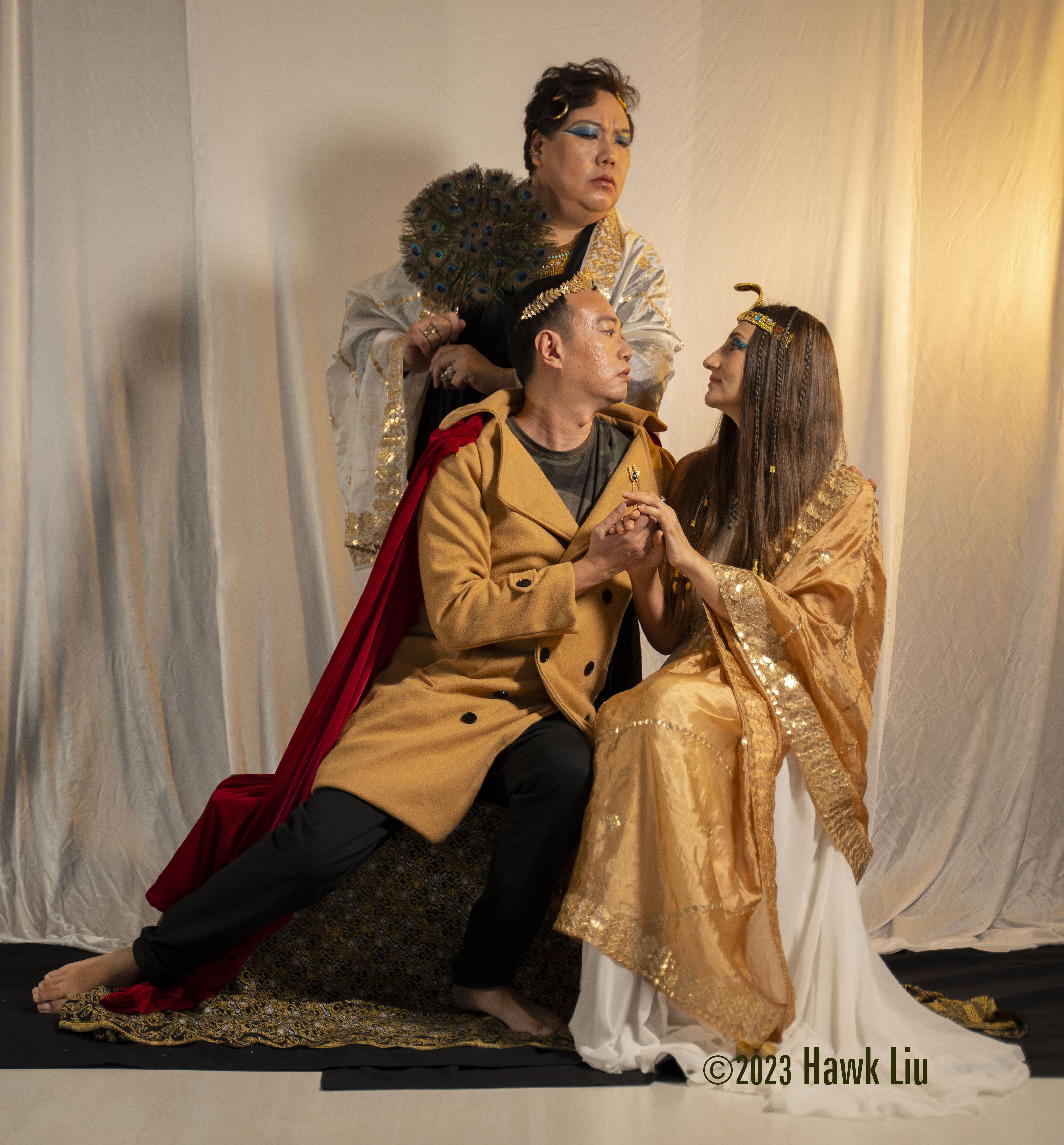
[Interview] Steven Ang on Julius Caesar in Egypt by The Mad Scene

Francis Wong (Hong Kong) as Ptolemy watches Steven Ang (Singapore) as Julius Caesar and Tatiana Konovalova (Russia) as Cleopatra

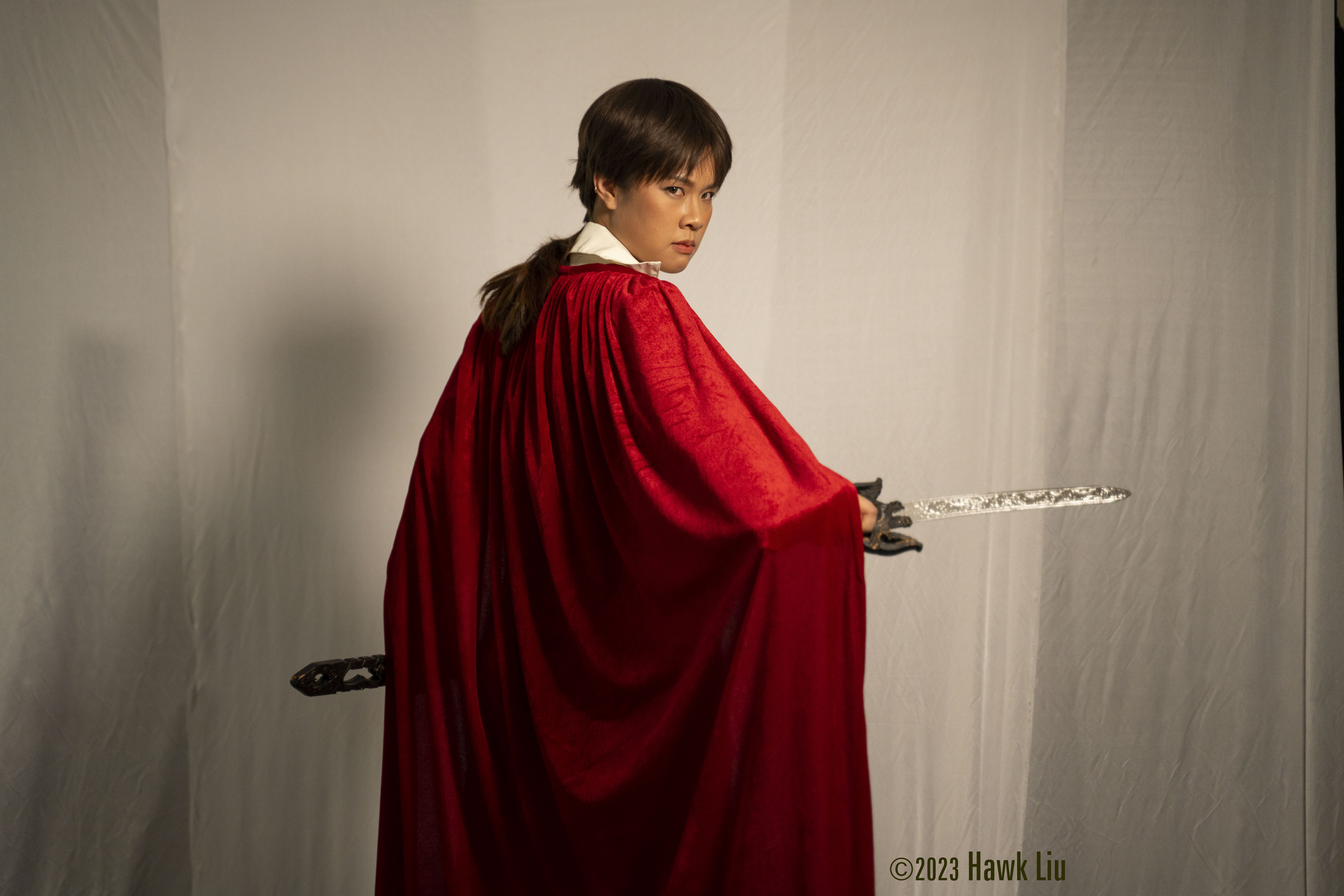
Ashley Chua (Singapore) as Sextus

Hugo Van Beever (Belgium) as Achillas

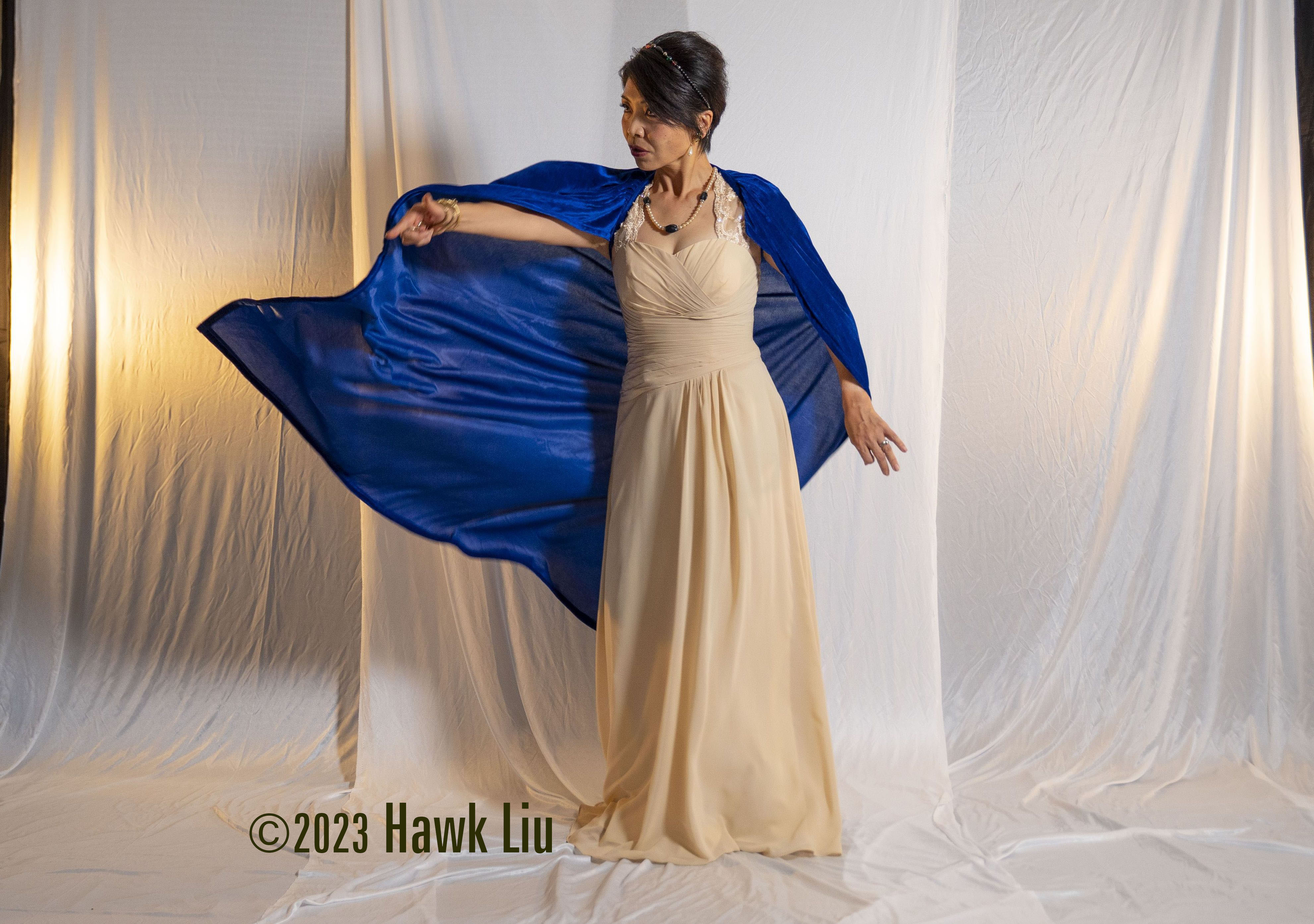
Chieko Trevatt (Japan/UK) as Cornelia


[Interview] Lucas Ho talks about his latest play, Tender Submission

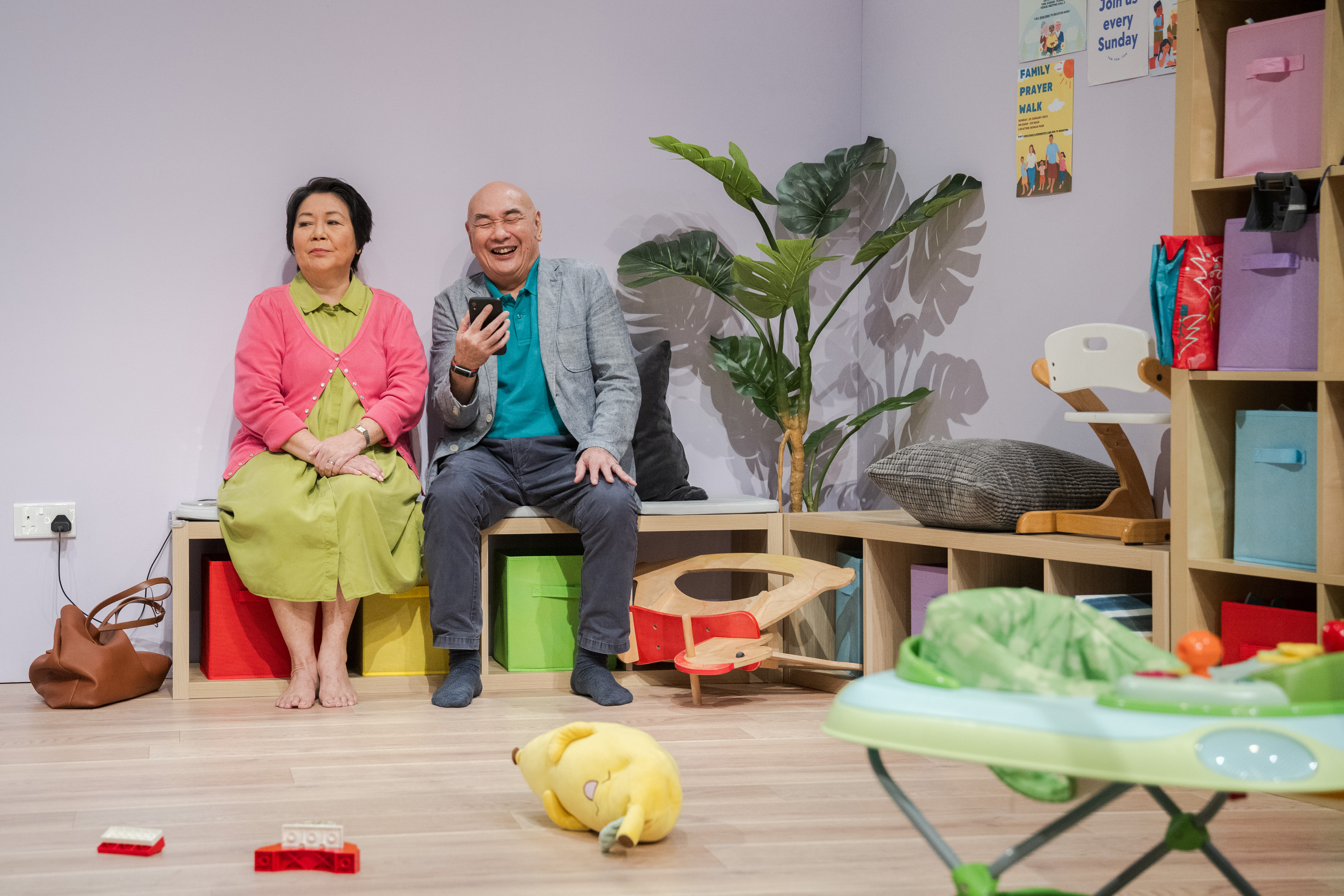
For the second production of their 2023 season, Checkpoint Theatre will stage Tender Submission by Lucas Ho. I caught up with him to find out more about his brand new play that cuts across faith, marriage, and commitment.

Synopsis
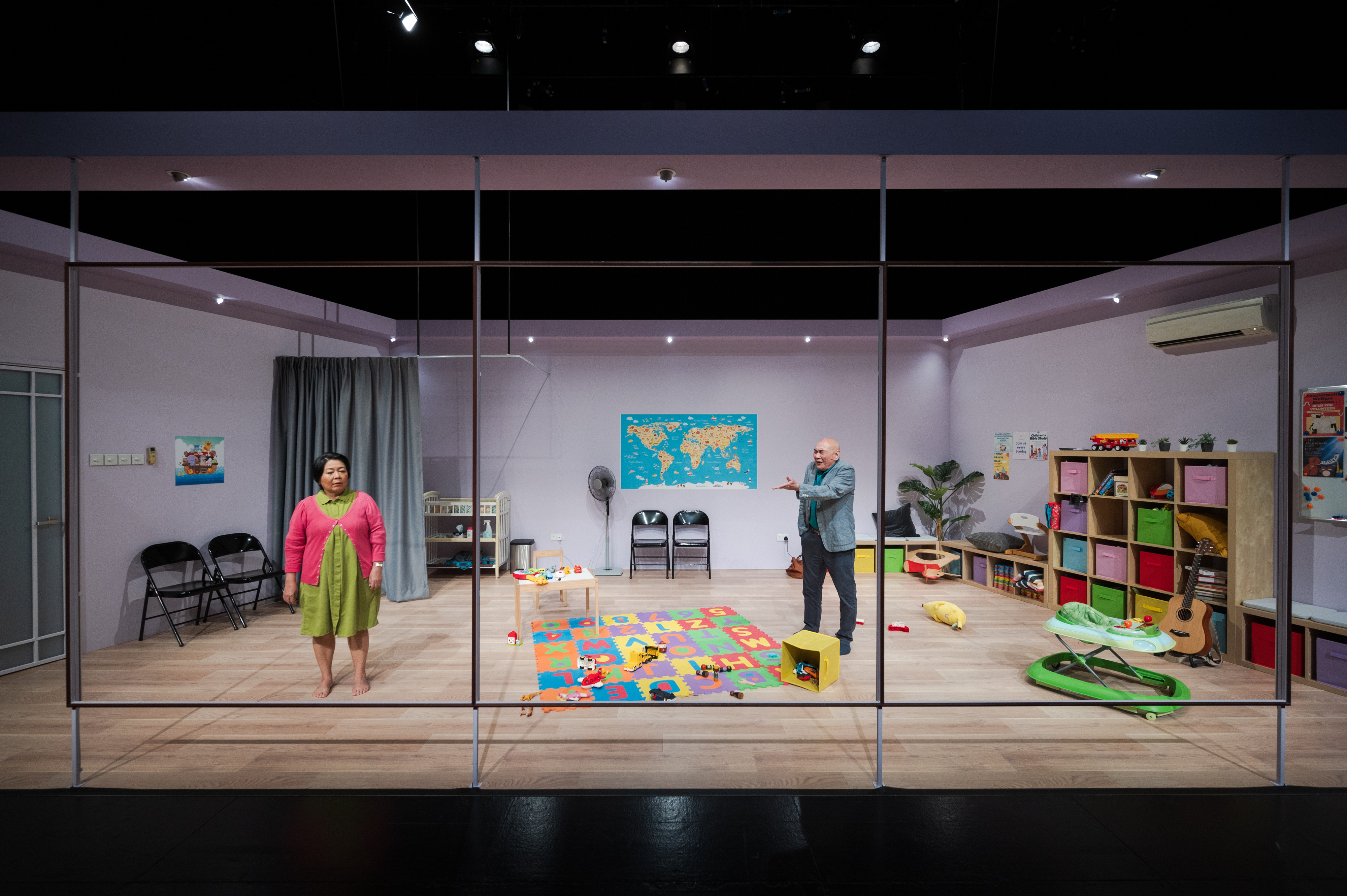
In the quiet of their church’s cry room, Catherine and David anxiously await the results of an important vote. As the crucial decision hangs in the balance, the life they have built together over the last 30 years comes under sharp scrutiny, and they are compelled to confront the very basis of their relationship.

Tender Submission bears witness to the unspooling of a decades-long marriage. When faith and purpose diverge, what truly lies at the heart of a relationship? Can a new path be found together?

Under Huzir Sulaiman and Chen Yingxuan’s taut, vivid direction, veteran actors and real-life couple Neo Swee Lin and Lim Kay Siu bring honesty and nuance to these complex characters as they navigate unspoken doubts, fears, and desires.

With precision and deep compassion, Lucas Ho’s new play grapples with the tensions between the institutional and the individual, and asks what it really means to commit to something greater than yourself.

What inspired you to write Tender Submission?

Thematically, I wanted to explore how religious beliefs are situated within the Singapore context—do they intermingle, improve, impinge, or impoverish; or all at once? In my case, Christianity is the religion I’m most familiar with. How do those who are religious attempt to balance the need to proselytise with the reality of being part of a society that appears secular at its very foundation? What are the means by which some will attempt  to exert influence, and do the ends justify those means?

It also started as a technical challenge for myself, reducing theatre to its absolute minimum: two people in a room, no scene cuts, no flashbacks, no additional characters to shift the dramatic vector. How much storytelling could happen? How far could I take it? And would it be compelling theatrically? I found that these restrictions forced me to dig deeper into the inner lives of the characters, and really compelled me to be deft and delicate about how to create a sense of forward momentum for the plotting. I hope it works!

One theme the play explores is how far one would go to act on one’s convictions. What made you decide to explore that theme in the context of a couple, and their Christian faith?

Centering it upon a couple was my way of finding a narrative conduit through which it became viable to tell a story about religion, in dramatic form.

And, as I was writing the play, I also found myself curious about an older couple from an anthropological perspective. I had grown up in church around these accomplished, well-spoken, and well put together married couples. They always seemed to know what they were doing and always had a ready answer to any question, religious or not. I began to imagine how they came to be, and wondered who they were when they were alone with each other.

In the press release, you mentioned that you wrote this play as an ‘invocation’. Could you elaborate more on that? What do you hope to invoke through the audience’s experience of the play?

It’s often been said that what keeps human individuals motivated and hopeful and alive is for them to be aligned with and committed to something other than, or larger than, themselves. It could be a social endeavour, or a communal engagement, or a religious activity.

An invocation in this regard is thus on one level an appeal to that core need within us. And, on another level, it’s also an appeal to the authority that said core need has over us.

One more sense of the word ‘invocation’ that’s very much on my mind, is “a cry for help”.

How has the process of writing this play informed you of your own personal struggles?

I’ve recently realised that one common fixture in all my plays is a character who is a middle-aged Chinese man. Maybe I’m trying to examine why the middle-aged Singaporean Chinese man looks and talks and thinks in a particular way; maybe I’m trying to figure out if that’s my future self, and if so, how to do better.


Catch It!

Tender Submission runs from 17 to 27 August 2023 at Drama Centre Black Box.

[Theatre Review] ‘Brown Boys Don’t Tell Jokes’ by Checkpoint Theatre: The Joke’s on All of Us

Photo: Joseph Nair / Courtesy of Checkpoint Theatre

Brown Boys Don’t Tell Jokes
Checkpoint Theatre
24 March 2023
Drama Centre Black Box 
23 March–2 April 2023

A musician, an activist, an academic, and a therapist walk into a politician’s house on the eve of an election. The showdown that ensues is unexpected as the characters, save for the politician, thought this was just a group of friends catching up for old time’s sake.

There may be a sense of camaraderie in the shorthand that one develops with friends, but without examining the intention and context that underlie them, the in-jokes, nicknames, and quips soon become barbs. 

As Tesh, an aspiring member of parliament, enlists the help of his friends due to a looming political scandal, friendships are pushed to the limits, and intentions are questioned, as old or unresolved conflicts emerge. Barbs and hands fly quick and fast. 

It is in this messy slugfest that playwright Myle Yan Tay interrogates race, politics, class, and censorship. Issues such as minority representation in media and politics; what constitutes the brown community; and whether cancel culture is going too far—among other topics—are unleashed on us in unrelenting waves.  

The topics covered might make the production seem like an argumentative essay in costume, but it is far from that. The topics are raised organically, depending on what the characters clashed about, and we are not brow-beaten into any position. 

But where we really see the playwright’s skill is that as we lean towards all the characters being complex and irreducible to a set of identity markers, we are yanked back to the reality that there are some issues affecting all of them simply on the basis of their skin colour. One is unsure of one’s stand, but as a Chinese man, I find myself keenly absorbing every nuance and complexion presented.

Not turning a provocative play into something overly didactic or having a woe-is-me protagonist, while offering several insights to mull on is difficult for any playwright, let alone for one debuting his first full-length play. 

L-R: Dev (Krish Natarajan), Adam (Shahid Nasheer), Tesh (Gosteloa Spancer), Scott (Ebi Shankara), Fizzy (Adib Kosnan)
Photo: Joseph Nair / Courtesy of Checkpoint Theatre

As most of the stage time mirrors real time, and all the action occurs in Tesh’s living room, it is easy for the show to be derailed into an endless shouting match. The sophistication in Huzir Sulaiman’s direction coupled with the sheer commitment from the wonderful cast mean that every moment is filled with pregnant intensity. 

Our attention is drawn to different parts of the room when the fissures occur. But if one were to cast an eye on the other characters observing the situation, you can feel the simmering tension, as you wonder what would happen next. 

Gosteloa Spancer’s portrayal of Tesh may be slightly tentative initially. But by the time he delivers the key monologue, he has the audience latching on to every word. 

Ebi Shankara’s Scott, a therapist who moved to the US, may be the most easy-going of the lot, as he bears the brunt of jokes about him escaping Singapore or adopting Americanisms. However, domestic troubles gradually bubble to the surface. Witnessing how Shankara allows his character to stew in his problems until the inevitable revelation is a delight. 

Krish Natarajan plays Dev, a musician who provided most of the comic relief due to his cheeky demeanour. But one should look out for the handling of Dev’s character arc as he becomes more circumspect when Tesh’s predicament compels him to reflect on his past.

Watching Adib Kosnan play Fizzy—an ardent activist seeking to effect change via social media—is a refreshing change to his mild-mannered character in a previous collaboration with Checkpoint Theatre, Keluarga Besar En. Karim. This is also a testament to his versatility as an actor.

Adam, a jaded academic caught in an unjustified social media maelstrom caused by Fizzy, is understandably sceptical and guarded. Shahid Nasheer’s keen sense of timing allows Adam to play devil’s advocate as he curtly interrogates everyone’s intentions.

The other cast members—Isabella Chiam (Marina, Tesh’s wife); Lareina Tham (Caroline, Tesh’s assistant); Vishnucharan Naidu (Ravi, Tesh’s intern);  Hang Qian Chou and Chaney Chia (cameramen)—serve to emphasise how politics is heavily reliant on optics.

The Singapore theatre canon is no stranger to tackling race issues. Only time will tell if Brown Boys Don’t Tell Jokes will be added to it.

However, with so much to think about, the joke’s on all of us if we don’t move the conversation forward on race issues, and figure out ways to coëxist better. 

Other Reviews

“Theatre review: Brown Boys Don’t Tell Jokes offers detailed characterisation and serious themes” by Ong Sor Fern, The Straits Times Life! (Review is behind a paywall. Read a partial transcript here)

Brown Boys Don’t Tell Jokes by Naeem Kapadia, Crystalwords

“Review: Dia Hakim on Brown Boys Don’t Tell Jokes by Myle Yan Tay (Checkpoint Theatre)” by Dia Hakim, Critics Circle Blog
[Theatre Review] ‘The Puppets are Alright’ by The Finger Players: Puppets Revealing Humanity’s Frailties

Doreen Toh in ‘My Father The AI Machine’ / Photo: Benson Lim / Courtesy of The Finger Players

The Puppets are Alright
The Finger Players
26 February 2023
Drama Centre Black Box 
22–26 February 2023

In my email interview with the creatives of The Puppets are Alright, the common theme of working towards a piece in which the puppet is crucial to the story-telling came up consistently. 

The puppets used in the triple-bill are created by Sim Xin Feng, Loo An Ni, and Marilyn Ang during their respective year-long residencies at The Maker’s Lab. 

When the audience enters the black box, they will see Sim Xin Feng’s puppet seated at the dining table, facing them directly. It is the size of a large doll, its head resembling a bald, bespectacled, middle-aged man. 

With its big eyes and indecipherable mouth, it has an enigmatic presence throughout My Father The AI Machine. In the piece, it is a machine which supposedly contains the brainwaves and memories of a deceased man, an innovation by the government-backed Revive the Dead Programme.

The man’s wife (Doreen Toh) treats it like her actual husband, and takes on multiple jobs, hoping to eventually afford the upgrades to make this machine more human-like. This leaves the son (Neo Hai Bin) contending with treating the machine like his father, and not having a proper relationship with his mother.

Neo Hai Bin plays the son who is unwilling to treat the machine as his father
Photo: Benson Lim / Courtesy of The Finger Players

With its movable eyes, controlled by a joystick, and a button at the mouth to print ten words at a time on a ticker tape, dispensed through its chest, the puppet is not completely inanimate, but hardly human. 

The liminality of the puppet is the crux of this poignant human drama in which one is clinging on to what is lost at the unknowing expense of slowly losing what one has.

Playwright Chong Tze Chien keeps the plot and world-building of a near future simple, which allows us to focus on the human drama. Unfortunately, Liew Jia Yi’s direction and the performance by the actors is just short of realising the drama to its fullest potential. 

For a woman who desperately wants to keep her husband alive, and treats the machine as her husband, Doreen Toh is slightly tentative in handling the puppet as they slow dance to the couple’s favourite song. Even when the son threatens to destroy the machine, her desperate pleas do not feel like her son has just threatened to kill his father with a long knife in hand. 

At the end of the play, when the son makes an irrational decision that contradicts his previous beliefs, Neo Hai Bin portrays the son to make that decision a little too easily. 

That said, the play is engaging and touches on a very human struggle. 

Alvin Chiam plays a man who is haunted by the spectre of his wife / Photo: Benson Lim / Courtesy of The Finger Players

As a counterpoint to the opening piece, Loo An Ni’s puppet in Parting only appears in the middle of the piece. Instead of using the original puppets she created for her residency, she created a new one based on insights gained from her research into modularity. 

While I am slightly disappointed as she is modest in her ambitions with the life-sized female mannequin with detachable limbs,—as opposed to her original interests in exoskeletons and modularity—the puppet serves as the spectre that confronts us with our sins. 

In this non-verbal piece conceived and directed by Oliver Chong, a man (Alvin Chiam) writes a parting letter to his wife and removes his wedding ring. Three creatures (Angelina Chandra, Jo Kwek, Rachel Nip) dressed in black appear and they seem to represent the man’s personal demons. As they scamper and scramble about the room to frolic and cause mischief, the man gets increasingly affected.

The timing between the creatures shifting the body parts of the puppet, and the man wondering they are constantly being misplaced, is incredibly taut. This brings out a sense of dark humour. We get the horror trope of things moving about and seeing the dark forces causing mischief, while also getting the comedic element of child-like creatures playing pranks.

The creatures (Angelina Chandra, Jo Kwek, Rachel Nip) seem to represent the man’s personal demons
Photo: Benson Lim / Courtesy of The Finger Players

Chiam’s slightly understated approach is a nice touch as this contrasts with the creatures suggests how he is trying to control what is going on internally as manifested by the creatures on stage.

The creatures also double as puppeteers. When the mannequin is assembled, it becomes the spectre of the man’s wife, and he is confronted with what he did. As the ultimate act is committed, the puppet is crucial in showing how violent we can be. This may be a little too uncomfortable if such violence is enacted on a human actor. 

The promotional materials describe this piece as “high octane”, but the initial menacing quality of the piece is not ramped up towards the climax. While one might worry about how much the audience can take, I think there is still more room to push this further. 

Ian Tan handles and gives voice to the rod puppet, Paul. T. Saitharan plays Paul’s father
Photo: Benson Lim / Courtesy of The Finger Players

The Bench brings us back to familiar ground with Marilyn Ang’s rod puppet which plays the son, Paul, whose relationship with his father (T. Sasitharan) is strained.

Having lost his wife, the father has to raise his son alone and tries to connect with him by creating an environment that the father thinks is beautiful—building a bench that can play sounds when touching different parts of it, and telling him stories or quotes by luminaries of the past whenever Paul needs some guidance. 

Paul drifts from his father as he tires of the cryptic wisdom provided by his father, which does not seem to help him navigate through the thickets of life. 

In this wistful play, written by Ellison Tan and directed by Myra Loke, we see Paul grow from an infant to a young adult through the sensitive puppeteering and line delivery by Ian Tan. 

One of the key features in Marilyn Ang’s design of Paul is a mechanism in the chest which allows it to emit bubbles. At a few points in the play, we see Paul emitting a stream of bubbles from his chest, as if he is pouring his heart out. Just like the stories and quotes from his father, they appear beautiful, but are fleeting and do not exist long enough for a connection to be made. 

Delicate performances from T. Sasitharan and Ian Tan / Photo: Benson Lim / Courtesy of The Finger Players

T. Sasitharan, as Paul’s father, has an unmistaken presence and one could listen to him tell stories for hours. Despite him likening acting with and reacting to puppets as a high-wire act sans safety net, he does it effortlessly.

However, even when the relationship is fraying, the father still resorts to quotes and anecdotes to communicate with his son. One wishes that the audience with some sort of indication—either through the text or direction—as to why the father could not speak from the heart, despite being very eloquent in relaying wisdom from the past.

With a few beautiful moments sprinkled in the piece, which brings out Marilyn Ang’s exploration of tactility and bubbles, the piece is an elegy of father-son relationships, and the missed opportunities for connection. 

Despite needing a few tweaks, everyone involved in the triple-bill must be congratulated for creating works that incorporate the puppets in an organic way, while throwing humanity’s needs, desires, and frailties into sharper relief. 

Other Reviews

“Theatre review: The Puppets Are Alright is sophisticated storytelling about grief and love” by Charmaine Lim, The Straits Times Life! (Review is behind a paywall.)

“To Make is To Care” by Lee Shu Yu, harmonicstagebeams

“The Puppets Are Alright” by The Finger Players—and I know the outgoing artistic directors will be alright too” by Corrie Tan, the intimate critic

“Response: Alex Li on The Puppets Are Alright by Ellison Tan, Oliver Chong, and Chong Tze Chien (The Finger Players)” by Alex Li, Critics Circle Blog

Further Reading

[Interview] Creatives shed light on ‘The Puppets are Alright’ by The Finger Players

[Interview] Ellison Tan and Myra Loke celebrate their stint as co-artistic directors of The Finger Players with The Puppets are Alright

Programme booklet of The Puppets are Alright