n.b. I would like to inform my readers that I am currently a project-based intern with Checkpoint Theatre for their upcoming production,The Last Bull: A Life in Flamenco. However, I strongly believe that this does not affect the integrity of my critique. Views expressed are my own.
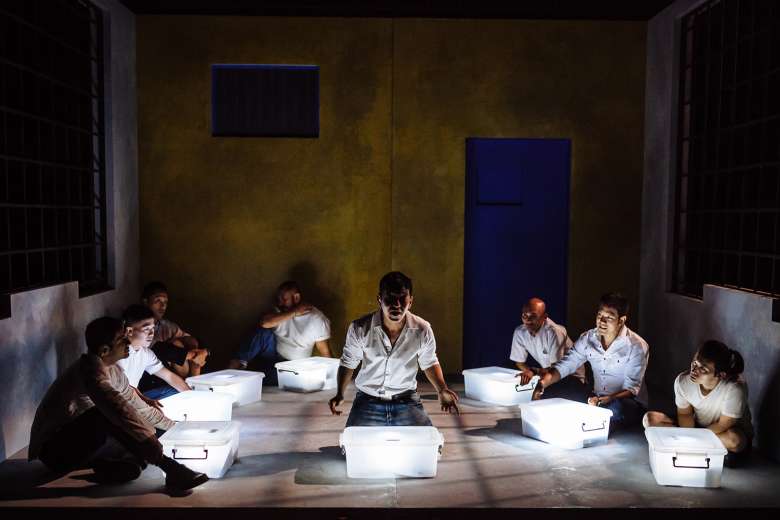
Dark Room Edith Podesta 28 April 2016 Esplanade Theatre Studio 28 April–1 May 2016
Two years ago, I was profoundly affected and had my pre-conceptions about ex-prisoners challenged by Dark Room x8.
The memory of its impact makes me apprehensive about watching this iteration. What should one expect of this second staging? More importantly, having been made aware of my prejudices, will Dark Room still have an impact?
In the midst of my apprehension, I forgot a simple truth. Regardless of what one knows, there is a sort of power in having someone stand in front of you and tell you a story. And the stories told in Dark Room—that of the prison system, and how it affects the individuals—need to be retold again and again.
While there are some changes in the main ensemble (Nelson Chia, Timothy Nga, Erwin Shah Ismail, Ian Tan, Mohd Fared Jainal, Noor Effendy Ibrahim, Oliver Chong, and Pavan J Singh), the performances by this batch of actors are equally stellar. The complexities of script are deftly handled as the show organically shifts from poignancy, to hilarity, to the downright painful.
Chris Chua’s set, which consists of three structures that can be cleverly configured into the prison cells and walls, is a much welcomed addition. It vividly impresses on the audience the small space that the prisoners inhabit, and its possible psychological impact.
That said, this fuller rendering also has its excesses.
Director and writer Edith Podesta took on the audiences’ earlier feedback by introducing the perspectives of a female inmate (Shafiqhah Efandi) and the parents (Lim Kay Siu and Neo Swee Lin) of the prisoners. However, they are tokenistic at best.
Apart from learning two new facts,—female inmates man the call centre, and yard time is not a regular occurrence—the female inmate does not add anything to the show. Podesta also does the character an injustice by not giving her an identifiable personality which is present in the male characters.
Similarly, the parents’ perspective only focuses on their sadness, and the difficulties of visiting their child in prison. All these are not really new insights and could be easily imagined by the audience.
Additionally, certain sound effects by Darren Ng—such as the banging of the judge’s gravel— are too literal and gimmicky. This takes away the gravity of the text which can be competently conveyed by the actors.
Finally, the ending which has the characters repeatedly imploring the audience not to judge too quickly risks being overbearingly didactic.
Despite all that, the beauty of Dark Room is that the issues raised in the piece will always be pertinent. This gives Podesta countless opportunities to re-stage it, and find the right balance for the show. What remains is for her to trust her artistic instinct and be very selective of which suggestions to bring on board.
Wild Rice brings back the Singapore Theatre Festival (STF) for the 5th time with 8 of the most exhilarating, ambitious, and thought-provoking new plays. Featuring 9 playwrights, 8 directors, and 4 theatre companies, the plays touch on a diverse range of issues that would speak to people from all walks of life in contemporary Singapore.
With LASALLE College of the Arts being the festival’s hub from 30 June to 24 July, STF will feature re-worked productions of recently staged plays,— Rodney Oliveiro’s Geylang, Johnny Jon Jon’s Hawa, Kenneth Chia and Mark Ng’s Let’s Get Back Together and Alfian Saat’s Geng Rebut Cabinet (GRC)—and shine the spotlight on the works of first-time playwrights: Helmi Yusof’s My Mother Buys Condoms, Nessa Anwar’s Riders Know When It’s Gonna Rain, and Thomas Lim’s Grandmother Tongue.
Recently awarded the Best Production of the Year at ST Life! Theatre Awards, HOTEL, directed by Wild Rice’s very own Ivan Heng and Glen Goei and written by Alfian Sa’at and Marcia Vanderstraaten, will be the mainstay production of the festival.
There will also be a programme of FEST!VITIES held at LASALLE’s Lowercase Café comprising a series of lively forums; drag, music and stand-up comedy performances; and a Playwriting Workshop by the festival’s Dramaturg and Wild Rice’s Resident Playwright Alfian Sa’at.
For more information about the Singapore Theatre Festival, please visit its official website.
Na Mah Bhaskar’s Arts Academy 16 April 2016 Esplanade Theatre Studio 16 April 2016, 3pm & 7:30pm
Before every rehearsal or performance, Bharatanatyam dancers are required to perform the namaskar. It is a ritual which expresses gratitude to Mother Earth, the deities, and their gurus who have brought them to where they are.
If Na Mah is anything to go by, these people, spirits, and elements have done an excellent job with Bhaskar’s Arts Academy (BAA).
In many ways, the repertoire on offer is an extensive namaskar. Deities such as Ganesha, Bhaskara, and Muruga are praised; the wonders of nature is an analogy of the nature of love; and the skill, precision, and presence on display testify to the wisdom and efficacy of the gurus.
In the course of this thanksgiving, the audience is reminded of how the body is a fantastic instrument for story-telling. The group numbers—especially Bhaskaraya and The Peacock’s Cue—are wonderful spectacles as the dancers come together to form distinct iconographies of the gods, or inject a certain energy in celebration of a deity’s divinity. This is achieved through the contrast between stillness and exuberant footwork. The slight variation in the way each dancer executes the gestures or facial expressions also present the multi-faceted nature of the deities.
That said, there are a couple of occasions when the dancers missed their marks by a hair’s breadth. But they are so minor that they hardly mar an otherwise beautiful performance.
The solo numbers prove that abhinaya (expressive elements) is a forte of BAA’s soloists. The exactness of the gestures, and the nuances of the facial expressions not only tell classic stories, such as Shakuntala searching for Dushyanta in Maaney, it also expounds on abstract concepts such as the nature of love in Vaanil Mukilodum.
The ability to portray an array of emotions, coupled with the different physicalities of the masculine, feminine, and animal within a split second indicates a high level of craftsmanship. From the feelings of joy and longing when one is in love, to seeing a series of flowers bloom with a mere flourish of the hands, it is impossible to take one’s eyes off the soloists.
It is important to note that the programme also includes two Kathak solos by Pallavi Sharma. While she brilliantly executes her steps in Shiv Stuti, the choreography does not bring out the enormity of Shiva’s cycle of nothingness to everythingness, and everythingness to nothingness. However, she is an absolute treat in And This is Love…. Sharma brings out the coy flirtation of lovers through motifs of looking and hiding, and slowly progresses into a series of spins which evokes the all-encompassing and thrilling feeling of love.
It would be remiss of me not to praise the musicians (Ampili Pillai, Arasakumari Nagaradjane, Ghanavenothan Retnam, TV Sajith, TK Arunkumar, S Harikrishnan, Imran Khan, Nasir Khan, Shakeel Ahmed Khan) for their artistry in enhancing the dances. From the meditative to the earthy rhythms of joy, the music is evocative, hypnotic, and potentially therapeutic.
It is unfortunate that we have no ritual of our own to thank the performers for the sacrifices that they have made. Perhaps, the best thing we can do is to show our continuous support and introduce more people to their work. And Bhaskar’s Arts Academy definitely deserves that.
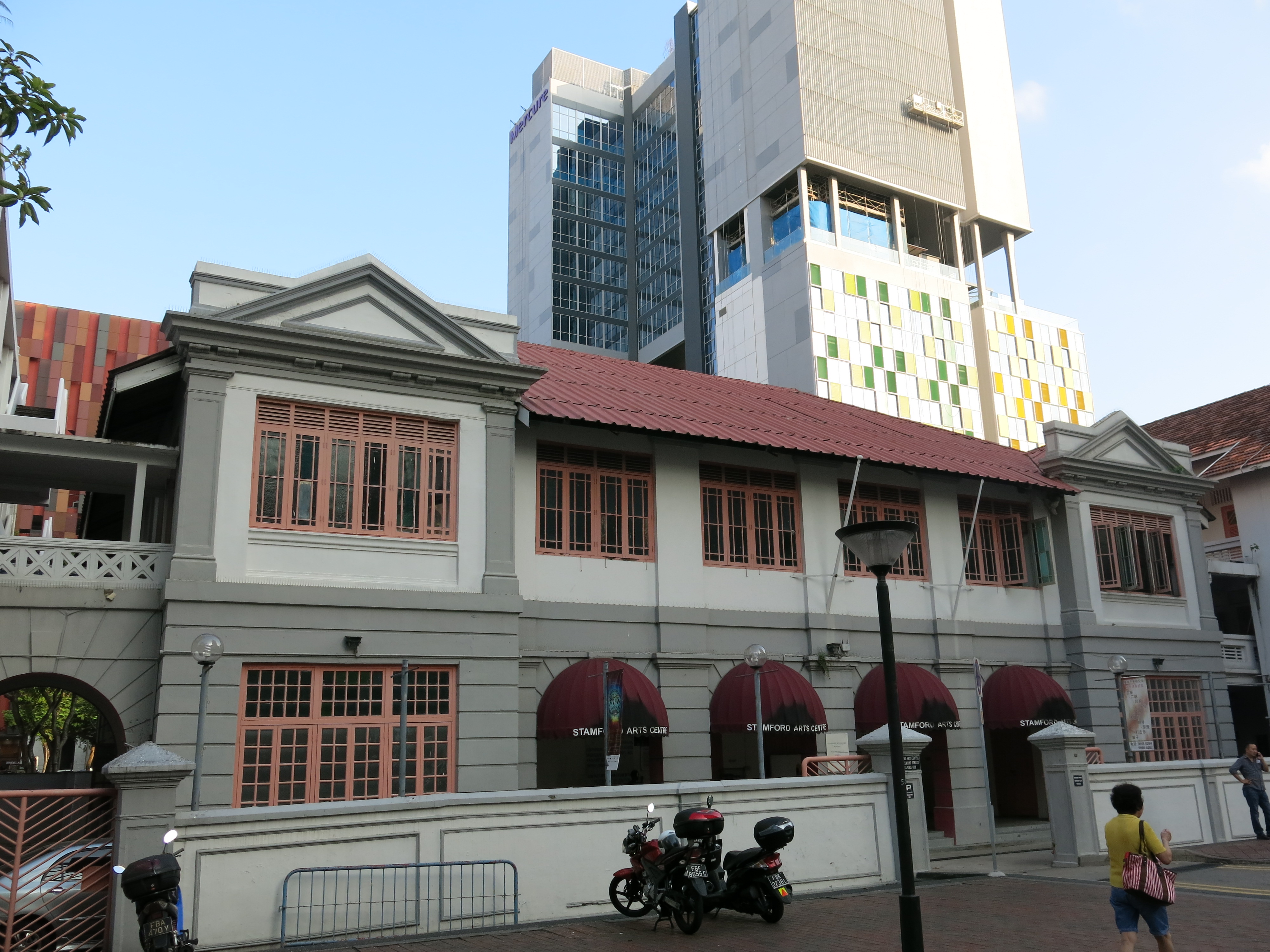
To many, the Stamford Arts Centre is a quaint building where art happens. But for Mrs Santha Bhaskar, artistic director of Bhaskar’s Arts Academy (BAA), it is more than a sum of the things that happen within it; it is home.
Mrs Santha Bhaskar
It is home not simply because she spent half her artistic career there, or that she feels a surge of sentimentality with the centre’s impending closure. Rather, it is home because the space is sustained by a community and, in turn, the space allows for art to grow and evolve. She explains:
“It was in 1988 that we moved here, and we were the first tenant. The National Arts Council (NAC) did not give us a grant to renovate the place, but we needed to convert some of the bigger rooms into smaller rooms on the third level for music classes. What my late husband, Mr K.P. Bhaskar, did was to borrow money from our students’ parents, wrote IOUs, and we returned the money when we made some profit.”
Another significance of the space is that it marked a new phase of development and growth for BAA and its training arm, Nrityalaya Aesthetics Society (NAS).
“Our group is in this place. When we were at the National Theatre and Telok Ayer Performing Arts Centre, it was Mr Bhaskar and I who taught dance. We didn’t have any teachers. I taught most of the classes, and Mr Bhaskar handled all the administrative tasks. We only taught and performed Bharatanatyam, that is all. Coming here, we really grew and we brought teachers from India to help with the music classes. So all that happened here. The school has become big now.”
According to anearlier interview, NAS has around 2000 students learning a plethora of Indian art forms. Courses in dance (Bharatanatyam, Kathak, Kuchipudi, Odissi), music (various instruments and Carnatic singing techniques), and visual art are offered. More importantly, NAS has its own syllabus for Bharatanatyam and students who completed it are awarded a diploma, and offered teaching and performing opportunities at BAA. “We are self-sustaining in the sense that we have our own pool of dancers and are not dependent on India. We have Singaporean dancers, that’s our specialty,” says Mrs Bhaskar as she beams with pride.
Courses offered by NAS
But space and community are not limited to the boundaries within Stamford Arts Centre. “We are opposite two temples and there’s a lot of good energy for the space. So whatever we do, we offer it to the deities, the people, and the space around us.” She adds, “We have very good neighbours. Although we are near to a food court and HDB blocks, no one has complained that we make a lot of noise. We stay here with a lot of harmony.”
Kwan Im Thong Hood Cho Temple which is opposite Stamford Arts Centre
Nearby HDB Blocks
It is with this sense of gratitude that led Mrs Bhaskar to conceive of Na Mah as the first production of the year for BAA. “We will be saying goodbye to this building. It is my way of thanking the space, and the dancers who have learnt from me. While some of them have stopped, their presence and support have sustained the company.”
In fact, gratitude lies at the heart of her practice. “For me, it’s very important. I’m grateful to a lot of things which surrounds me. Even the dancers, they pass energy to me when they perform. I consider this to be my philosophy of performing and teaching.”
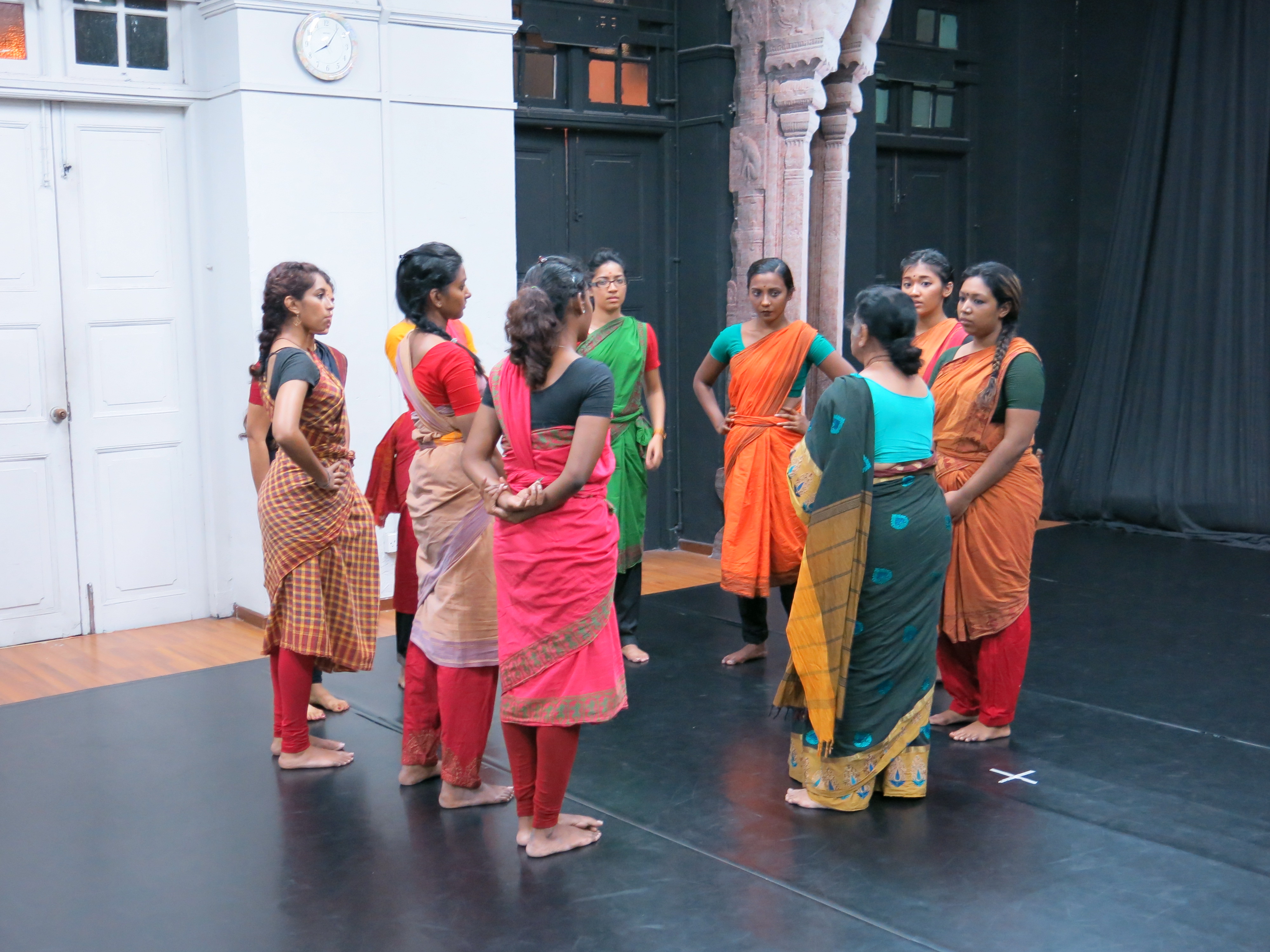
Mrs Bhaskar instructing the dancers
The show mostly consists of Mrs Bhaskar’s favourite pieces that were performed by the company. “I can sit and watch those items for any number of times. Some people might get bored and say, ‘I’ve seen this already. Why are you watching it again?’ For me, it’s not like that.”
However, there are other pieces in the show that hold a deeper significance. Two pieces in the line up are from a previous production, Xpressions, which was performed three years ago. This was the last production that Mr Bhaskar watched before he passed away. “We had two nights, and he couldn’t watch the performance on the second night as he was unable to walk up to Esplanade. Three days later, he passed away,” recalls Mrs Bhaskar. “As these two pieces have not been performed since, I am putting them in this show to pay homage to him.”
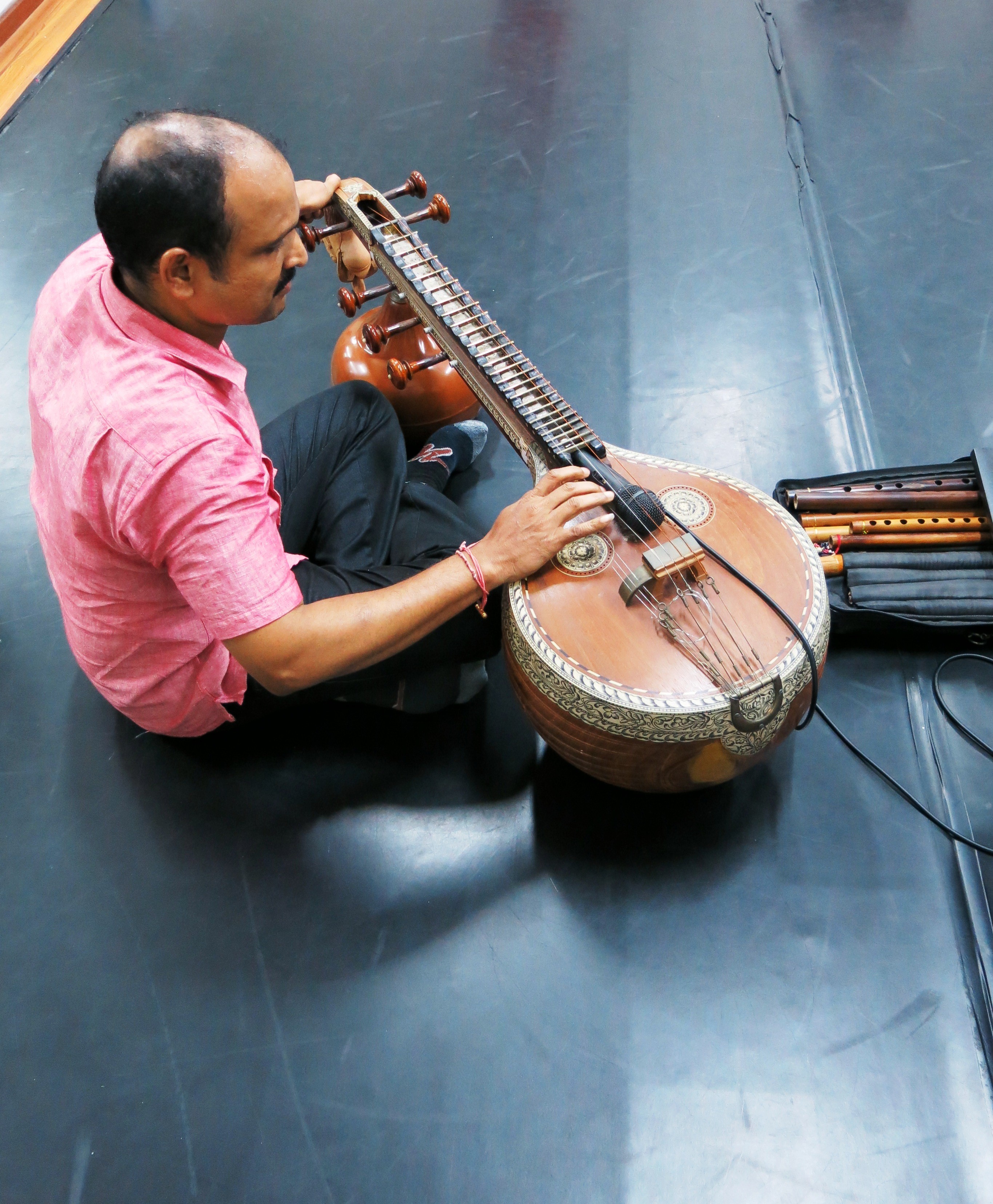
Mr TK Arun on the veena
Yet, long-time fans of BAA have something new to look forward to. Apart from the opening number, there is an item that is based on a contemporary Tamil poem. Mrs Bhaskar elaborates: “It is about love and anger between two people. Who is getting angry with whom? I am in love with this space, the clouds love the sky, and the flowers are also spreading their scent. But who is angry with whom?”
She also points out that the pieces are not connected together and audience need not be intimidated, if they are unfamiliar with the Indian epics, as they can be appreciated on their own. Thus, Na Mah is a tribute to those who have come before, and a celebration of the artistic trajectory that BAA has taken.
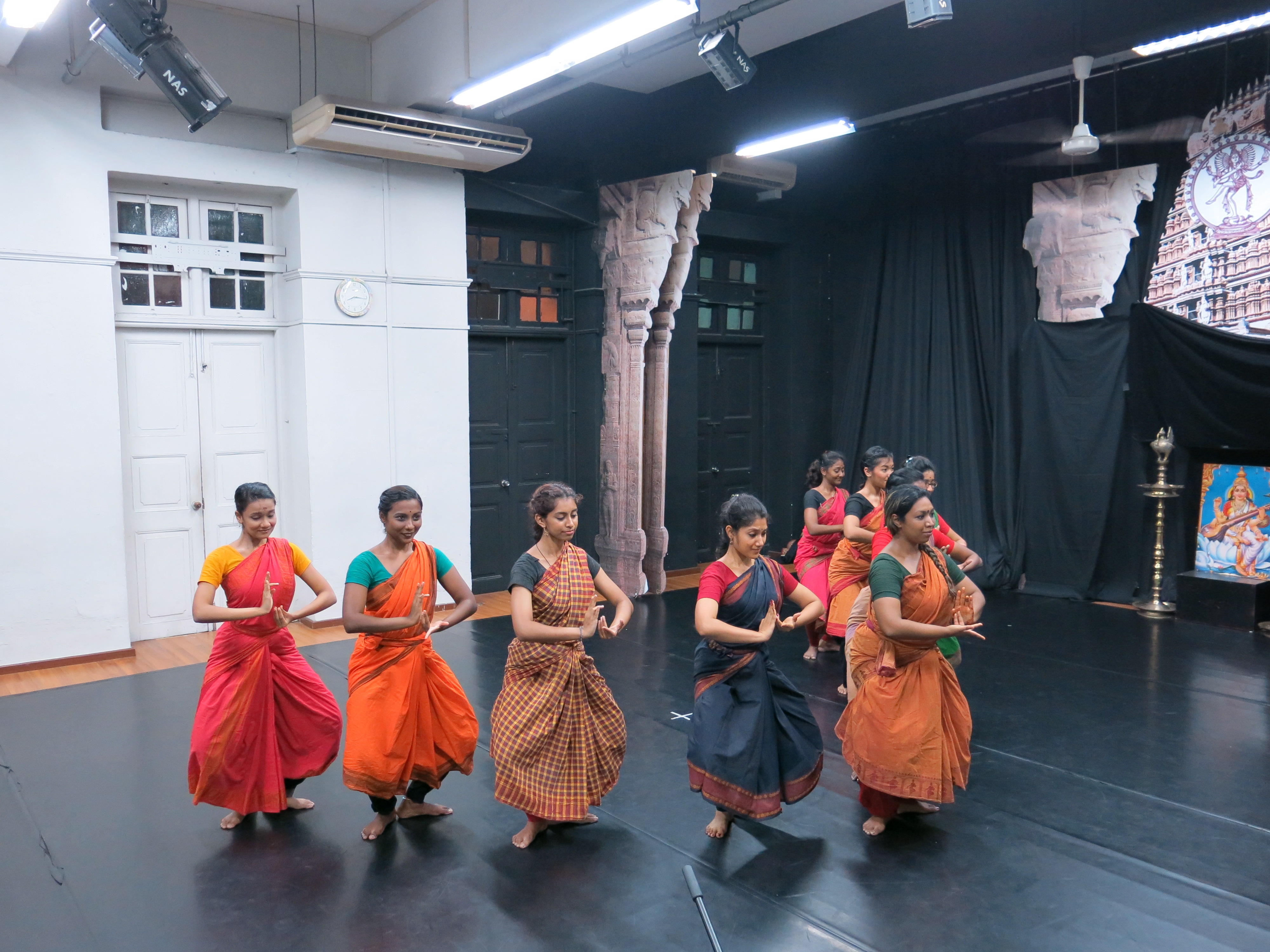
Dancers in rehearsal
Despite the understandable sadness of bidding the centre farewell, Mrs Bhaskar is accepting of NAC’s decision. “Singapore is changing, and we have to change accordingly. The building is very old and its stability is a big concern for all of us. If it has to be changed, it has to be changed.” To the best of her knowledge, the centre will be converted into a space for traditional arts.
While NAC has yet to announce any concrete plans, she hopes that the NAC and other government agencies are mindful of the centre’s surroundings. “I told them that we are opposite two temples, and a lot of devotees go there. I believe that there are a lot of energies around, both positive and negative. It is important that they consult both temples before going ahead with any plans. Personally, I believe that there shouldn’t be any tall buildings in front of the temples.”
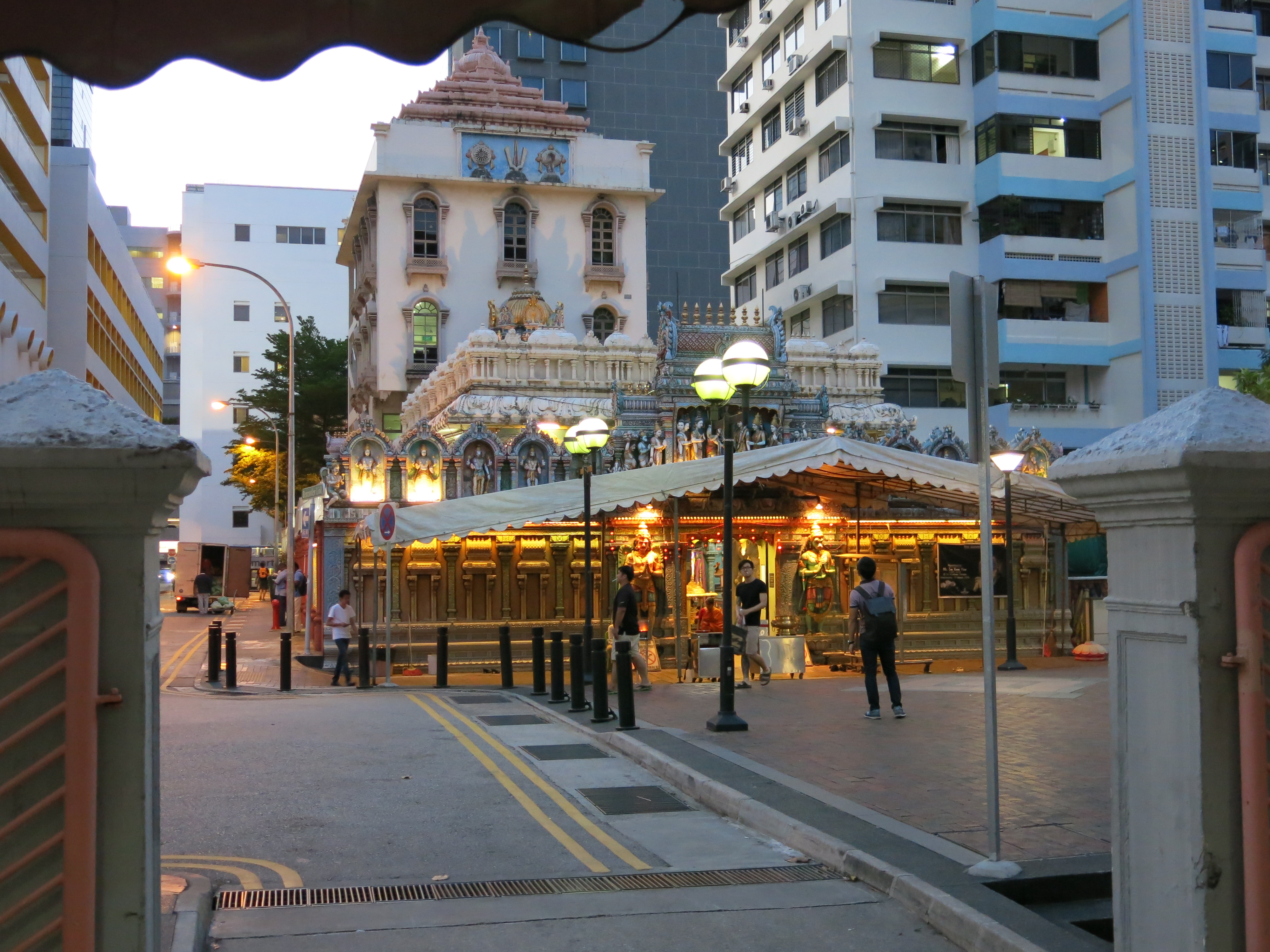
Sri Krishnan Temple as viewed from Stamford Arts Centre
Looking forward, BAA and NAS will be relocated to the fourth floor of Bras Basah Complex. The new space will host rehearsals for their next production which will be choreographed by Mrs Bhaskar’s daughter, Meenakshy Bhaskar, in collaboration with Balinese dancers.
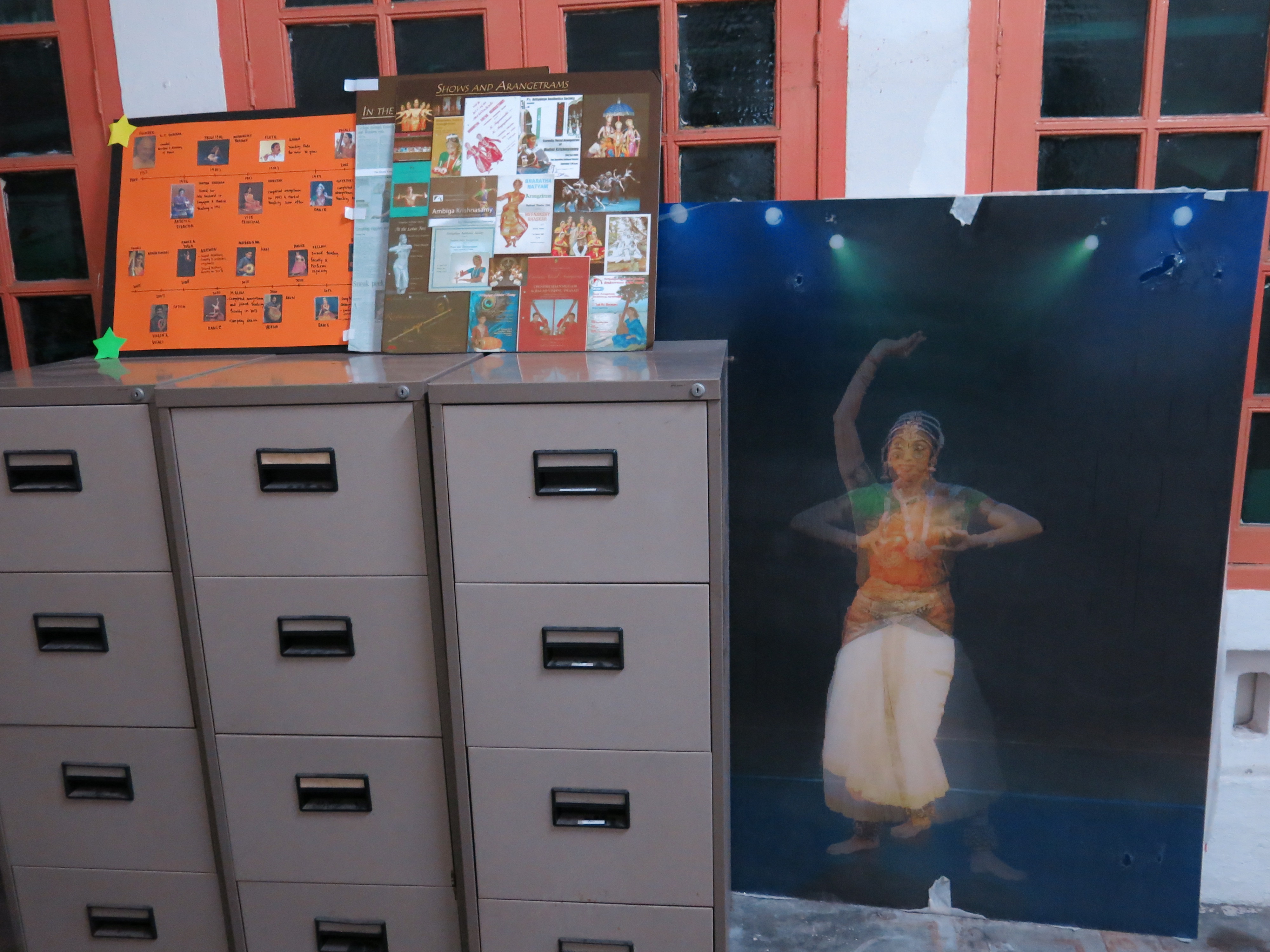
Apart from new productions, Mrs Bhaskar is also looking at starting a research programme in the near future. It will introduce a systematic way of archiving, researching, and analysing the artistic practices of BAA. For a start, Dr Wong Chee Meng, post-doctoral fellow at Nanyang Technological University, will research on BAA’s upcoming performance of Ramayana in Thailand.
Mr Ghanavenothan Retnam (flute), Mr TV Sajith (violin), and Ms Ampili Pillai (vocalist)
When asked for her hopes for the future, she has this to say:
“I hope the younger generation will take it seriously. Apart from dance, they should learn music, literature, and visual arts because these elements are interconnected with any traditional Indian dance form.
But the present situation is that they do not have time to learn other things because they are busy with their studies or work. They can only do that if they are a full-timer, but somebody has to pay them a decent salary. I don’t think Singapore is ready for that. So they have to resort to teaching, but the body will become lazy. You’ll think that it is enough and say, ‘I’m making a living already, so why should I do other things?’
If you really want to be an artist, you need a lot of willpower. I don’t know how the next generation is going to be as they are quite pampered. But maybe, someone will come forward.”
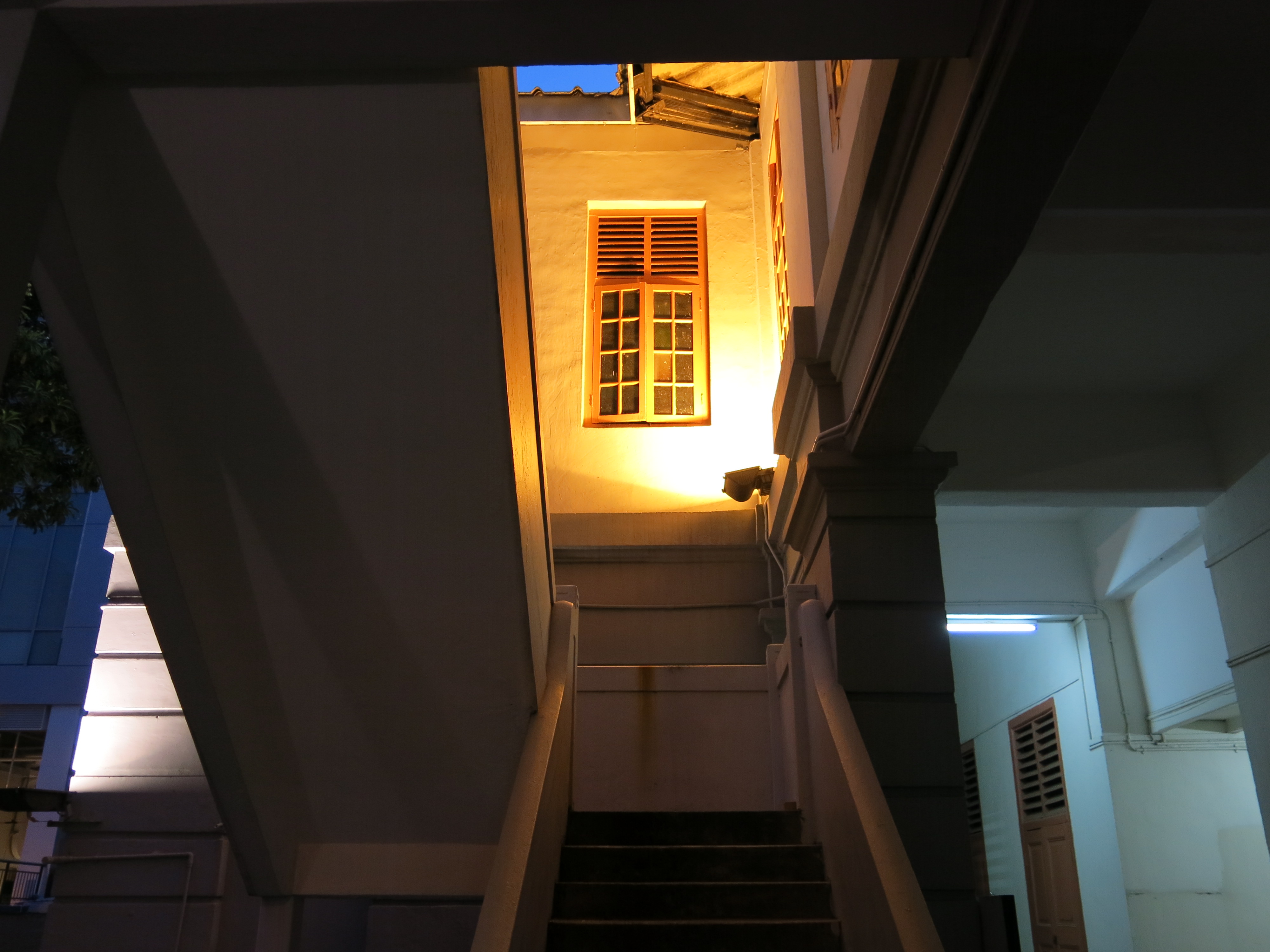
Hallway looking into one of the studios where music classes are held
While the future may be uncertain, there is still a lot to be thankful for. “Mr Bhaskar used to say, ‘Although we didn’t make much money from practising art, we have a lot of good karma.’ We are able to give our students a little bit of knowledge about dance and music, and that itself is a big thing.”
Directory of Stamford Arts Centre
Catch Na Mah at Esplanade Theatre Studio on 16 April, 2pm and 8pm. Please contact Bhaskar’s Arts Academy at 6336 6537 to book your tickets.
n.b. I would like to inform my readers that I am currently helping Checkpoint Theatre to archive one of their upcoming productions. However, I strongly believe that this does not affect the integrity of my critique.
Intrusions Jean Ng & Joavien Ng 31 March 2016 Esplanade Theatre Studio
31 March–2 April 2016
(After Tynan, 2 November 1958)
A studio filled with ephemera. It is scattered all over the place as it is evident it has been in a toss-up of trial and error. Towards the back, a banner reads “Our Dream Show.” Two performers are in the midst of the devising process.
Performer 1 (henceforth P1) is at the mirror making a series of weird faces. Performer 2 (henceforth P2) reacts by laughing. P1 occasionally checks the sound levels of P2, writes in a notebook, takes photos of some of her faces, and continues experimenting in the mirror.
P1: (while writing in her notebook) Ok, so that’s two motifs done.
P2: (laughs a little) I really admire you man. Not only do you have a strong physicality, you have a rubber face; the variety of expressions you can do ah. (P1 takes pictures of some of her own expressions) Eh, you trust me that much?
P1: Yea. But we still have to try them out on others… just to be safe (continues with her experimentation).
P2: Yea, play safe better.
P1: But not too safe, if not our show will be boring. (She writes up her notes and takes a break. She’s clearly exhausted). Oh yea–
P2: What?
P1: What is a good way of linking the motifs together?
P2: Hm… I’m not sure…
P1: Damn. We still need to create more sections…
P2: Well–
P1: Yup?
P2: If the motifs are good then maybe we don’t have to worry too much. We just use the usual link. (P1 is puzzled) Since our work has a post-modern flavour, we link it up by the usual movement as if we are being electrocuted or possessed.
P1: What?
P2: Don’t worry. As long as the motifs of the facial expressions and our subsequent material are amusing enough, I think the audience won’t mind too much about that.
P1: (looks at the decibel meter) I guess so. Ok let’s KIV this issue.
P2: Orh. What about our other materials ah?
P1: Let’s look at our journals. (Goes to a table and takes two dream journals and peruses them with P2).
P2: Eh see here… We both talk about mirrors!
P1: Mirrors… Maybe we mirror each other in something…
P2: But don’t make it exactly alike.
P1: Same same but different… Perhaps like we are in a parallel existence or something. Then we do actions within in a similar theme but we are clearly in different spaces.
P2: Yea! Maybe different climate or we suggest that we exist in different era or culture. Not bad…
P1: Good, good. At the same time we can also confound expectations. Since we are both women right, maybe we randomly do some construction stuff and cook really badly in some parts.
P2: (laughs) Can. But do you think there’s something is missing for this part?
P1: Yea… but I don’t know how to say it.
P2: That’s right!
P1: Huh?
P2: We can’t communicate what it is… lost communication… (tries to come up with related concepts for a bit) Since we can’t just keep doing stuff willy-nilly, we should try to establish communication with each other.
P1: But we fail to do that! That’s great… At least the audience has something to follow. We also can throw in something for fun (looks around and sees a red telephone) like that one! (Both agree and write in their notebooks) Speaking of audience following us ah, maybe we should come up with something on top of us just moving all the time?
P2: Like what? Monologues ah?
P1: Yea… You can do that since you are the literary one.
P2: Eh but you must also help me to think.
P1: If you want audience to follow us… then throw in something about mothers or childhood. Make that one funny ah. Don’t just make it a trip down memory lane. The theatre shouldn’t add to the nostalgia fest.
P2: Ok… But I think we need to mix it up a bit. Not everything should be funny.
P1: Funny is good what. If the audience—and especially the critics—are happier, they might be more forgiving… But you’re also right… If we want serious, then have something that suggests violence but we don’t actually act it out.
P2: Haha… like in a Greek play… Something serious… You ok with rape?
P1: What?
P2: I mean of course no one is ok with rape. I’m talking about adding something about rape inside the show… it could be quite violent. Just checking because some people might be sensitive.
P1: But we don’t act it out right?… Then it’s fine.
P2: Ok cool. Oh yea, how should we frame this whole thing? I mean we have a bit of this and that, but how do we string them together?
P1: We ask questions.
P2: Huh? Why suddenly so profound?
P1: No, we are talking about dreams and fantasy right? We ask questions about it.
P2: Oh like those seemingly paradoxical ones?
P1: Yea. With that we can also use the lights to highlight certain things. That way, we have some sort of structure but we are free to explore.
P2: Dreams are such wonderful sandboxes. You can do anything.
n.b. Out of professional courtesy, I would like to inform my readers that I am currently helping Checkpoint Theatre to archive one of their upcoming productions. However, I strongly believe that this does not affect the integrity of my critique. None of the actors in The Effect are involved in the project I am working on.
The Effect Pangdemonium! 13 March 2016, 3pm Victoria Theatre 25 February–13 March 2016
Audiences and colleagues who have watched The Effect before me rightly pointed out that one of the themes of the play is about the nature and reality of love. However, if we were to look at the bigger picture, the play poses a more fundamental philosophical question: Can the self be reduced to the workings of the brain?
Prebble expounds on this question through two parallel relationships. On one hand, we have Tristan Frey (Linden Furnell) and Connie Hall (Nikki Muller) who are test subjects of the antidepressant drug, RLU37. When they fall in love, questions are raised over whether it is real or is it an effect of the drug.
On the other hand, we have Dr Lorna James (Tan Kheng Hua) and Dr Toby Sealey (Adrian Pang), researchers administering this drug trail. Apart from their professional relationship, this duo once had a turbulent romance. James suffers from depression and Sealey wants to her to take the drug. James is reluctant as, apart from her doubts about its efficacy, she believes that medication does not solve everything.
And it is in the interactions of the couples that lie the greatest merit and demerit of any play that poses philosophical questions. The former is seen in the Frey-Hall romance as the questions arise through the plot and conflicts the couple has.
The latter is seen in the doctors’ relationship as Prebble stages a flat-out debate with both characters expressing opposing arguments. Granted that Prebble does attempt to flesh out a past history between the doctors, the argument could still take place even if they were madly in love with each other. As if the main philosophical question is not complex enough, the doctors also debate about the ethics of marketing drugs.
As for the effect of the acting, the actors are competent but not impressive. Furnell and Muller wonderfully feed off each other’s energy and are completely at ease on stage. However, Muller adopts an accent that, while believable, restricts how she expresses herself. She sounds perpetually excited and there is hardly a modulation in tone. While Tristan Frey is Irish, Furnell makes the wise decision of adopting a very light Irish lilt to play his character. This gives him more space to work with the demands of the scene.
Oddly enough, Tan Kheng Hua and Adrian Pang decided not to adopt an English accent which makes it rather odd given that both actors are more than capable to do so. More importantly, they mar an otherwise good performance by not being able to sustain the energy in the quieter moments. Even when Dr Lorna James unravels, Tan’s portrayal is too inward that I found it difficult to sympathise with her. Instead, it feels like I am observing a curiosity from afar.
While many productions do create multiple physical and psychological spaces within the confines of the same set, the division is not clear enough in this production. For some reason, it feels rather crowded when all four actors are on stage. Furthermore, even when the set is altered to suggest a different space,—such as when the doors of the lab are tilted diagonally outwards to suggest the open windows of an abandoned asylum—Furnell and Muller do not make the effort to create the sense of a new space.
That said, set designer Wai Yin Kwok must be praised for the futuristic and clinical set. This is complemented by Guo Ningru’s sound design of static noises or the humming of the machinery which create an unsettling atmosphere.
If my review were akin to the results of a drug trail, it would be what Dr Lorna James had expected: Some positive effects but these are ultimately inconclusive.
After years of rehearsals in the the nights, the walls of the studio at Stamford Arts Centre will witness the last major production rehearsals by Bhaskar’s Arts Academy (BAA). With this palpable air of nostalgia, BAA thought it apt to stage Na Mah, which is essentially a salute to the space they called their own for more than 25 years.
“We are so at home in this space. But now the final countdown has started. So many creations, so many laughter, tears and sweet memories are embedded in these walls. Soon, all these will be like a forgotten piece of art when its memory is nothing but dust,” shares Santha Bhaskar, Artistic Director of BAA.
Na Mah, which means salutation, is a collection of repertoire items found in the vocabularies of Bharatanatyam and Kathak. It features 10 of BAA’s best Bharatanatyam dancers and our in-house Kathak soloist in demanding and exacting choreographies. All this work asks of you is to appreciate the visual beauty of movement, and the emotive aesthetics of abhinaya. Nothing more—no storyline, no characters, and certainly no complex philosophical concepts. Sometimes all you need is to see, feel, and live the dance.
Na Mah
16 April 2016 (Saturday)
3pm & 7:30pm
Esplanade Theatre Studio
$20 & $25
For more ticketing information, kindly contact BAA at enquiries@bhaskararts.com
Singapore Lyric Opera is dedicating it’s annual Opera Ball this year to its late founding chairman, Mr. Leow Siak Fah. The event will be held at the St. Regis Hotel, John Jacob Ballroom on Friday, 11th March 2016.
This special evening will feature excerpts from operas fondly associated with Mr. Leow – including well-known operas like “O Sole Mio,” “Granada,” and concert favourite “Mattinata“. This year’s exciting line-up includes SLO’s first Honorary Artistic Director, Nancy Yuen, as well as tenor extraordinaires Peter Ong,Melvin Tan and Reuben Lai, accompanied by distinguished local pianist, Rena Phua. The late chairman’s wife herself, Dr Ling Ai Ee, will be the guest pianist whiletheir grand daughter, Caitlyn Tan, will be making a special appearance singing “Never Never Land” from Peter Pan.
Gracing the event will be Guest-of-Honour, SLO’s Patron-In-Chief, Mr. S R Nathan who has been very supportive of SLO’s work and whose presence has been a great source of encouragement for the institution.
Part of the proceeds from the event will contribute to the establishment of the “SLO – Leow Siak Fah Young Artists Programme“, a performance-based training programme to support the artistic development of talented young Singaporean singers, providing opportunities for them to hone their craft and gain experience on the professional stage. In addition, the SLO is initiating the inaugural “SLO – ASEAN Vocal Competition 2016” – a competition open to citizens and permanent residents in the ASEAN regions which will help talent spot singers of all ages in the region, establishing Singapore as a singing hub. The final will take place on the 2nd of October 2016, on our very own little red dot.
For booking information, visit Singapore Lyric Opera’s website.
If one were to peruse the syllabus of a Singapore English-Language Theatre module offered by the National University of Singapore (NUS), it categorises the playwrights into three generations. The publication of Joel Tan: Plays Volume 1 marks the start of the fourth generation.
The whole collection is tinged with a deep sense of ambivalence. Rather than focus on what constitutes Singapore theatre or champion certain issues which were the main concerns of the previous generations, Tan explores what it means to be living in Singapore and dealing with what life throws at you. To aid this exploration, he constantly uses the context of failed or unfulfilled relationships, in subtly different ways, to show the complexity and vulnerability of his characters.
In Family Outing, Joseph plans to come out to his family as a gay man. He gets electrocuted after a freak accident and his boyfriend, Daniel, tells his family the truth a year later. On the surface, this plot appears to be about a family accepting or rejecting the son’s sexual orientation. However, there underlies a certain uneasiness about family relationships and what it means to be a gay man.
After the initial outrage, Joseph’s mother and brother try to reconcile Joseph’s sexual orientation with the Joseph whom they know. Scenes from the past and present intersect one another on stage as they negotiate and come to terms with Joseph’s sexuality. While one’s sexual orientation is a fundamental aspect of one’s identity, does it mean that the Joseph the family knows is less of a person? If so, does one sexual orientation matter more to one’s identity as compared to other areas of one’s life?
Towards the end of the play, there are intimations that Joseph’s mother and brother have a slight inkling about his homosexuality but chose to ignore it due to their deep religious beliefs. This throws a new complexion on the matter as this has got to do with familial relationships and the violence members of family inflict on one another through denial or the supposed desire to protect. This estrangement is further enhanced when we realise that what we are seeing is Joseph’s fantasy which leaves open the possibility that the family might reject him instead.
With this being one of his earliest plays, Tan displays a great deal of sophistication in being able to pack all these into a light-hearted play which is brought out by the brother’s antics and the mother who is slightly prone to histrionics. While Tan manages to balance the moods of the play well, he is a little overambitious with including all these different layers in the play especially—as Tan himself admits— the fact that it is Joseph’s fantasy may not come across clearly.
The ambivalence of being a gay man is also seen in That Daniel but it focuses on a young man fitting into the gay culture. In this deeply personal monodrama, Tan displays his linguistic dexterity in expounding on the pressures of conforming to a certain type and how this might affect one’s relationship with food. This is best encapsulated by the metaphor of noodles as Daniel says:
“We are noodles, we begin life as lumps of human starchiness, sliced by the noodle-cutter of life into pretty shapes, acceptable to the human eye and fit for human consumption, palatable” (271).
The richness of the gastronomical descriptions enhances the poignancy of the play as Daniel realises that he has pursued unrequited love at the expense of a certain happiness that he finds in food. It might be tempting to say that everyone faces a similar pressure to conform, but—as Isherwood’s A Single Man points out—it unfairly whitewashes the experiences of the individual. While this play does not enlighten us about the particularities of the pressures faced by gay men, it compels sympathy and reflection that hopefully precedes conversation.
That said, I wished this play was a wee bit longer. Tan sees this play as an optimistic one because he sees Daniel making a positive change after coming to a certain realisation. However, we only see Daniel coming to terms with his hurt and it stops there. This realisation could have made a positive or negative impact on Daniel which is why there should be a hint of what is to come.
Aside from linguistic versatility, Tan is keen to experiment with form and structure which is clearly seen in Postgrads and People.
The phrase “true-to-life” has been used and abused by critics of all stripes, but this term is most apt for Postgrads. The trajectory of life’s events does not follow a curve of climax and resolution, some conversations are never had, and some relationships remain unfulfilled. More importantly, one does not necessarily have a clear reason for doing something. And that is what confounds a group of housemates who are postgraduate students when one of them decides to drop out of the PHD programme.
While the conversations consist of feel-good reminiscences, private regrets, and banal chatter, there is a mounting sense of resignation and sadness. The atmosphere may be relatively serene, but the conversations appear to be a desperate attempt to forestall the final goodbye. Despite the fact that the play is crafted in a certain way due to the demands of the commission, Tan excels in infusing a certain sensitivity and subtlety to his play and it does not feel that he is consciously working around certain limitations that were placed on him.
The vignettes in People, which are either monologues or duologues, make it the most ambitious play in the whole collection. Tan once again returns to the motif of estranged relationships and see variations of it play out across a cross-section of society. Set in either Singapore or Tokyo, there is a distinctively urban sensibility to it as we see the characters relate to others either across geography, class, or on a spiritual level. Tan’s ear for dialogue is apparent as he captures the milieu that the characters operate in. The litmus test for any playwright with regard to Singaporean dialogue is to balance between Singlish and whatever language the working class character speaks. In the hands of a careless writer, the dialogue makes the character nothing more than a caricature. While Francis the mobile phone seller has certain speech quirks that one—rightly or wrongly—associates with the working class, Tan is careful not to overdo it. Additionally, Tan even experiments with verse in the monologues of Nicholas who decides to leave the priesthood.
Given that Tan allows the director to arrange the vignettes as she pleases, this play merits several re-stagings just to see what can be excavated from the text.
Speaking of estranged relationships, the one in Hotel is the most ugly and toxic. Within a few pages, Tan raises all the ugly implications of economic success through the explosive arguments of the rich couple. What is notable is that Tan resists any form of resolution—the argument at the end of the play is interrupted and will probably occur again. Bearing in mind that Hotel is supposed to be a reimagined history of The Arts House (Singapore’s former parliament house), the play serves as a fitting platform for Tan to rail against the excesses of Singapore. Its brevity also ensures that it does not go overboard.
Mosaic explores another form of emotional violence in our lives—the destruction of physical space, and the memories that go with it, in the name of progress. However, violence is also inflicted upon one’s memories if it is co-opted and turned into some kind of fetish or commercial enterprise. This play thus juxtaposes both forms of violence and expresses a deep sense of ambivalence towards the efficacy and appropriacy of popular causes such as heritage activism.
This is embodied by Sharon, the protagonist who ropes in her boyfriend and tries to organise a demonstration against the authorities tearing down an old playground. She is clearly unable to rally people to her cause and when asked what how she is going about the event, she retorts: “Nothing is going to happen, why must thing always happen? What we’re doing is symbolic […]” (212, original emphasis). Later on, she tells Rong Cheng, a passer-by who lives nearby and used to play in the playground that the “playground is like a tile in the giant mosaic that is the things I care about” (222). However, a mosaic on the whole should form a coherent picture but her specious replies and lack of planning cast doubts on the coherence of her pet causes. The conflict between Sharon and Rong Cheng also raises the question of whether someone can legitimately oppose any governmental re-development projects if she does not have any prior relationship to the place.
Tan’s talents are seen in how, on one level, the characters are symbolic of certain things and their conflicts and interactions becomes a dialectic about activism. On another level, the settings and situations are entirely naturalistic and the characters are not reduced to being mouthpieces for a certain position. At the end, Tan could not help but employ the same motif of a failed relationship to bring up themes of moving on, letting go, and the difficulty of doing so as we often have a complex relationship with the past.
The Way We Go is a reworking of Tan’s second full length play that was written as part of a playwriting module at NUS. In it, he explores what it means to love yourself and another by having two parallel romances; the lesbian relationship between two convent school students (Gillian and Lee-Ying) and that of the school’s principal and a cousin of her colleague (Agatha and Edmund). The former relationship fails due to a difference in temperament and goals while the latter is disrupted by death.
Tan employs counter-directional narratives to allow for the parallel relationships to be shown on stage in an economical way. It also shows Edmund dealing with the hurt and finding his way back to the first moment he saw Agatha. This allows him to find closure and begin again. This play rewards the careful reader as a careless one will only see it as containing snapshots of the lives of the characters and nothing more.
That said, Violet (Edmund’s cousin and Agatha’s colleague) feels like a convenient device for the couple to meet and the two romances could have been a little more inter-connected in some way.
Perhaps, it is due to this early and extended exploration of dealing with love, lost, and moving on that led Tan to re-use the motif of failed relationships over and over again. While there is an effort to use it in various ways, Tan has stretched it to its limits this early in his career.
However, this does not detract from the sensitivity, subtlety, and a strong voice which Tan clearly possesses. In this collection, he resists being didactic and focuses on the individual and sometimes painful story of simply dealing with everyday life. He has also shown that he can use this lens to reflect on wider societal issues.
In the interview that is included in the book, he says he is interested in writing political plays which are rooted in the experience of living in Singapore rather than those which preach to the choir. Judging from his output in this collection, I await the next phase of his writing career with much excitement.
The Emperor’s New Clothes W!ld Rice 21 November 2015 Drama Centre Theatre 10 November–12 December 2015
There is a difficulty in adapting the popular tale by Hans Christian Andersen as a pantomime. It needs to have wonderful costumes, it has to be fun, and—most importantly—it must not be pretentious as the main point of the story is to mock the pretentions of society.
W!ld Rice excels on all counts.
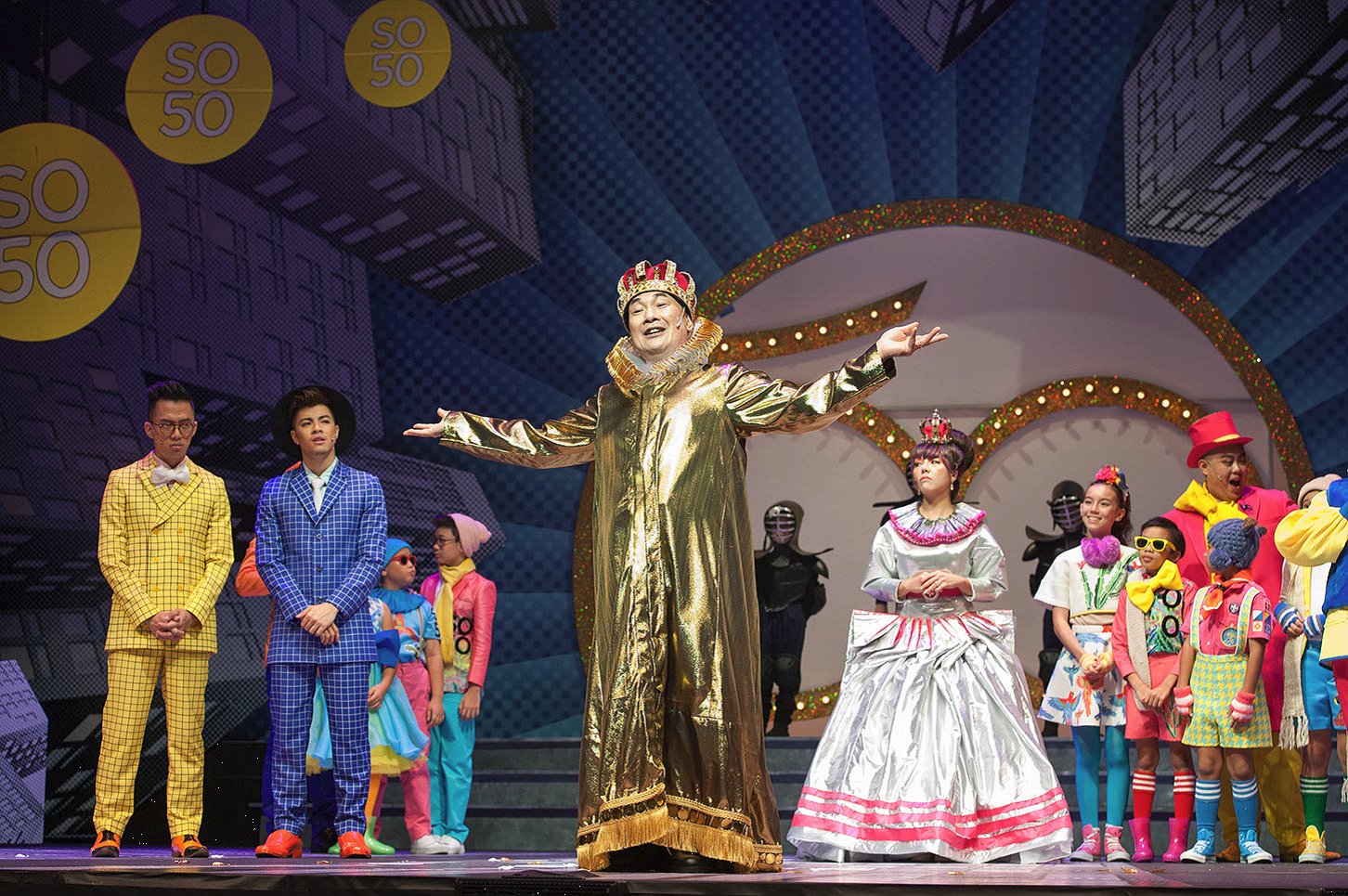
Nathan No Surname (Benjamin Kheng) and Khairul No Surname (Sezairi) are orphans who become tailors. They are commissioned by the ministers in the hopes of getting them to create a wonderful outfit for the vainglorious Emperor Henry Lim Bay Kun (Lim Kay Siu) for free. Khairul eventually convinces Nathan that they should take it as it is a good exposure for their business. They later find out that the Emperor arrests all who take the attention away from his outfit during the National Dress Parade (NDP) and decide to teach the Emperor a lesson with his “new outfit” for the 50th NDP.
Nothing is safe from satire as Joel Tan’s witty script references Lee Kuan Yew, lawsuits against foreign media, incompetency of the ministers, ISA, banning musical instruments during Thaipusam, mediocrity of Mediacorp dramas, SG 50, and absurdity of national day parades.
With Tan’s clever employment of puns, acronyms, and Singlish, the audience experiences a bellyache of laughs throughout the two hours. The greatest merit of this sparkling script is that it does not belabour the various criticisms that it puts across. This makes the play snappy while packing in quite a lot at the same time.
Additionally, its injection of self-deprecating jokes such as mentioning Ivana Heng, the crazy theatre director who designed a rainbow outfit for the Emperor, or the Emperor asking his Minister of Retribution (Andrew Lua) to keep tabs on Sam Willows (a band that Kheng is part of) makes it all the more delicious.
Director Pam Oei pulls out all the stops and makes her cast showcase whatever talent they have or even acquiring new ones just for the show. Most of them sing, dance, and play instruments live on stage.
Benjamin Kheng’s anxious Nathan is a nice contrast to Sezairi’s laidback Khairul. Aside from their singing which they are known for, their dancing is tight and there is a wonderful synergy between them as we can easily believe that they are “brothers from another mother.”
Lim Kay Siu (Emperor Henry Lim) brings out his youthful and vain side as he preens and poses throughout the show. Audrey Luo (Empress Jeanette How) plays the melodramatic caricature of local actress Jeanette Aw to the hilt. This could not come at a worse time as Aw is currently facing criticisms about her inability to sing in Beauty World.
Other notable performances include Siti Khalijah Zainal (Nafisa bte Jasmani, Minister of Finance), Andrew Lua’s (Wong Bok Siu, Minister of Retribution), Benjamin Wong and his counter-tenor vocal range as the aptly named Aplhonsus Kan Sing Low, Andrew Marko as the Thai fashion reviewer, and Candice de Rozario as Arppeggio Chong.
Julian Wong keeps our toes tapping with his catchy tunes that range from joget music to the moving, ballad-like “Open Up” when the tailors and the Empress confront the Emperor. Set designer Eucien Chia adopts the comic book aesthetic by having skyscrapers pointing inwards. The monochromatic set allows costume designers Phisit and Saxit from Tube Gallery to unleash a largely neon palette onto the stage.
All these elements make for a fun, energetic, zany, and hilarious musical that calls on the powers that be to reflect on their style of governance and perhaps renew their commitment to serving the people.
With Singapore celebrating her Jubilee and witnessing a heated election, I could not think of a more befitting production to end the year. If only we could nudge our ministers into the theatre.













 Isaac Tan