“If there is a subgenre of writing Singapore is becoming alarmingly good in, it is the literature of nostalgia.”
While thatcommentby Dr Gwee Li Sui was referring toLast Train from Tanjong Pagar, it is arguably an accurate description of James Suresh’s latest book.
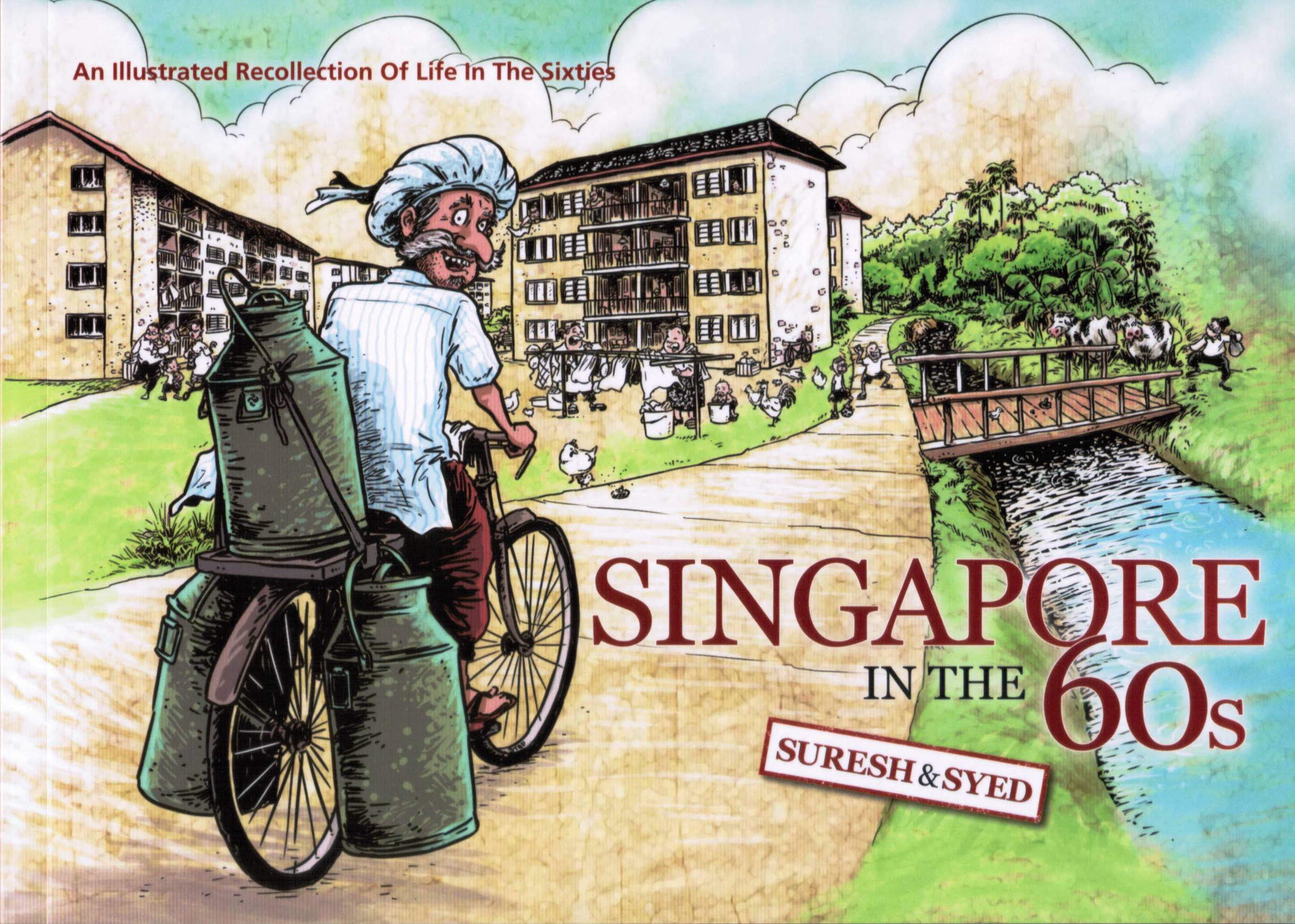
From the sights and sounds of his childhood in Queenstown to descriptions of trades and public amenities available, Singapore in the 60s serves as a comprehensive introduction to what life was like back then. The choice of adopting a conversational style of writing makes the book accessible and engaging—it feels as if one is brought around the neighbourhood by a jolly uncle.
The combination of general facts and personal anecdotes shows why such personal recollections complement official history. It reveals how certain events affected people involved who, at that point in time, do not have complete knowledge of what was happening.
While I may be able to rattle off a couple of reasons why Singapore merged with Malaya, to learn that children were provided with a book to familiarise themselves with the flora and fauna of Malaysia is incredibly illuminating. It makes the historical event much more vivid and I am pleased that this book will be used as a teaching resource in schools.
That said, this book would have benefited from tighter editing. A couple of the sentences are too long and should broken up into shorter sentences. In other cases, the use of punctuation will make it a smoother read.
Illustration: Syed Ismail (2015)
Given that this is an illustrated book, the contributions of Syed Ismail must not be overlooked. While his humorous depictions undoubtedly enhances the reader’s enjoyment, his ability to capture the architectural features (see the cover of the book) and a sense of space must be commended.
Additionally, it is clear that Ismail also took the pains to tell his own story with his pictures. Rather than offer a general depiction of Suresh’s descriptions, all his figures are given a unique personality as they react to a certain situation quite differently (see image above). This creates visual interest and readers, especially the older ones, will be rewarded if they took the time to appreciate the illustrations.
Regardless ofwhether there is a future in nostalgia, Singapore in the 60s promises to be an enjoyable read for the old timers and an educational one for younger readers aged nine and up.
Hello and welcome to Isaac Encounters! Today, I’ll be encountering A Single Man by Christopher Isherwood. I have to admit that I picked up the book after watching the beautiful film version by Tom Ford starring Colin Firth as George. However, as there was quite a gap between watching the film and reading the book, I will only be reviewing the book today.
A Single Man follows a day in the life of George, an English professor, after he found out that his partner, Jim, was killed in an accident. I hesitate to say “a day in the life of” because rather than giving it a full-blown naturalist treatment, Isherwood presents us with a portrait of grief in three facets. George has to deal with everyday happenings, his friend, and his student with memories of Jim looming in the background.
From the first paragraph, one understands why Ford would be compelled to make a film based on the book. Isherwood’s ability to describe a mundane activity—such as George waking up—in such a refreshing way and at a micro level is akin to a camera close-up on a part of the actor’s body. Isherwood’s dexterity in language treats us to writing that is humorous, poignant, and enlightening.
This is complemented by telling it through a third-person perspective which allows us to see the juxtaposition between his inner and outer reality. This mind-body dualism indicates the profound disconnect George has with his life and he copes by merely performing what is expected of him. The thing about grief or depression is that the most difficult thing to handle is not the surge of feelings but the mundane.
The zipping in and out between George’s thoughts and how others react to him sheds light on his sardonic interpretation of things. From feeling that he might as well be a talking head on a tray while lecturing to observing a quarrelsome couple who would die in their “beer-stained bed,” he keeps the happenings of the world at arm’s length. If they are distant, he does not need to deal with them.
This sense of melancholy is amplified by his tendency to indulge in fantasy fuelled by his misanthropy. He imagines punishing everyone in various ways for being part of the hetero-normative culture or being straight-out homophobic. In his anger for what happened, he blames them for causing Jim’s death. And the times that he is alive—the sexual or human longing that he experiences—makes him painfully aware of Jim’s absence which makes it incredibly heart-wrenching.
Of all the interactions George has, the one with his student, Kenny has to be the most interesting. The relationship is of a teacher-student, father-son, and two men in a bar all rolled into one. Kenny represents what George has just lost and a vicarious second chance in life. Isherwood balances ambiguity with tenderness and beautifully explores love, lost and everything in between.
It is easy to sum up this novel as a man grieving about the lost of a loved one. However, it is important that we see it as a gay man grieving for his partner. The openness in the treatment of George’s sexuality has led many critics to tout this novel as laying the foundations for gay liberation in literature.
However, critics like Octavio Gonzalez disagree and argue that there is an ascetic element of self-abnegation in George. By doing so, he offers an alternative to the identity politics of being a synecdoche for gay liberation. I am sympathetic to this view as there is more evidence in the text to support this stand.
Yet, one should also be careful not to read too much into it because the detachment of George could very well be part of a private grieving process. If you’re interested in reading about the debate, I’ve left a citation in the description below.
Thank you for joining me on this encounter. If you’ve read the book or have watched the movie, tell me what you thought about it. If you like what I’m doing, please subscribe and tell your friends. With that, till the next book.
References
Gonzalez, Octavio R. “Isherwood’s Impersonality: Ascetic Self-Divestiture and Queer Relationality in A Single Man.” MFS Modern Fiction Studies 59.4 (Winter 2013): 758-89. Print.
And just like that, one of our cultural institutions in its own right has decided tocall it a day.
The theatre and dance arm ofThe Flying Inkpothas been consistently reviewing and assessing a large section of the arts scene for the past 19 years. In its own quiet way, it amassed a decent following and stands as an alternative source to our newspaper critics and a whole crop of glossy lifestyle websites of more recent vintage. The most unfortunate thing is that only those invested in the arts scene will understand the gravity of this loss.
While Corrie Tan (The Straits Times, Life!), Mayo Martin (Today), and Helmi Yusof (Business Times) will undoubtedly continue their wonderful work, their professional commitments mean that they will not be at the forefront of theatre criticism. One must understand that they are journalist-critics—journalists first, critics second. The focus of the newspapers probably require them to prioritise industry stories over the reviews. To compound the problem, they have to shoulder the lion’s share of the arts beat as they have few colleagues working with them.
As such, their role in criticism is limited to being active writers and providing occasional feedback during industry consultations conducted by theNational Arts Council(NAC). They neither have the time nor energy to promote the standing of critics, spark thoughtful discussions about the arts scene (beyond the allotted column inches), and improve the quality of writing (apart from their own).
That is where The Flying Inkpot comes in and its departure has left a gaping hole in the ecosystem.
I have been reading Inkpot‘s reviews on and off for years. It started out as getting a second opinion on whether a particular show is good or not. However, having developed a strong interest in theatre criticism over the past two years (hence this blog), The Flying Inkpot has become a benchmark for me. My reviews have to be as good, if not better than what Inkpot puts out. Additionally, it has been an interesting experience to see if the writers there agree with my opinions of a particular show that I have reviewed. Behind the computer screen, I have occasionally let out exclamations of, “Hear! Hear! What’s with all the hype by people on Facebook?” or “Are you serious!? Did you even watch the show?” Indeed, I feel an odd sense of camaraderie just by yelling at my computer screen after reading the reviews.
As the performing arts scene show gratitude for services rendered, a pressing question looms: What is next for theatre criticism? Here are some initial ideas.
Taking Stock
For starters, before we decide our next step, we have to lay the groundwork for current and future critics. In acknowledging the value of the reviews for researchers, practitioners, and aficionados, the editors of Inkpot—Kenneth Kwok and Matthew Lyon—have decided to make the archive available to all even after the website has shut down. The mainstream media should do the same.
Rather than subject interested individuals to squinting as they scroll through microfilms or settle forheavily watermarked copies online, the NAC should partner with Singapore Press Holdings (SPH) and Esplanade Library to start an online portal which contain all the reviews by our newspaper critics past and present.
NAC should also commission a book which will be a general survey of the history of theatre criticism in Singapore. Drawing from the newspapers and The Flying Inkpot, it will feature some key reviews of various productions over the years. Perhaps it can include an introduction at the start of each section which analyses writing styles of reviewers or interesting insights about theatre history that can be gleaned from these reviews.
If there is enough academic and artistic interest, an academic book can be published which contains various essays about theatre criticism. They can range from in-depth analyses of particular critics to how theatre criticism fits in our local arts ecosystem. Practitioners could contribute essays about their views on critics or how they made use of past reviews to inform their research while creating a new production.
Looking Ahead
In the best of all possible worlds, we should work towards having full-fledged critics or at least actor/dancer-critics (some feel that there will be a conflict of interest but I disagree—another post for another day) a reality. Criticism is not just about watching something and voicing one’s opinion. A critic should be as knowledgeable about the performing arts as possible. Ideally, he or she should be reading up on latest trends and research in the day before rushing off to review a show at night. It is a proper career and not something you do when you have some time to spare in the evenings.
However, even if all relevant parties were to work together on this (and that is a big if), it would take at least 10–15 years to achieve this. What can we do now?
Well, a critic is nothing without readers. Apart fromThe Art of Reviewtalk organised by the Esplanade Library this year, there was no forum on theatre criticism in recent memory at all. I would like to see discussions comprising both practitioners and critics on the same panel and get views from both sides of the curtain. A public talk will give the audience a chance to weigh in on what they think the role of criticism. It would also benefit the critics as, speaking from my own experience, they hardly get any feedback from their readers and the conversation borders on being insular.
Of course, one might point out that it is a lovely exercise of preaching to the choir. This might be true in some respects but a realistic goal of such public outreach is to encourage those who might be willing to engage at a deeper level rather than “convert” the uninterested. Besides, even within the arts scene—and I will be really pleased if I am wrong—the engagement seems to be between the reviewer and the reviewed; the choir needs some encouragement to expand its repertoire and sing louder.
As for more “concrete” measures, the easiest route to take is to ask all the writers to start their own blogs or, for those who are interested in journalism as well, joinThe Muse(a rather good arts website). Alternatively, they could join the glossy lifestyle websites and improve the quality of criticism there (I shall not bore you with a list of their inadequacies).
While that is all well and good, a central website is still necessary. If everyone does their own thing, who does a theatre company choose to offer press tickets to? Will they shun critics whose tastes and proclivities do not incline towards the genre or dramaturgy that the company is known for? We cannot all flood The Muse and there is something to Inkpot resolutely standing as an alternative—not necessarily against—to the soundbites galore offered by glossy websites that seem to be spawning exponentially.
Matthew Lyon is on to something when he mentionedthat if Inkpot were to be revived in any way, shape, or form, it will have to expand its scope to include videos, podcasts, and feature articles. However, it would take a generous funding model to sustain this. On top of that, it would require a full-time team which would not be possible for him and fellow editor, Kenneth Kwok, to be in charge of. He does not think corporate sponsorship or advertising might be a good idea as the site should not be beholden to commercial interests and that most companies do not want to be associated with an activity that is generally (and most erroneously) seen as being nasty to people.
I sympathise and somewhat agree with Lyon. But there are a lot of things going on here. In the beginning, this website will still have to be on a voluntary basis for a while but it can steadily progress to a model in which contributors are paid a nominal fee.
While it might probably be true that big corporate sponsors do not want to be associated with the website due to the negative perceptions of what critics do, it might not be true for smaller establishments. Perhaps one should woo restaurants and bars that are near performing venues for advertisements. Why would it matter to them if it is a eulogistic or slamming review as long as the readers—who form a reasonable section of the theatre-going public—glance at their advertisements and learn about their promotions? The only clash of interests here are companies who serve as official caterers or are involved with certain promotional tie-ups with a particular theatre company. Even with them off the list, there are still many companies available.
Aside from that, why do we have to limit ourselves to direct funding/ advertising/ sponsorship? Online advertising revenue has progressed quite a bit. There are “indirect” advertising revenue streams such as Google Adsense in which the website can earn some revenue based on the number of unique views or clicks on the advertisements displayed. If the website starts a YouTube channel, the videos can also be monetised. Hopefully, after a few years, the revenues will be substantial enough to remunerate the contributors.
Speaking of YouTube, the sky is the limit in terms of content. It could be a panel talk-show setting (seeTheatre Talk) in which various critics (including those from the newspapers) come together and talk about the shows they have seen, predictions for the Life! Theatre Awards, or just argue with each other over what they have written. It could also be two enthusiastic presenters just bantering away and occasionally inviting artists in for a chat. The setting of the latter format could be in a cafe and perhaps the management could give some advertising dollars too.
Finally, there is absolutely no shame in asking people for donations. In fact, theatre companies could sponsor a couple of tickets and donors who donate a certain amount will be entered into a lucky draw to win them.
Whatever it is, considered and insightful criticism must be kept alive and we are poorer for it if it dies. Adieu Inkpot, it has been a good run and—fingers crossed—we will meet again someday.
“It’s ok if you don’t understand a single word,” assures Salonga before a medley of Filipino songs, “we as a people wear our hearts on our sleeves.” With a programme comprising pop songs, jazz, Disney, and show tunes, there is undoubtedly a lot of heart in her renditions.
From the opening jazz number, Feelin’ Good, she makes her approach to the songs clear. Rather than taking this opportunity to pull out all the stops and belt it out in its full jazzy glory, she decides to sing it straight—no frills, just music.
She lets the effort and ingenuity of the composers, lyricists, and the arranger (who happens to be her brother, Gerard Salonga) do the talking. And she backs them up by displaying an exquisite sense of control and technique.
She moves across various registers effortlessly—her high notes are not shrill but really powerful while every word can be heard when she sings in the lower register. She sustains her long notes very well while colouring it with a gorgeous vibrato. With such skill, who needs to engage in vocal gymnastics to prove a point?
Despite her straightforward approach, she does not lack in showmanship. While the concert hall has seen grand recitals, Salonga’s candour and personality turns the sizeable space into an intimate one. Despite her fame, she is open with anecdotes from her personal life and has no qualms about teasing her brother. No shout-out from the audience is left unanswered. In fact, she encourages it and one lucky chap, Kim, got to be Aladdin for the night in A Whole New World.
One of the highlights has got to be songs from Les Misérables. Having played Eponine and Fantine, singing One My Own or I Dreamed a Dream would be a natural choice. Being a crowd-pleaser, she sings a medley of both songs. Being familiar with the songs, I thought it would be quite difficult to merge them without an abrupt break. However, that is where the brilliance of music director Gerard Salonga comes in as the transition felt natural and well chosen.
Aside from pleasing the crowd, I realise that putting both songs together should be a natural choice. Both characters are roughly about the same age when they sing their respective songs and they are about lost loves. While Fantine is utterly dejected by the end of her song, both girls still dream about having their men by their side.
It is such a beautiful coincidence that my first introduction to Salonga is through the 10th Anniversary concert DVD and now, the Salongas—both Lea and Gerard—have given me a renewed appreciation of the musical.
Despite listening to a slew of crowd favourites, what really got to me was Mr Bojangles. Salonga prefaces the song by sharing an anecdote about young Robin Williams being a mime at Central Park, New York. Days after his death, his friend who was his fellow mime then wrote a touching tribute. While I was hoping that she gave her own personal anecdote of Williams, her soulful rendition of the song really got me in knots. All I could think of was: please Mr Bojangles, just one more dance?
Clearly, Salonga’s artistry does not just lie in her singing but also in the way she plans her programme and introduces them.
The lady sitting beside me, who unfortunately decides to sing along with Salonga for a quarter of the programme, remarks that Salonga is mesmerising. While I cannot agree with her singing, I wholeheartedly concur with her opinion.
This semester, I took a module on Singapore English-Language Theatre. It made me realise how rich our local theatre history is and how one generation of playwrights builds on the previous generation. As part of our course assessment, we are required to put together a hypothetical anthology and write a critical introduction to said anthology. The following is an excerpt from the introduction which offers a brief analysis of all the plays to be included in the anthology based on the theme of invisibility.
If you are interested in reading the plays, click on the links to either purchase or borrow (when they are not freely available) the collections which feature the particular play.
♦♦♦
This collection starts with Elangovan’sTalaq. It is arguably the most controversial play of the collection as it was perceived to be against Islamic principles which offended the Indian Muslim community (Hamilton 1999). This resulted in the English version being banned in 2000. Talaq explores the plight of Muslim brides from India being married off to Indian Muslim husbands in Singapore. They are often ill-treated and Islamic precepts are intentionally misinterpreted as a justification for their subjugation. The use of monodrama thus empowers the wives as we only hear their perspective and anguish which is normally silenced in the public sphere. Having the wife voicing the comments made by her husband and her community gives one a vivid impression of how she is personally affected by it. Cyril Wong (2014) also notes that it evokes a sense of schizophrenia and that “[i]n a world gone insane, patriarchy is the unscalable wall that the victimised woman in the monologue rams and rails against, and predictably to no avail.” In a society that is so afraid to discuss anything pertaining to religion, Talaq boldly breaks the silence and insists we take a look at what is happening to Indian Muslim women.
Apart from its historical importance of it being used as incriminating evidence against members of Third Stage,Esperanzaby Wong Souk Yee and Tay Hong Seng, presents the struggle of maids trying to earn a living in Singapore (Li 2012). It is unfortunate that, despite a rise in advocacy of their rights, some of the scenes in the play still ring true almost 30 years on. The employment of naturalism allows the playwrights to present situations that mirror the treatment of maids in some households. This affords easy identification with the plight of the maids which is evident from the sympathetic and positive press reviews of the performance (Speeden and Sampang 1986). Yet, Esperanza is controversial in other ways. It raises the question of why there was a clamp down on this rather tame play with modest ambitions and whether the maid character is truly pitiable considering that she did certain things out of revenge. While there are no easy answers, this play should not be dismissed simply because it was mired in some political controversy.
Russell Heng’sLest The Demons Get to Meis one of the few plays that depicts the experience of a transsexual in the face of societal pressures and expectations. While it is also a monodrama, Heng adds an additional layer by including the voices of other characters but they are only heard off-stage. This gives a sense of the public intruding on the private—familial and societal demands encroaching on the privacy of Kim Choon (KC) as she has to decide whether to capitulate and conduct her father’s funeral rites as the only son, or to secretly pay her respects as the disgraced son-turned-daughter. To make matters worse, the impending closure of Bugis Street also threatens the collective memory of her and other transsexuals. Should she hold on to the identity that she identifies with or should she conform to that which society puts on her? Unlike other plays which present issues about transsexuals within a socio-political framework as camp is used to subvert societal norms, Heng’s poignant piece is firmly grounded in a personal struggle. The title is most fitting for as a child, KC wears an earring to ward off traditional supernatural demons. But as an adult, she must decide if she wants to don her earrings to reclaim her identity and fend against demons of tradition.
While the prevalence of dementia is generally known, it is rarely talked about. Haresh Sharma’sDon’t Forget To Remember Mewas commissioned by the Alzheimer’s Association of Singapore. Such a collaboration shows that organisations can tap into the potential of theatre to inform without resorting to a skit filled with clichés and awkward writing. This lyrical piece juxtaposes the reality of the dementia patient to that of the caregiver and it depicts the struggles that both face. Getting the mother and daughter to converse in different languages not only marks the generation gap but it also emphasises the difference between the two realities as both try to reach out to the other. Kenneth, the day care centre manager, delivers the medical information but without sounding as if he is reciting a medical brochure. The ability to write such a heartfelt piece while including the need of educating the audience about taking care of dementia patients is a strong testament to Sharma’s skill as a playwright. It is unfortunate that this play had a short run before touring to selected communities for it deserves more attention not only for the message, but for the writing as well.
In terms of technique, Alfian Sa’at’sAsian Boys Vol. 3: Happy Endings can be said to be the most complicated of this collection. Similar to Asian Boys Vol. 1, this play has a strong inter-textual element in which Johann S. Lee’s Peculiar Chris (1992) lies at the heart of the play. The play revolves around Joe who sets out to write a novel called Peculiar Chris. In the process of crafting his novel, his Muse and the characters in the story will question his authorial choices and the audience gets to see the storyline of the novel being enacted. Based on this simple premise which is enhanced by meta-theatrical (the actor playing Joe will play Chris) and meta-narrative (the Muse and characters asking him whether the plot should be that way) devices, Alfian Sa’at presents us with a typology of gay men and some of them will be based on stereotypes that have been perpetuated in a hetero-normative society. We are thus compelled to examine our own perceptions, especially if we are heterosexual, of the gay community. This is emphasised further by the characters discriminating among themselves or arguing over whether they should agitate for change or be content with the limited freedoms that they have. Whatever opinion one holds, Happy Endings makes you recognise that the gay community is not homogeneous and perhaps convince you to get to know the individuals better.
♦♦♦
All the plays in this anthology have received previous publication. The details are as follows:
Elangovan. “Talaq.” The Good, The Bad, And The Ugly: Three Banned Plays. Singapore: Math Paper Press, 2014. 13-53. Print.
Heng, Russell. “Lest The Demons Get To Me.” Fat Virgins, Fast Cars and Asian Values. Singapore: Times International, 1993. 28-53. Print.
Sa’at, Alfian. “Asian Boys Vol. 3: Happy Endings.” Collected Plays Two: The Asian Boys Trilogy. Singapore: Ethos Books, 2010. 191-272. Print
Sharma, Haresh. “Don’t Forget To Remember Me.” Don’t Forget To Remember Me. Singapore: Necessary Stage, 2013. 124-146. Print
Wong, Souk Yee, and Tay, Hong Seng. “Esperenza.” 5 Plays from Third Stage: A Collection of Five Singaporean Plays. Ed. Anne Lim and Suan Tze Chuan. Third Stage, 2004. 100-129. Print.
I, Carmen (Yo, Carmen) María Pagés Compañía 17 October 2014 Esplanade Theatre 17-18 October 2014
To declare one’s identity, one may choose to stomp the ground and yell out who you are. But with wisdom and self-confidence, María Pagés chooses to gracefully present what it means to be a woman and embrace its humanity in all its manifestations.
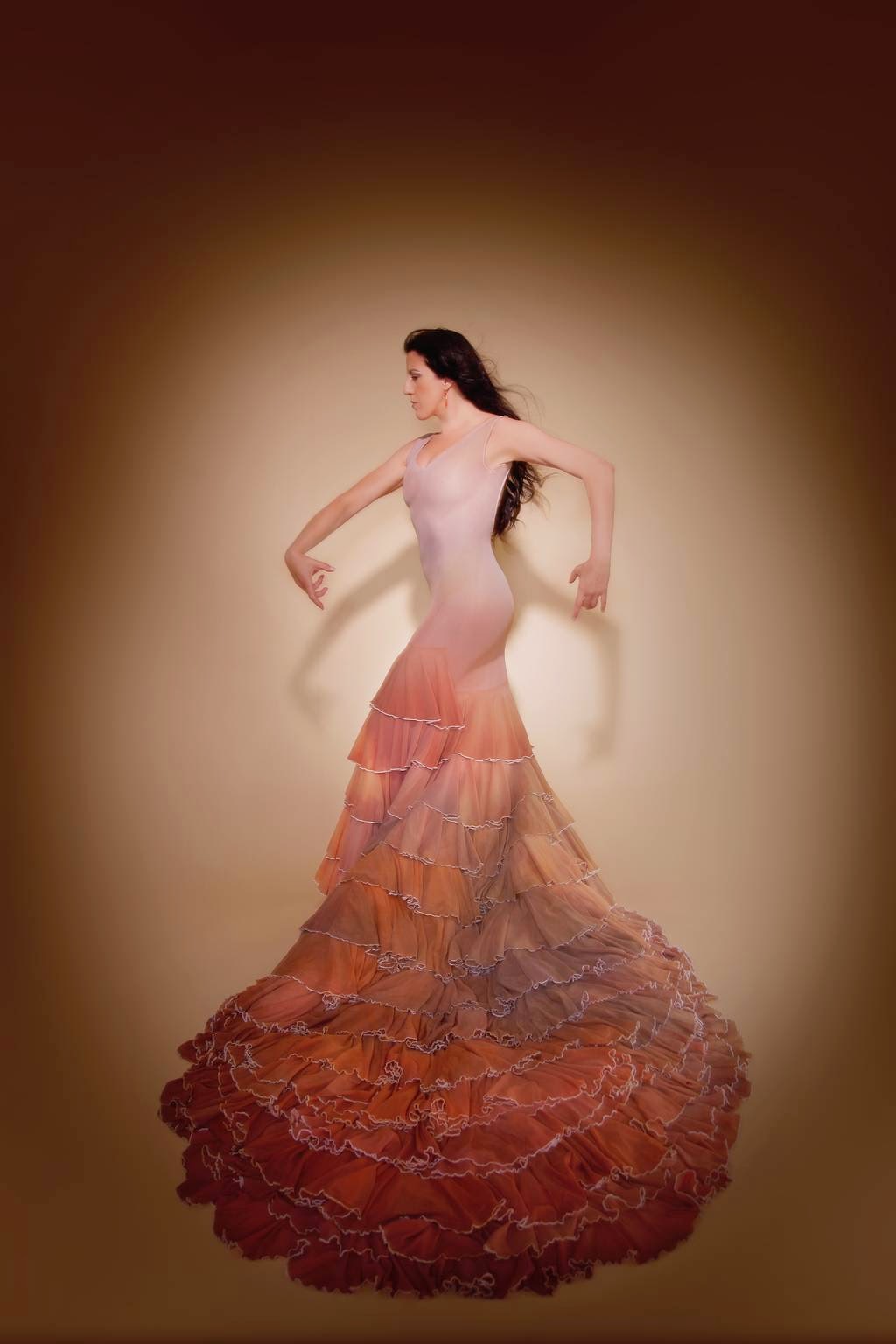
I, Carmen is a lush blend of music, dance, poetry, and tongue-in-cheek complaints. Rather than negating all that is not, Pagés offers a positive and soulful expression of womanhood. By incorporating the meditative potential of contemporary dance, her choreography ranges from a quiet but profound contemplation to one of strength and passion. I realised that half of her choreography consists of basic steps that any flamenco student would be familiar with. It is very easy to dismiss such steps but to execute it beautifully, as her dancers have done, is no mean feat.
Beauty in simplicity is definitely the order of the day as Pagés uses artistry as her needle to weave beauty into the quotidian. I was surprised to see a scene of all the dancers were doing housework which can be read as a re-establishment of traditional gender roles. However, she turned it into a celebration of the everyday by taking all the rags and tying them up to form a manton (shawl).
Yet, life has its moments of sadness and vulnerability too. That is where Pagés shines the most. Ever hand movement, every crinkle in her face, and every turn is a process of digging deep and expressing the most moving of emotions. Even in stillness, as she examines herself in the mirror and donning the height of traditional Spanish fashion only to take it off again, one remains transfixed. I cannot help but notice two sides of her; the one in the flesh and the one in the mirror.
I would do this show an injustice without mentioning that it achieved something rare in dance: incorporating poems as another layer of the dance without privileging the latter. A sound recording of women reading works by female poets in the original languages was played as the dancers danced to it. Here, Pagés displays a rare sensitivity in respecting the text. The rhythms of the poem was incorporated as the driving beat of the dance and the stresses of the words replaces the palmas (hand clapping) that usually accompany the dance. Though it must be said that the surtitles are slightly distracting.
Finally, due credit must be paid to the production elements. As a response to Bizet’s Carmen, most of the music was an adaptation of the original score to flamenco guitar. A great deal of thoughtfulness went into the arrangement as the frenzy during the climaxes of the original score is re-expressed into a sense of quiet joy. Those with a keen ear would be in for small treats as the musicians occasionally includes motifs such as the chime of a clock tower before the housewives scene to represent the passing of time.
While Pagés’s costume designs seemed simple enough with bold lines running across a skin coloured dress, the wonderful injection of light often creates the illusion of the dancers wearing different costumes. In one number, the reddish-brown wash from the side booms mixed with the bold lines on the dress gave me the impression that the dancers were wearing a different dress with two colour blocks. I was pleasantly surprised that they were wearing the same dress as the lights changed for the next number. Clearly, artistry does not begin and end with the dancing in this production.
It is worth noting that María Pagés started her career with Antonio Gades who, in his time, created the flamenco version of Carmenthat is still based strongly on Bizet’s opera and all the loaded implications that come with it. With I, Carmen, Spain can truly say that she has reclaimed Carmen for herself.
Hello and welcome to Isaac Encounters! Today I’ll be encountering Beyond The Village Gate by Mei Ching Tan, published by Ethos Books.
When I was on my usual visit to the bookshop, the cover of this book caught my eye and I thought it was a new novel by a local writer. I was surprised to find out that this novel was awarded the commendation award in the 1992 Singapore Literature Prize and was first published in 1994. The copy I have is a recent reprint under the Ethos Evergreen series. Considering that it received some attention when it first came out and a publisher would take the risk of reprinting it as an evergreen title, I decided to give it a shot and was rewarded in a few ways.
The story is set in a fictional village in China and revolves around an orphan, Shi Ying (which translates as Lost Child) who was abandoned as a baby, found by a villager, and was given to a family of fisherfolk. Growing up, she has always felt distant from her adoptive family and wonders who her biological parents are. An incident with a village outcast, who was pregnant out of wedlock, led Shi Ying to form a bond with her. This interaction sparked off her journey in search of her identity.
The novel excels in dealing with the theme of escape in a nuanced manner while telling the story through the child’s perspective. To give you a sense of the effort and sensitivity that goes into developing this theme, here are a few things that really struck me.
Names play a big role in the book. We can easily understand why the protagonist is named 失婴 shī yīng (“Lost Child”). But the name is also a pun on something else that symbolises freedom and escape. As Tan chooses to disclose this intended pun towards the end, you’ll have to read the book to find out.
Another pun, which I’m unsure if Tan intended it or not, is 适应 shì yìng (getting used to something). The conflicts between these puns encapsulate the main thrust of the plot beautifully. It is because she’s not used to her situation and feels isolated that she dreams of escape. Names come into play yet again when she asks her friend to give her a new name; a new identity.
One of the key features of the story is how myths and legends make up the cultural fabric of society. Shi Ying is very taken with such stories because her own origin is a legend which keeps changing every time it’s retold. Her unknown origin gives her the possibility of rewriting it and determining how her future will unfold.
They also capture Shi Ying’s child-like wonderment which gives the novel hints of magical realism. Whenever she’s out in the fields working or running away, the lines between reality and fantasy are often blurred. While we may disregard it as childish hopes and fears, that is the reality of her experience. Tan did well to maintain that and not let the adults correct that or offer the “truth” as such.
Tan cleverly uses myths and legends to give Shi Ying complexity as well. It presents her desire for escape not simply as running away or waiting for her parents to take her away. Escape can also be a form of transcendence. Shi Ying often wish that the wind would take her away or she could ride on the back of a wild creature.
As with myths and legends, the supernatural and death loom in the background. Death can also be a form of transcendence as Shi Ying would even welcome it if it provided her an avenue of escape. This reveals the extent of her desire to be somewhere else and someone else. One should not paint it with a broad stroke and view it as depression or having suicidal thoughts.
I love how Xiao Ling, the outcast of the village who is pregnant out of wedlock, complements Shi Ying. Her tragic situation is a counterpoint to that of Shi Ying as she has to deal with her child while Shi Ying wonders about her biological parents and deals with her adopted ones. The strange bond that both characters form allows Tan to showcase her sensitivity of language as she develops certain metaphors throughout the whole novel to great effect. I shan’t cite any examples now for it’ll give away too much of the plot.
Speaking of other characters, I can see why most of them are less developed. This is how Shi Ying views them which explain her loneliness and isolation. The only exception was when she had to take care of her father and she bonded with him when he talked about his love for his wife. It is unfortunate that it was only a chapter long as I often wondered why the couple agreed to adopt her in the first place. Having extra help on the farm is hardly a strong incentive as compared to the large responsibility one has to shoulder to bring up a child. I sometimes wished Tan could leave a couple of hints for the readers without Shi Ying knowing. I would definitely enjoy this novel even more if it were a couple of chapters longer.
That said, I’m surprised how Beyond The Village Gate has so little mention and I would have missed it had it not been the chanced encounter at the bookstore. To end this review, I shall read the last paragraph of the first chapter just to give you a taste of all the points I’ve mentioned thus far. This paragraph really sets the stage for the novel and it’s worth noting that this is not even the best passage.
The Untitled Funeral Play by Luke Vijay Somasundram
This is a comedy of errors surrounding a family that consists of an Indian husband and a Chinese wife. Hilarity ensues when the undertaker is late and the husband’s uncle and the wife’s mother arrive unannounced to help with the funeral arrangement.
This play criticises bureaucracy and how inflexible it is. While one may see the influence drawn from Kuo Pao Kun’s The Coffin is Too Big for the Hole, Somasundram certainly has his own voice that makes this play absolutely hilarious. I was literally laughing out loud, as I was reading his play in my room, to the point of squawking. Yes, squawking.
Aside from criticising bureaucracy, this play stands out by exploring a diverse range of issues such as interracial marriage, negotiation between the races, and what death means to the living. These themes are well placed in the play and it doesn’t feel like that playwright is anxious to discuss everything that interests him at one go.
Finally, as a testament to the skill of his writing, the play does not merely start from being somewhat funny before escalating the humour. Instead, it actually starts on a slightly tense and poignant note before transiting to the funny bits. The transition is not rushed and it feels like a natural progression.
This play is certainly refreshing as most plays that comment on social issues are often serious and morose. One hopes that the playwright continues honing his craft and puts his stamp of comedy on the Singapore stage.
For Better Or For Worse by Faith Ng
For Better Or For Worse by Faith Ng was nominated for best script at the Life! Theatre Awards and it’s not difficult to see why. This play depicts the long marriage between Gerald and Swen; warts and all. It is structured with alternating scenes between the couple as they are now and when they were young. Ng’s ability to portray the differences between a young, hopeful love as compared to one with years of emotional baggage shows Ng to be a sensitive and perceptive writer.
The choice to play with absences by making all the other characters invisible allows us to hone in on the marriage of Gerald and Swen. If you remove everyone and everything that one must deal with when one is married, what does marriage; this relationship between two people mean?
Perhaps the greatest merit of the play is that it does not offer any easy resolution. Yet, the readers are taken on a journey as we experience all the joys, pains, laughter, and sorrows that comes with life. We are made to dwell in a shared humanity.
The only bone to pick with this play is that the level of colloquialism in the dialogue seems to be overdone. Given that Gerald has a diploma and Swen studied at a very good school, they are generally better than average in terms of education for their generation. That said, I am open to the fact that it might not sound so jarring when spoken considering that the theatre reviews did not raise this issue.
Maggie And Milly And Molly And May by Leonard Augustine Choo
Three gay men in their 30s and one gay teenager, for their own individual reasons, decide to throw themselves off a cliff. Interestingly, all of them chose the same cliff as they each arrive at different times only to find that someone is already there. They bicker, taunt, challenge, and justify why they should commit suicide. In this morbid situation, they form an unlikely bond.
What makes this play a good read is the subtlety in exploring issues about homosexuality. Gay stereotypes and tropes are weapons used by the characters to annoy and confront each other which make for great comedy. Yet underneath the comic exterior, the conflicts among the characters disclose personal difficulties they face as gay men in society.
The choice for the slow reveal captured my attention as I was eager to find out what drove them to suicide. Choo certainly struck a right balance between entertainment and mystery which makes for an intriguing and thought-provoking piece.
While the gay men are not related by blood, the bond that they form is just like one regardless of whether they would like to admit it or not.
Part 2
[Transcript]
#UnicornMoment by Oon Shu An
I had immense pleasure reading #UnicornMoment by Oon Shu An because it brought back happy memories of watching the stage production earlier this year. It reminded me why I liked the play so much. To top it off, I was pleasantly surprised to find that my review of the production was quoted to promote the play! For those who are interested to read the whole review, I’ve placed the link in the description below.
#UnicornMoment is sort of a partial auto-biography of Oon, except that it is much more daunting for her. Rather than just recollecting various episodes of her life, she went back and asked the questions she has always carried with her. Based on a series of interviews with family, friends, and teachers, what emerged is an honest and witty script that captures the various facets of life. It is impossible not to identify with at least one of the scenes.
It is rare for one to say this but I am impressed by the stage directions of the last movement sequence. When I was watching the show a few months ago, I was wondering what would the stage directions say and guessed it would just say “final movement sequence.” But what was written in the script did capture the essence of what I saw.
I don’t see this play being restaged at all because it is inextricably tied to a point in Oon’s life. But it is worth publishing based on the writing and how it captures a deeply personal experience. After revisiting this play, the title of my theatre review still rings true: #UnicornMoment #Heartfelt #Compelling.
Family Outing by Joel Tan
Before reading this play, I thought Family Outing would probably be about everyone being too busy with life and they finally realise the importance of spending time with each other. After reading it, I can’t get over how clever the title actually is as you’ll soon find out.
Due to an absurd accident, Joseph is electrocuted while trying to fix the TV. One year later, Joseph’s boyfriend, Daniel—in accordance with Joseph’s wishes—appears at Joseph’s family dinner commemoration to tell them that their son is gay. This does not bode well for them, especially Joseph’s mother who is a staunch Christian. Family Outing thus explores what happens when a son posthumously comes out to his family. Get the cleverness of the title now?
One thing that stood out to me is how Joel Tan deals with memory by weaving the past and present into the same scene. While this is nothing new, I like how he uses the same device to show the family reminiscing or re-constructing the past. The revelation of Joseph’s sexuality then forces the family to deal with how to carry on their lives while holding the memory of Joseph dear to their hearts.
While it is possible to criticise the ending for being too easy and too neat, I think it captures the wonderful thing about familial bonds. It is this indescribable instinct we have of our family members, and they of us; a sort of inherent knowing. We love and hate this instinct at the same time, that’s what makes being part of a family so intriguing.
While the play explores the conflict between religion and sexuality among other issues, Family Outing is more about love than anything else.
Recalling Mother by Claire Wong & Noorlinah Mohamed
As the title suggests, Recalling Mother is a play in which Claire Wong and Noorlinah Mohamed play as themselves and they recall what their mothers are like at various stages of their lives.
Parallels and contrasts are at the heart of this play. We are made aware of the different backgrounds and cultures of both women, yet certain struggles or concerns are very similar in any parent-child relationship.
One element that fleshes out these parallels and contrasts is language. From the get-go Cantonese and Malay are used whenever they converse with their mothers. In certain situations, the mother tongue represents a generational and language gap. In others, it is comforting as it allows both ladies to access their childhood memories. It is, at the same time, a tool of isolation and reconciliation.
This review would be incomplete without discussing the words in the script itself. The simple conversational style makes it very accessible. In fact, the shortest sentences tug at one’s heart strings the hardest. It is no wonder The Straits Times review of the stage production states that the play will “make you go home and hug your mother much harder.” I couldn’t agree more.
Conclusion
If I were to sum up my experience of reading this anthology in a sentence, it is this: reading these plays makes me regret not catching these productions when they were staged. So if you are free and have some cash to spare, go catch a local play. You never know, you might be the first to encounter a gem.
Last year, I applied to be a social media intern with Asymptote, which is a literary journal that focuses on world literature and its translations. As part of the application process, I was asked to pick a few pieces and explain my choices. Having read through them, I found it a waste to leave it in the recesses of my sent mail. As such, here are some of my thoughts about some of the works featured.
Ermanno’s Breathby Fabio Pusteria (translated by Damiano Abeni & Moira Egan), Jan 2011
I am struck by the exploration of breath as a metaphor to describe a poet’s voice, presence and legacy. This simple tribute to a poet who died too young, with an inter-textual reference to another poem, is really clever. Just as the father’s breath gave life to the mattress in the other poem, Ermanno’s work thus brings to life certain things for Pusteria. I love the economy of the last line – “a breath and some lines” – which points to a variety of things but it most centrally suggests the lingering presence of the poet and his work.
Being a Singaporean, it is understandable that any work of local literature being featured will immediately catch my attention. This work was simply refreshing for me. There is a certain gentleness to the poem despite containing some biting criticism and fierce images such as war drums, annunciation and drawn-out screams. Portraying the voters as sheep is a very interesting choice for me as it contains a lot of connotations – from meekness and gentleness as marks of a civilised person to passiveness and helplessness as one is being shepherded around. Tan displays an acute awareness of this as evident from the direct juxtaposition in the line. “little lambs/must rule their homes”.
A lingering thought after reading the poems was how will Singapore solve the various problems of our politics? Do we need a sort of a Messiah figure to shepherd us? While there are no biblical allusions in the poems, it is to be expected that some readers would immediately connect it in such a way. But a further thought came to mind, if we need a shepherd, what are our roles as citizens and voters? This brings me back full circle to the complexity of the image of the sheep. If a poem could inspire such afterthoughts on first reading, what fruitful conversations are there to be had with closer readings and more in depth discussion? Of course, the accompanying essay by Teng made me appreciate the craftsmanship on part of the poet as well as the translator which further deepens by impression and admiration for the set of poems.
Only in New Yorkby Jonas Hassen Khemiri (translated by Rachel Wilson-Broyles), July 2011
The sheer creativity of this piece caught my attention from the first few sentences. The structure of this fiction is a manifestation of what happens when we travel to another country or attempt to write about it; we engage in constant conversation with it. I love how through New York’s voice messages, one can see a variety of experiences one can have in the city. On the other hand it can remain impenetrable as evident from the persona’s failure to have a direct conversation with New York and a great deal of what the city says are stereotypes or idealised. After reading the piece, I found myself forgetting that this is a translation from Swedish. This leads me to wonder if Khemiri was spot on with the Americanisms or was this a voice of Wilson-Broyles coming through which reminds me of Susan Bassnett’s comments (in her interview from the previous issue) that “translation is effectively rewriting”. Whether it is the former or the latter, the co-authorship of two writers has provided me with a wonderful reading experience.
Mulberriesby Massimo Gezzi(translated by Damiano Abeni & Moira Egan), July 2011
For some reason, this poem took me on a road trip. What spoke to me in this poem was that the reader was made to go through the exact same experience as the persona. I thought the first four lines were referring to the mulberries stretching out its branches to touch the car window as it drove past. This seemed to be further established by how the persona looked and counted 8 mulberries. It is only in the last lines that the hands and gestures refer to the passenger in the car. Just as the passenger is able to create an “illusion of redemption” for the persona, the carefully crafted words of the poet and translators gave us an illusion of the seeming personification of the mulberries. Really cleverly written.
HOTELby Lin Yaode (translated by Lee Yew Leong), July 2011
Speaking of personification, I imagine the hotel heaving and breathing while reading this piece. I love how it casts a brilliant new light upon a venue that we are relatively familiar with. It also possesses a sensitivity in addressing the politics of space – from how the buildings around it are affected by its presence to the interaction between people and the hotel. It also compels us to think about how we conduct ourselves in different spaces as well especially in Singapore when the landscape is constantly changing and important buildings and social spaces can be demolished for the most banal of reasons.





 Isaac Tan