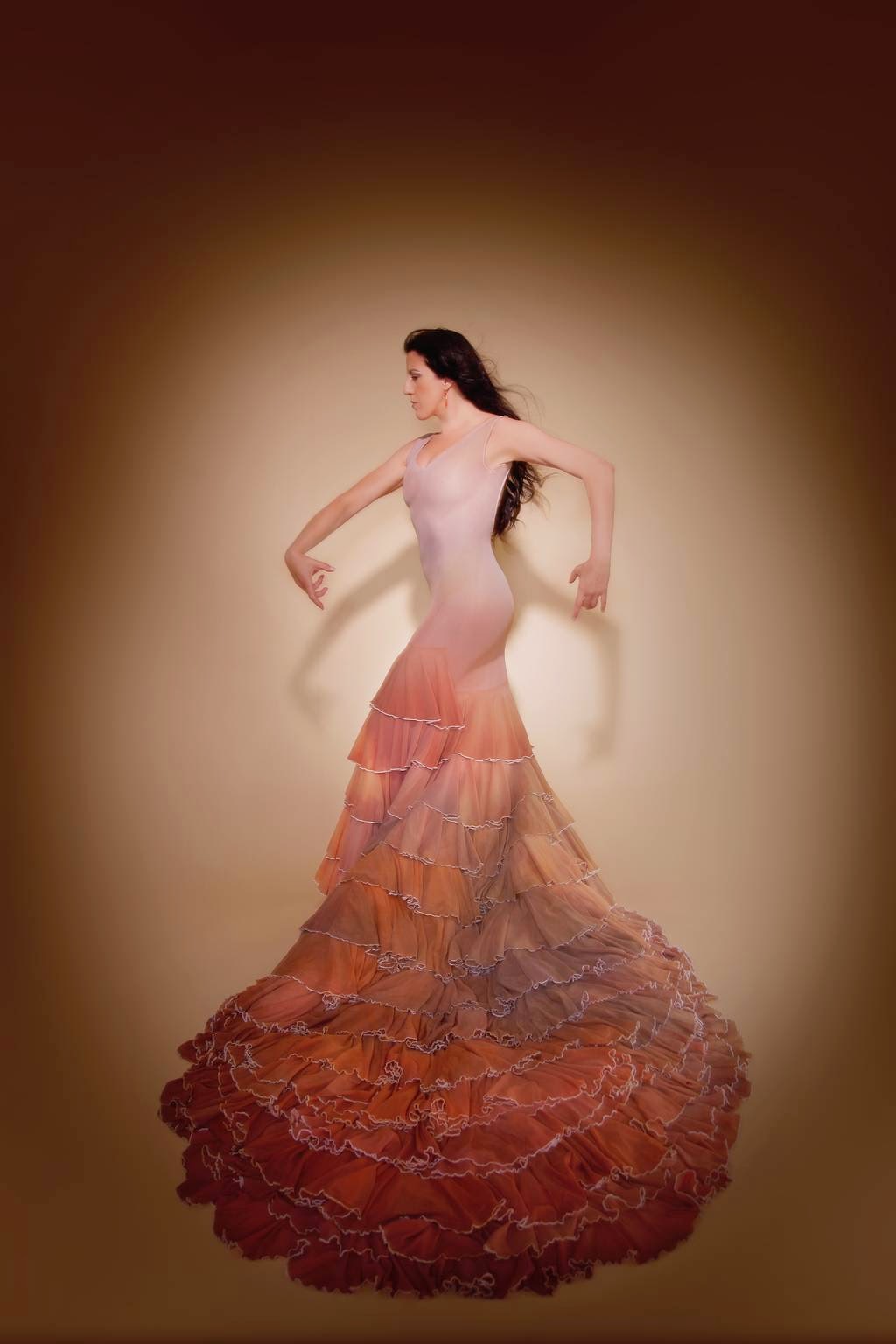
[Dance Review] An Evening of Five Works — A Dazzling Constellation of Bodies

NDT2

An Evening of Five Works
Nederlands Dans Theater 2
9 October 2015
Esplanade Theatre
9–10 October 2015
Part of da:ns Festival 2015

The youth wing of Nederlands Dans Theater (NDT) graces the Esplanade stage again with five fresh works which premiered within the last five years.

The programme opens with “Schubert and Some Other Time” by Sol León and Paul Lightfoot. In Schubert, the choreographic duo mirrors the motifs of the music by creating motifs of angular and flowing actions that extend throughout the pas de deux. While it is an exploration of love, it refuses to fall into extremities. What unfolds is a meditative rumination of love that is enhanced by the beautiful lines and perfect control of the dancers.

Despite the monochromatic set design of “Some Other Time”, León and Lightfoot colour their dance with various movement vocabularies such as mime, contemporary, and ballet. The dancers are tasked to embody the feelings of oppression and breaking free set against screens being pushed around the stage which adds another layer of movement. The dancers showed superb versatility and flexibility as they coalesce into a constellation of bodies. At times, it is hard to pick out which represents oppression and which freedom because—apart from being too transfixed by the dancers—what constitutes either sometimes depend on one’s perspective.

Sharon Eyal’s and Gai Behar’s “Sara” opened the second segment as several dancers appear in nude tights while pulsating to trippy music. The set up consists of one girl mouthing the words of a song while the others forming a series of pseudo-tableaus but each dancer repeats a particular action like a cog in a machine. This is interspersed with synchronised movement sequences.  It is surprisingly wonderful that Eyal mentions that “[i]t springs from the subconscious, but is very humane at the same time” because there is a primal quality that emanates from the piece. Sara eludes any intellectual interpretation but there is a sense of it coming from a deep place in oneself that is seldom the focus of introspection.

To be able to seek and achieve mutual comfort requires a great deal of interaction. Edward Clug’s “Mutual Comfort” is like a physics experiment of how one body reacts when it comes into contact with another. The dancers handle the technical demands with aplomb and the crispness of their lines is something to behold. This piece presents the facets of human interaction at its most beautiful.

NDT 2 pulled out all the stops to ensure that the show ends with a bang. Cue dazzling lights, sixteen dancers, synchronised movement sequences, and baroque music at its most dramatic. These elements come together to form an extravagant presentation of…

“Cacti”.

An earlier review of this piece says that Alexander Ekman’s ability to be genuinely funny through the medium of dance is an achievement. Unfortunately, that sentiment is myopic. Ekman’s genius lies in the ability to satirise one’s art form and yet the audience will still takes what he is doing seriously after having a good laugh. Cacti is a riot of fun which showcases not only the physical abilities of the dancers, but their creativity as well. The voiceovers which include a monologue expounding on a supposedly profound fact and the running commentary of the silliness of the dance moves show how the production elements can really enhance the dance. More importantly, it also boasts of the dancers’ non-kinetic talents.

Rather than just being a showcase of five recent works, NDT 2 offers an exposition of the potentials of contemporary dance and the human body. One can only hope they formulate their next exposition as soon as possible.

Other Reviews

“Nederlands Dans Theater 2’s Five Works closes with a work that is profound and humorous” by Germaine Cheng, The Straits Times Life! 

[Flash Dance Review] Lord of the Dance: Dangerous Games — Lord of the Looks

n.b. There are times when I am quite busy and would not be able to write a full review of the shows that I have watched. Quick reviews are meant to file my main impressions of a certain show.  

Lord of the Dance

Lord of the Dance: Dangerous Games
Michael Flatley
4 September 2015
Grand Theatre, Marina Bay Sands
3–6 September 2015

It should be called Lord of the Looks. Dancers are wonderful but there’s something odd with everyone being absolutely good looking. It’s exactly the same format as Flatley’s Feet of Flames and Lord of the Dance. Only minor tweaks were made to the choreography and new songs were added.

Those familiar with Flatley’s work will be absolutely disappointed as the way he markets the show is as if it’s a completely new show. What a horrible way to end a glittering career.

Surely he can look to various stories from America (where he was born) or Ireland (where his family comes from) to come up with something wonderful. What a waste of his talents.

Go if you are completely unfamiliar with Flatley’s work or are willing to blow your cash just to look at eye candies for a bit.

[Listing] The Fleeting Moment by Raw Moves

raw moves the fleeting moment

Italy meets Singapore in Raw Move’s latest contemporary dance production, The Fleeting Moment.

Italian choreographer Teresa Ranieri, who has worked widely throughout Europe, will be in Singapore for a 6-week residence with Raw moves to collaborate on a new creation that explores the meaning of dance and life.

Ranieri’s concept is inspired by a quote from Merce Cunningham: “…dance gives you nothing back, no manuscripts to store away, no paintings to show on walls and maybe hang in museums, no poems to be printed and sold, nothing but that single fleeting moment when you feel alive.”

Through a collaborative creative process, Ranieri’s exploration of ephemerality seeks to direct the audience to, as she puts it, “observe closely this complex  mechanism of surrendering, non-acceptance and maybe get a step further in the art of mastering the challenges of life. Or simply witness a poetic act.”

Ranieri’s The Fleeting moment journeys into the recesses of our emotion and mental landscapes in search of meaning: The meaning of our daily existence; the meaning of this moment that passes; the meaning of our lives. It promises a stimulating blend of styles and ideas set to provoke and challenge the way we look at dance and life.

Catch The Fleeting Moment from 5–7 November at Goodman Arts Centre, Black Box. For ticketing information, please visit  Peatix.

[Dance Review] Returning — Stunning Life Cycles

Photo: Ng Yuan Jie

Returning
Goh Lay Kuan
14 August 2015
Drama Centre Theatre
13–15 August 2015

Ostensibly, Returning shows the life cycle of a school of salmon and the trials and tribulations they face. Artistically, I see a life cycle of a tree—drawing nutrients from the roots of tradition before bearing fruits that are expressive and confident.

The dance piece is divided into five segments with the first three segments portraying the salmon developing from an embryo to a smolt and the final two showing the salmon returning to the streams to lay eggs.

Choreographers Meenakshy Bhaskar, Jenny Neo, and Osman Abdul Hamid drew on the movement vocabulary of the Indian (Bharatanatyam), Chinese, and Malay dance traditions to chart the developmental stages of the salmon’s life cycle.

As the embryos become alevins, their movements are limited and they struggle to make sense of the environment. The structured and grounded Bharatanatyam movements , conceived by Bhaskar, lends a firm but quiet energy to the piece. The striking facial expressions and footwork of the dancers exudes the eagerness of the alevins that are full of potential.

Neo’s light and youthful Chinese dance choreography captures the energetic fry as they zip around, avoid predators, and pick up the necessarily survival skills. Despite the perilous situation, the dancers punctuate their quick movements with a momentary pose and let out a playful kiss—the fry call out to one another to ensure that they stay together.

The fry become fingerlings and the process of smoltification soon occurs. After this transition, the smolts emerge with a silvery coating. This appears to be a rite of passage and the Malay dance choreography by Osman Abdul Hamid celebrates the fulfilment of the rite. A sense of joy fills the air as the dancers sway gently and gracefully to the lush tones of the accordion.

Reaching maturation and confident of survival, the smolts navigates and overcome all sorts of obstacles with aplomb. This is mirrored by the dancers as they—gaining all the needed technique and strength through their traditional dance training—come together and showcase their versatility in Osman Abduls Hamid’s contemporary choreography. All of them are consummate dancers as the audience is treated to a sequence that is engaging and dramatic. The swirling blue rays of the intelligent lights, designed by Dorothy Png, evoke the tumultuous depths of the ocean which heightens the tension.

The final choreography by Low Ee Chiang continues the drama that culminates in all the dancers taking to the stage. Their synergy is palpable for the renewal of the next generation of salmon depends on them. In one striking moment, they all fall to the floor as the lights goes out. The meditative sound of the flute creeps in slowly as the dancers emerge from their foetal position. The process is consummated and life begins again.

Despite its structure, Returning does not feel segmented and kudos to Mdm Goh Lay Kuan (artistic director) for ensuring that all the choreographies coalesced into a cohesive whole.

The same commendation must go to Julian Wong (music director) for the same achievement with the music. In fact, the structure of the music complements the dance as well. In the first three segments, music from the Indian, Chinese, and Malay traditions take their respective centre stage and instruments that do not typically belong to the tradition serve as accompaniment. However, in the final two segments, composer Ho Wen Yang really brings out the best in all the instruments as they chorus as a wondrous whole.

For us—the younger generation—whatever is known of Mdm Goh’s legacy is probably through interviews and books. With this latest offering, she beckons us to relook at the artistic roots and the possibilities of dance with fresh eyes.

We cannot help but follow her on this journey of return.

Other Reviews

“‘Returning’ Delivers Visual Delights” by Sonia Kolesnikov-Jessop, Blouinartinfo

“Goh Lay Kuan’s ‘Returning’ is a Flawed Return to Traditional Dance Forms” by Nirmala Seshadari, Straits Times Life!

Adieu Flying Inkpot: What Now?

Inkpot screengrab

And just like that, one of our cultural institutions in its own right has decided to call it a day.

The theatre and dance arm of The Flying Inkpot has been consistently reviewing and assessing a large section of the arts scene for the past 19 years. In its own quiet way, it amassed a decent following and stands as an alternative source to our newspaper critics and a whole crop of glossy lifestyle websites of more recent vintage. The most unfortunate thing is that only those invested in the arts scene will understand the gravity of this loss.

While Corrie Tan (The Straits Times, Life!), Mayo Martin (Today), and Helmi Yusof (Business Times) will undoubtedly continue their wonderful work, their professional commitments mean that they will not be at the forefront of theatre criticism. One must understand that they are journalist-critics—journalists first, critics second. The focus of the newspapers probably require them to prioritise industry stories over the reviews. To compound the problem, they have to shoulder the lion’s share of the arts beat as they have few colleagues working with them.

As such, their role in criticism is limited to being active writers and providing occasional feedback during industry consultations conducted by the National Arts Council (NAC). They neither have the time nor energy to promote the standing of critics, spark thoughtful discussions about the arts scene (beyond the allotted column inches), and improve the quality of writing (apart from their own).

That is where The Flying Inkpot comes in and its departure has left a gaping hole in the ecosystem.

I have been reading Inkpot‘s reviews on and off for years. It started out as getting a second opinion on whether a particular show is good or not. However, having developed a strong interest in theatre criticism over the past two years (hence this blog), The Flying Inkpot has become a benchmark for me. My reviews have to be as good, if not better than what Inkpot puts out. Additionally, it has been an interesting experience to see if the writers there agree with my opinions of a particular show that I have reviewed. Behind the computer screen, I have occasionally let out exclamations of, “Hear! Hear! What’s with all the hype by people on Facebook?” or “Are you serious!? Did you even watch the show?” Indeed, I feel an odd sense of camaraderie just by yelling at my computer screen after reading the reviews.

As the performing arts scene show gratitude for services rendered, a pressing question looms: What is next for theatre criticism? Here are some initial ideas.

Taking Stock

For starters, before we decide our next step, we have to lay the groundwork for current and future critics. In acknowledging the value of the reviews for researchers, practitioners, and aficionados, the editors of Inkpot—Kenneth Kwok and Matthew Lyon—have decided to make the archive available to all even after the website has shut down.  The mainstream media should do the same.

Rather than subject interested individuals to squinting as they scroll through microfilms or settle for heavily watermarked copies online, the NAC should partner with Singapore Press Holdings (SPH) and Esplanade Library to start an online portal which contain all the reviews by our newspaper critics past and present.

NAC should also commission a book which will be a general survey of the history of theatre criticism in Singapore. Drawing from the newspapers and The Flying Inkpot, it will feature some key reviews of various productions over the years. Perhaps it can include an introduction at the start of each section which analyses writing styles of reviewers or interesting insights about theatre history that can be gleaned from these reviews.

If there is enough academic and artistic interest, an academic book can be published which contains various essays about theatre criticism. They can range from in-depth analyses of particular critics to how theatre criticism fits in our local arts ecosystem. Practitioners could contribute essays about their views on critics or how they made use of past reviews to inform their research while creating a new production.

Looking Ahead

In the best of all possible worlds, we should work towards having full-fledged critics or at least actor/dancer-critics (some feel that there will be a conflict of interest but I disagree—another post for another day) a reality. Criticism is not just about watching something and voicing one’s opinion. A critic should be as knowledgeable about the performing arts as possible. Ideally, he or she should be reading up on latest trends and research in the day before rushing off to review a show at night. It is a proper career and not something you do when you have some time to spare in the evenings.  

However, even if all relevant parties were to work together on this (and that is a big if), it would take at least 10–15 years to achieve this. What can we do now?

Well, a critic is nothing without readers. Apart from The Art of Review talk organised by the Esplanade Library this year, there was no forum on theatre criticism in recent memory at all. I would like to see discussions comprising both practitioners and critics on the same panel and get views from both sides of the curtain. A public talk will give the audience a chance to weigh in on what they think the role of criticism. It would also benefit the critics as, speaking from my own experience, they hardly get any feedback from their readers and the conversation borders on being insular.

Of course, one might point out that it is a lovely exercise of preaching to the choir. This might be true in some respects but a realistic goal of such public outreach is to encourage those who might be willing to engage at a deeper level rather than “convert” the uninterested. Besides, even within the arts scene—and I will be really pleased if I am wrong—the engagement seems to be between the reviewer and the reviewed; the choir needs some encouragement to expand its repertoire and sing louder.

As for more “concrete” measures, the easiest route to take is to ask all the writers to start their own blogs or, for those who are interested in journalism as well, join The Muse (a rather good arts website). Alternatively, they could join the glossy lifestyle websites and improve the quality of criticism there (I shall not bore you with a list of their inadequacies).

While that is all well and good, a central website is still necessary. If everyone does their own thing, who does a theatre company choose to offer press tickets to? Will they shun critics whose tastes and proclivities do not incline towards the genre or dramaturgy that the company is known for? We cannot all flood The Muse and there is something to Inkpot resolutely standing as an alternative—not necessarily against—to the soundbites galore offered by glossy websites that seem to be spawning exponentially.  

Matthew Lyon is on to something when he mentioned that if Inkpot were to be revived in any way, shape, or form, it will have to expand its scope to include videos, podcasts, and feature articles. However, it would take a generous funding model to sustain this. On top of that, it would require a full-time team which would not be possible for him and fellow editor, Kenneth Kwok, to be in charge of. He does not think corporate sponsorship or advertising might be a good idea as the site should not be beholden to commercial interests and that most companies do not want to be associated with an activity that is generally (and most erroneously) seen as being nasty to people.

I sympathise and somewhat agree with Lyon. But there are a lot of things going on here. In the beginning, this website will still have to be on a voluntary basis for a while but it can steadily progress to a model in which contributors are paid a nominal fee.

While it might probably be true that big corporate sponsors do not want to be associated with the website due to the negative perceptions of what critics do, it might not be true for smaller establishments. Perhaps one should woo restaurants and bars that are near performing venues for advertisements. Why would it matter to them if it is a eulogistic or slamming review as long as the readers—who form a reasonable section of the theatre-going public—glance at their advertisements and learn about their promotions? The only clash of interests here are companies who serve as official caterers or are involved with certain promotional tie-ups with a particular theatre company. Even with them off the list, there are still many companies available.

Aside from that, why do we have to limit ourselves to direct funding/ advertising/ sponsorship? Online advertising revenue has progressed quite a bit. There are “indirect” advertising revenue streams such as Google Adsense in which the website can earn some revenue based on the number of unique views or clicks on the advertisements displayed. If the website starts a YouTube channel, the videos can also be monetised. Hopefully, after a few years, the revenues will be substantial enough to remunerate the contributors.

Speaking of YouTube, the sky is the limit in terms of content. It could be a panel talk-show setting (see Theatre Talk) in which various critics (including those from the newspapers) come together and talk about the shows they have seen, predictions for the Life! Theatre Awards, or just argue with each other over what they have written. It could also be two enthusiastic presenters just bantering away and occasionally inviting artists in for a chat. The setting of the latter format could be in a cafe and perhaps the management could give some advertising dollars too.

Finally, there is absolutely no shame in asking people for donations. In fact, theatre companies could sponsor a couple of tickets and donors who donate a certain amount will be entered into a lucky draw to win them.

Whatever it is, considered and insightful criticism must be kept alive and we are poorer for it if it dies. Adieu Inkpot, it has been a good run and—fingers crossed—we will meet again someday.

[Dance Review] Yo, Carmen — Pagés Breathes Life into Carmen

I carmen

I, Carmen (Yo, Carmen)
María Pagés Compañía
17 October 2014
Esplanade Theatre
17-18 October 2014

To declare one’s identity, one may choose to stomp the ground and yell out who you are. But with wisdom and self-confidence, María Pagés chooses to gracefully present what it means to be a woman and embrace its humanity in all its manifestations.

I, Carmen is a lush blend of music, dance, poetry, and tongue-in-cheek complaints. Rather than negating all that is not, Pagés offers a positive and soulful expression of womanhood. By incorporating the  meditative potential of contemporary dance, her choreography ranges from a quiet but profound contemplation to one of strength and passion. I realised that half of her choreography consists of basic steps that any flamenco student would be familiar with. It is very easy to dismiss such steps but to execute it beautifully, as her dancers have done, is no mean feat.

Beauty in simplicity is definitely the order of the day as Pagés uses artistry as her needle to weave beauty into the quotidian. I was surprised to see a scene of all the dancers were doing housework which can be read as a re-establishment of traditional gender roles. However,  she turned it into a celebration of the everyday by taking all the rags and tying them up to form a manton (shawl).

Yet, life has its moments of sadness and vulnerability too. That  is where Pagés shines the most. Ever hand movement, every crinkle in her face, and every turn is a process of digging deep and expressing the most moving of emotions. Even in stillness, as she examines herself in the mirror and donning the height of traditional Spanish fashion only to take it off again, one remains transfixed. I cannot help but notice two sides of her; the one in the flesh and the one in the mirror.

I would do this show an injustice without mentioning that it achieved something rare in dance: incorporating poems as another layer of the dance without privileging the latter. A sound recording of women reading works by female poets in the original languages was played as the dancers danced to it. Here, Pagés displays a rare sensitivity in respecting the text. The rhythms of the poem was incorporated as the driving beat of the dance and the stresses of the words replaces the palmas (hand clapping) that usually accompany the dance. Though it must be said that the surtitles are slightly  distracting.

Finally, due credit must be paid to the production elements. As a response to Bizet’s Carmen, most of the music was an adaptation of the original score to flamenco guitar. A great deal of thoughtfulness went into the arrangement as the frenzy during the climaxes of the original score is re-expressed into a sense of quiet joy. Those with a keen ear would be in for small treats as the musicians occasionally includes motifs such as the chime of a clock tower before the housewives scene to represent the passing of time.

While Pagés’s costume designs seemed simple enough with bold lines running across a skin coloured dress, the wonderful injection of light often creates the illusion of the dancers wearing different costumes. In one number, the reddish-brown wash from the side booms mixed with the bold lines on the dress gave me the impression that the dancers were wearing a different dress with two colour blocks. I was pleasantly surprised that they were wearing the same dress as the lights changed for the next number. Clearly, artistry does not begin and end with the dancing in this production.

It is worth noting that María Pagés started her career with Antonio Gades who, in his time, created the flamenco version of Carmen that is still based strongly on Bizet’s opera and all the loaded implications that come with it. With I, Carmen, Spain can truly say that she has reclaimed Carmen for herself.

Brava Maria, Brava.