[Theatre Review] No Man’s Land by The Necessary Stage: Soapbox Contestations

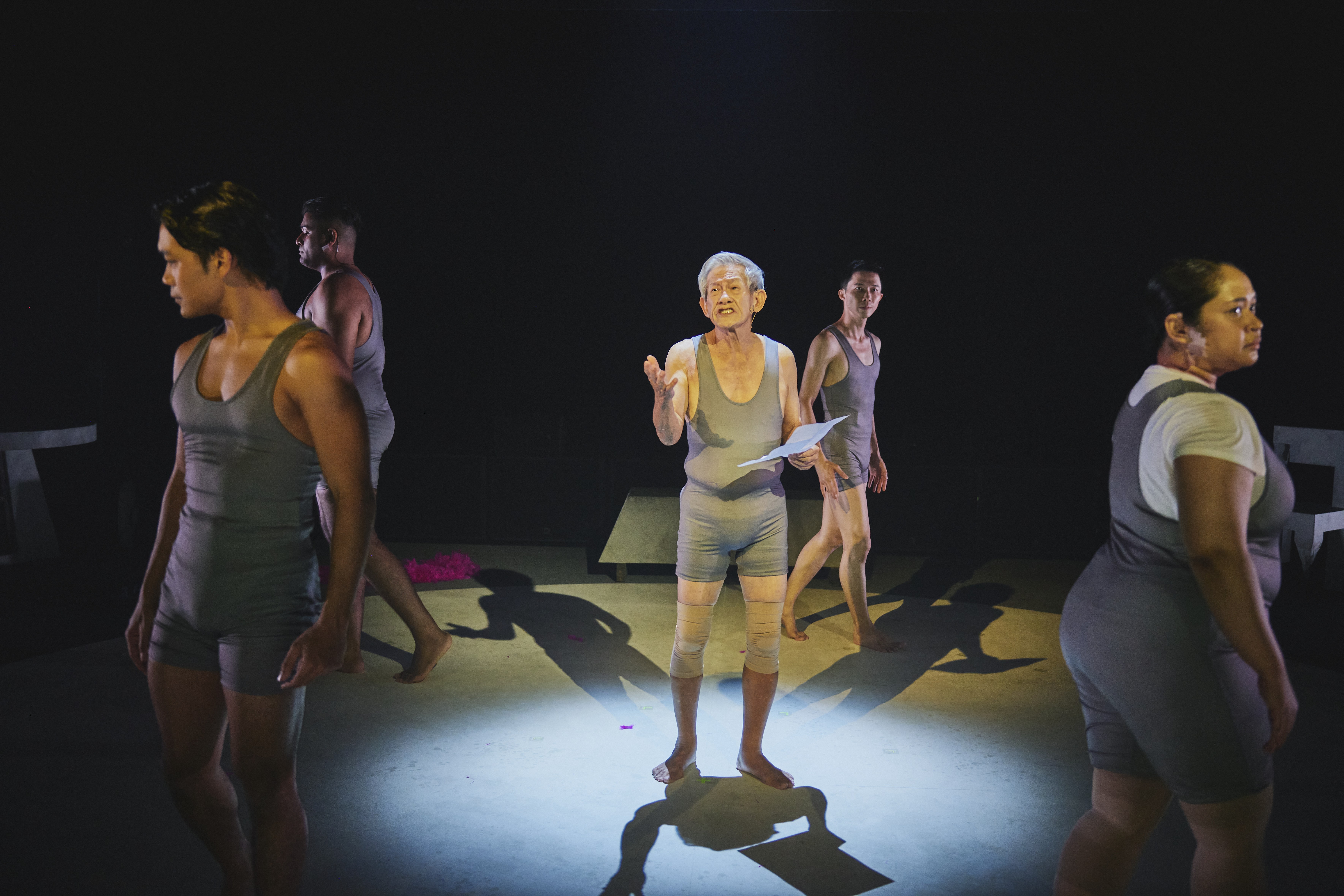
Dissecting masculinity / Photo: Tuckys Photography / Courtesy of The Necessary Stage

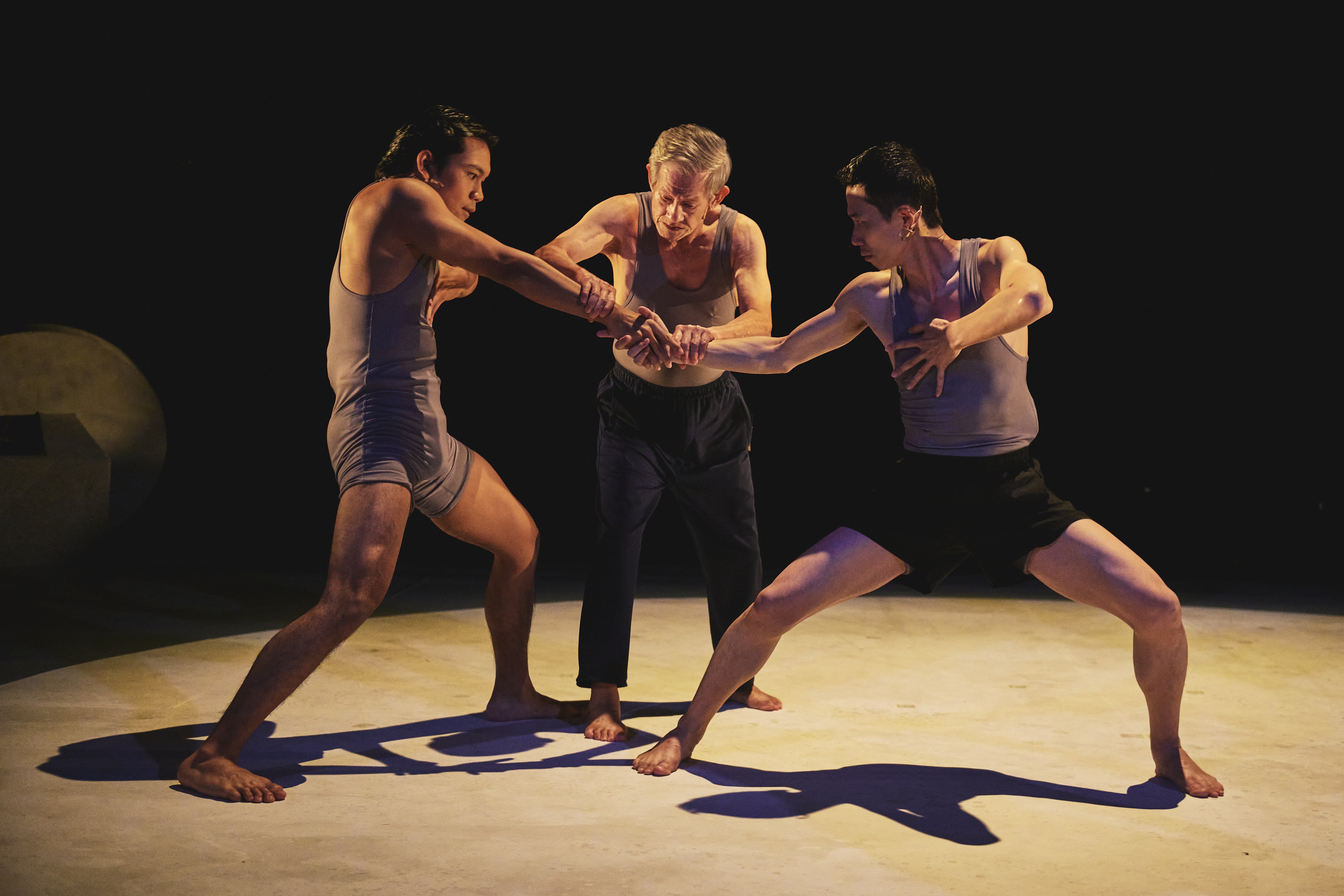
Flexed muscles and tensed sinews of Shahizman Sulaiman (left), Michael Tan (centre), and Neo Hai Bin (right) /
Photo: Tuckys Photography / Courtesy of The Necessary Stage

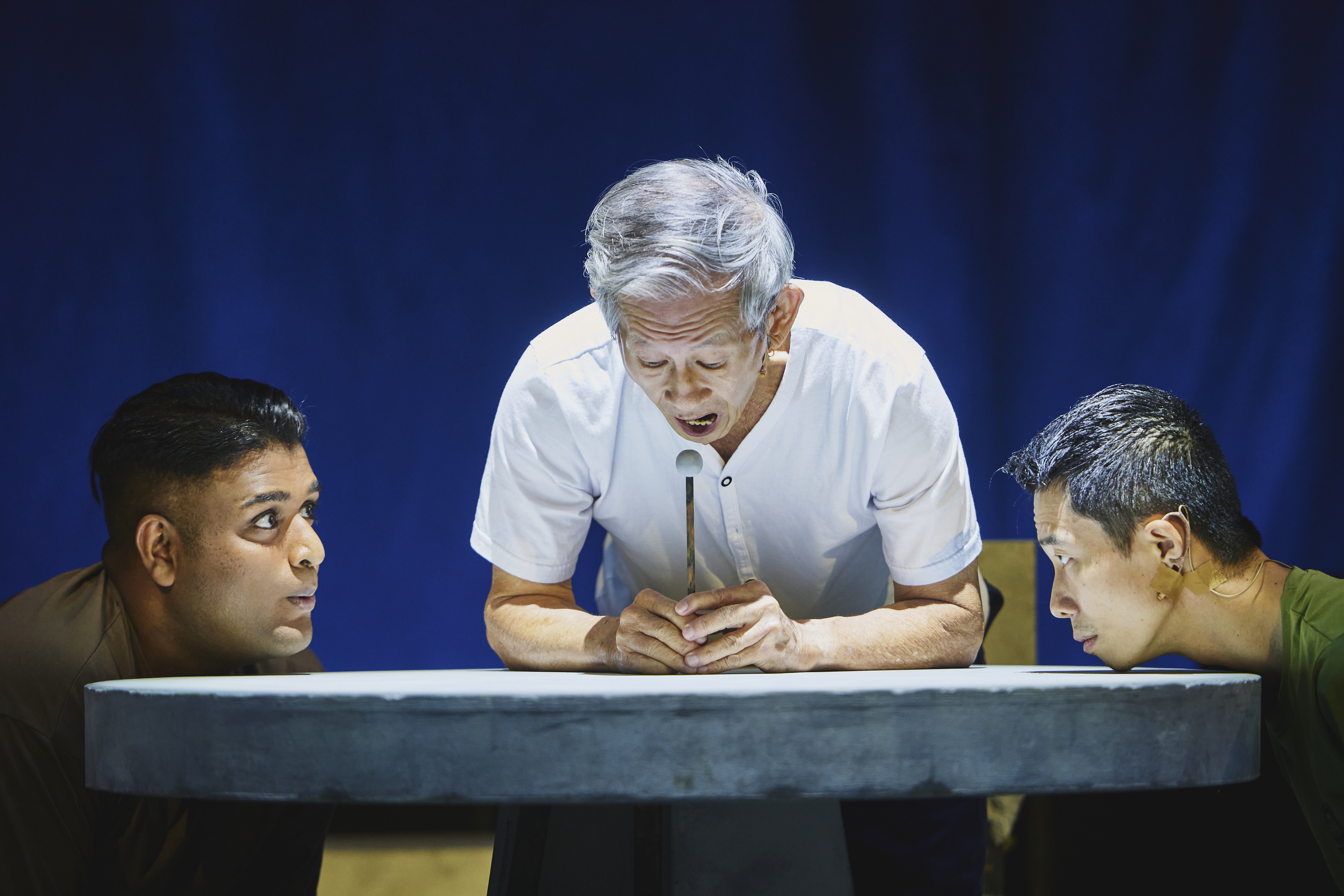
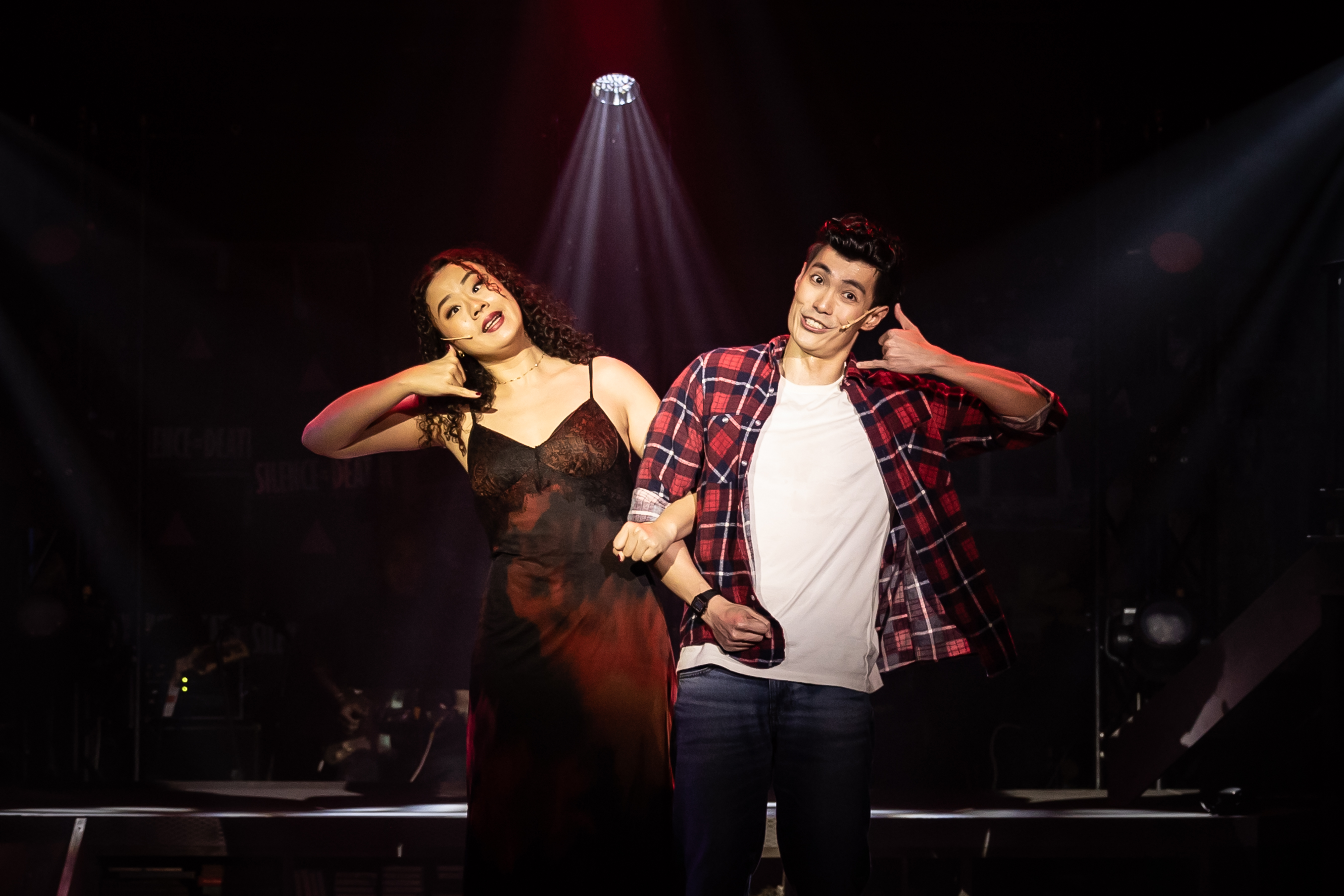
Men behaving badly / Photo: Tuckys Photography / Courtesy of The Necessary Stage

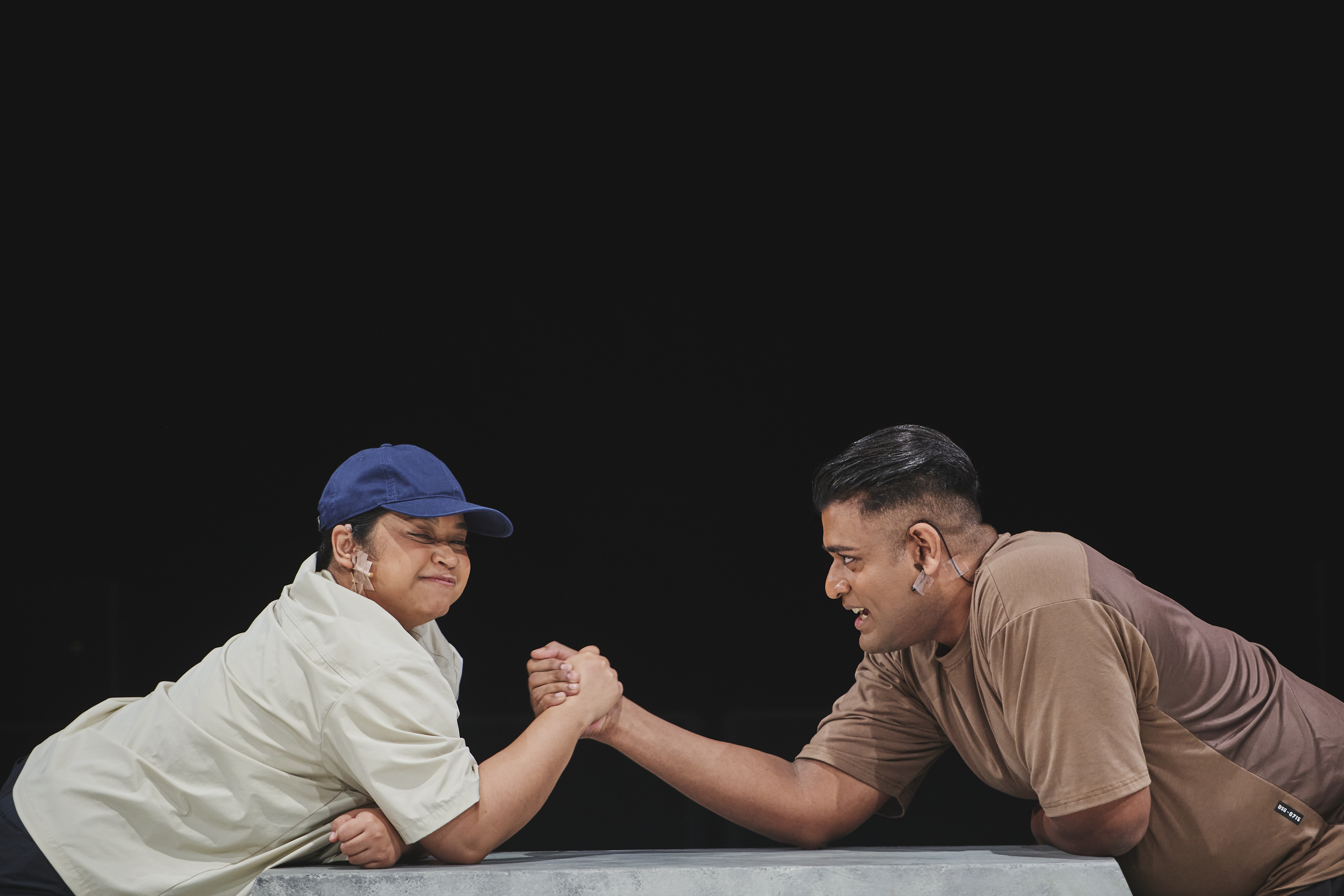
The lesbian sister (Suhali Safari) and her gay brother (Vishnucharan Naidu) deciding if she should return to Singapore /
Photo: Tuckys Photography / Courtesy of The Necessary Stage

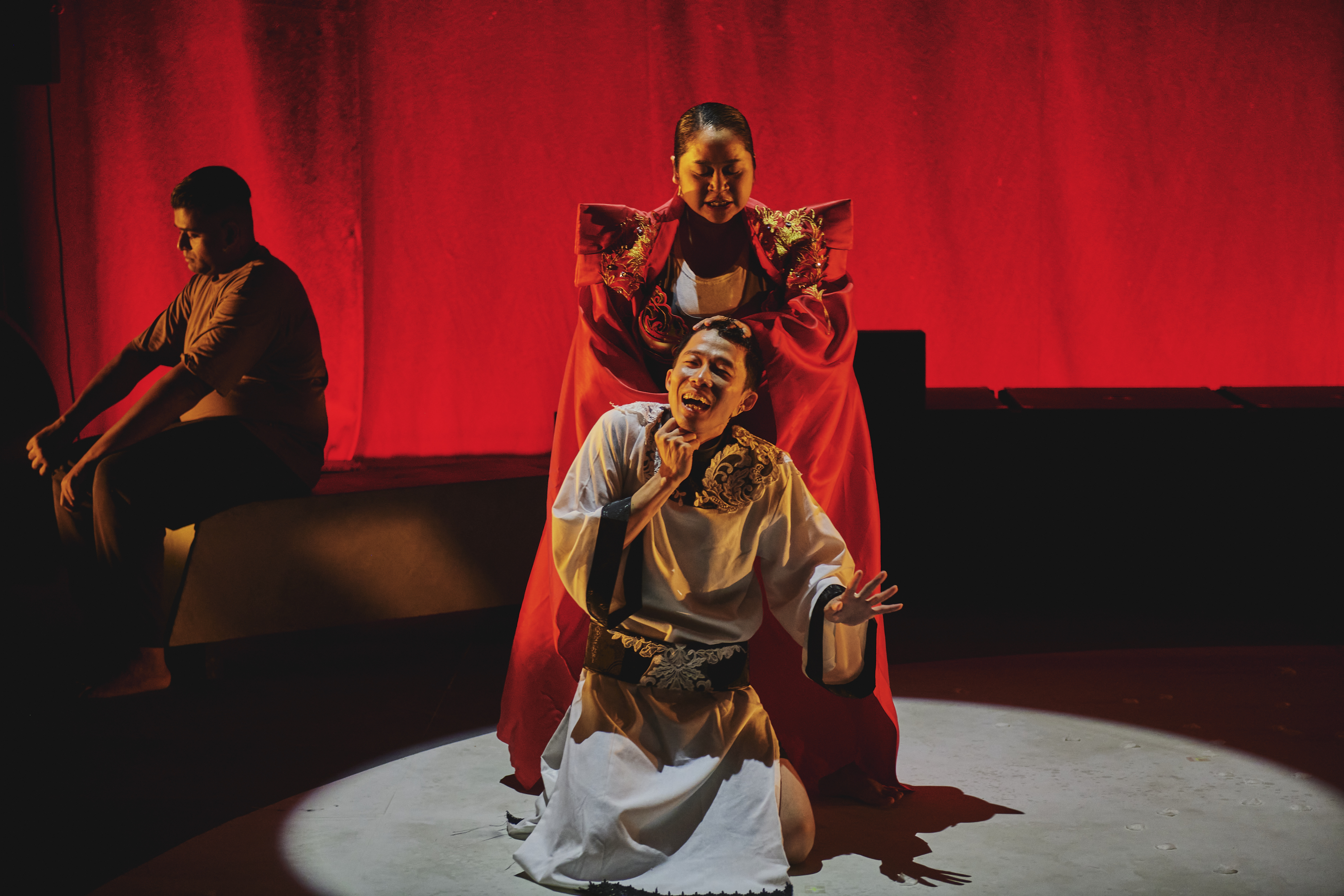
The Empress Dominatrix (Suhaili Safari) controls her Eunuch Client (Neo Hai Bin) /
Photo: Tuckys Photography / Courtesy of The Necessary Stage

Michael Tan (centre) tenderly reflects on his journey as a man in a letter to his younger self /
Photo: Tuckys Photography / Courtesy of The Necessary Stage

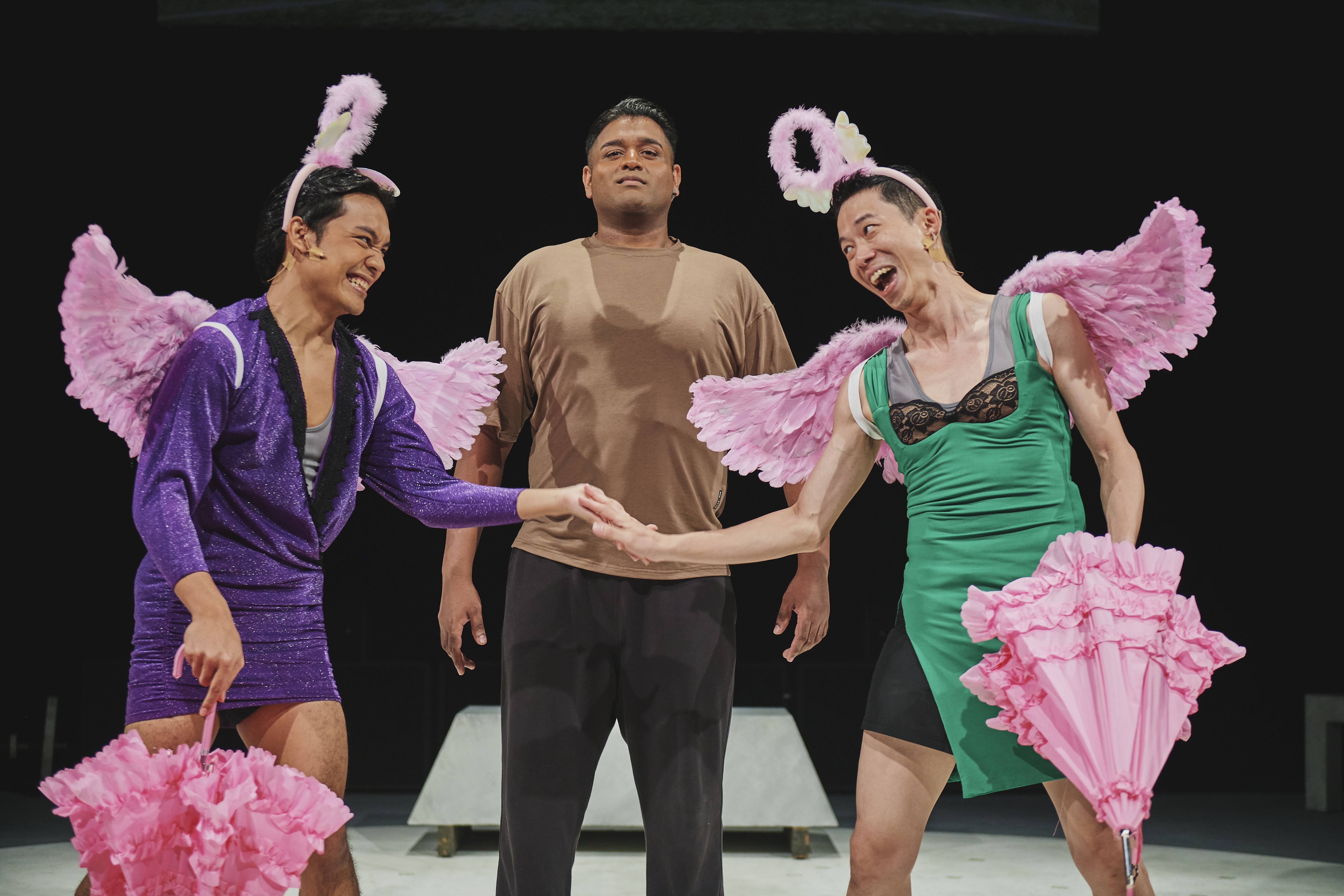
Shahizman Sulaiman (left) and Neo Hai Bin (right), teach Vishnucharan Naidu (middle) how to behave like a man /
Photo: Tuckys Photography / Courtesy of The Necessary Stage

Programme booklet for No Man’s Land

“Theatre review: Theatrical and funny, No Man’s Land questions ideas of manhood” by Clement Yong, The Straits Times Life! (Article is behind a paywall)  | Transcript of review

“【艺评】《无人之境》的意义在第四堵墙裂缝之处” by 孙靖斐, Lianhe Zaobao

“Review: Suria on No Man’s Land by Sim Yan Ying “YY”, Alvin Tan & Danial Matin (The Necessary Stage)” by Suria, Critic’s Circle Blog

“Review: Cheng Nien Yuan on No Man’s Land by Sim Yan Ying “YY”, Alvin Tan & Danial Matin (The Necessary Stage)” by Cheng Nien Yuan, Critic’s Circle Blog

No Man’s Land: Siapa ajar lelaki jadi begini?” by Pengkritik Sandiwara

No Man’s Landby Naeem Kapadia, Crystalwords

“Review: Review: No Man’s Land (The Necessary Stage)” by Aileen Tang, The Flying Inkpot

“[Theatre Review] The Necessary Stage’s “No Man’s Land” Takes on Modern Masculinity, Perfect Watch for Lonely Male Dudes This Father’s Day Weekend” by Alvin Lim, Alvinology
[Theatre Review] Hard Mode by Checkpoint Theatre: Heartfelt Mission with Too Many Side Quests

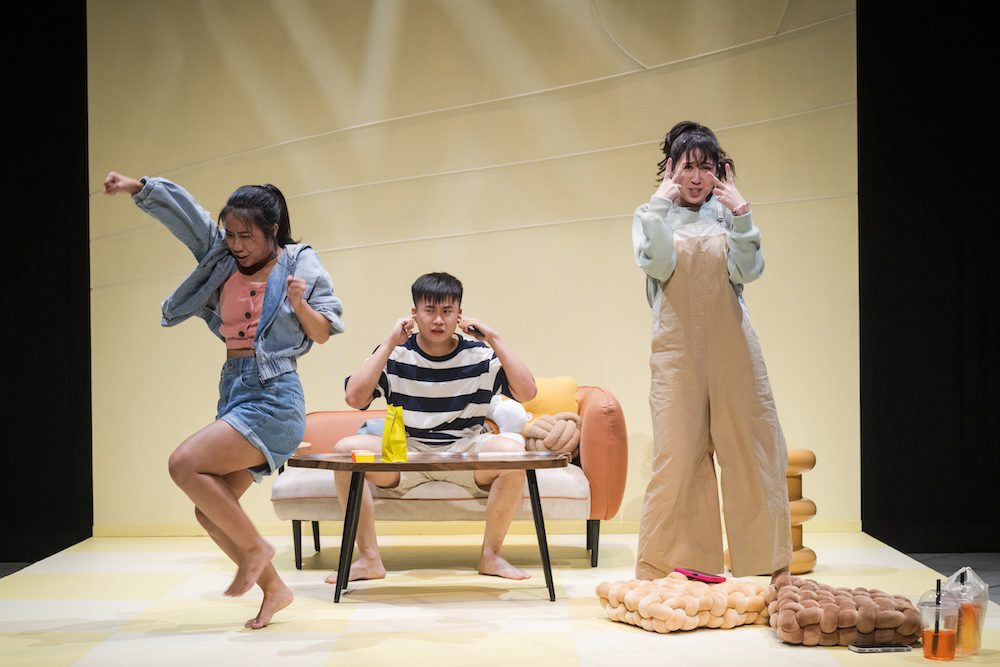
L-R: Arissa (Janine Ng), Adam (Chaney Chia), Maya (Kyra Lefebvre) / Photo: Joseph Nair / Courtesy of Checkpoint Theatre

Photo: Joseph Nair / Courtesy of Checkpoint Theatre

This makes me wonder how do d/Deaf audience members experience the show as it is difficult to watch both the interpreters and actors at the same time. 

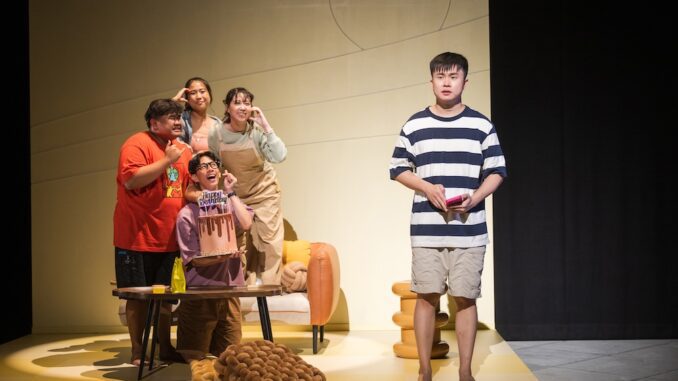
Sengkang Squad: Rian (Izzul Irfan), Adam (Chaney Chia), XY (Matthias Teh) / Photo: Joseph Nair / Courtesy of Checkpoint Theatre

Seeing the teenagers in the theatre taking countless selfies and hand swiping to APT. by Rosé and Bruno Mars, it is easy to dismiss them as disruptive and irrational.

But be it going to BTS’s Magic Shop or retreating to nostalgic reverie; a quest to the boss level or life’s odyssey—perhaps it is about embracing these polarities and truly listening to each other so that life need not be on hard mode all the time.  

Programme booklet for Hard Mode

“Checkpoint Theatre’s Hard Mode takes Gen Zers and Gen Alphas on their own terms” by Clement Yong, The Straits Times Life!

“Theatre review: Hard Mode gives youth and its obsessions full, unprejudiced treatment” by Clement Yong, The Straits Times Life! (Review is behind a paywall. Read the partial transcript here.)

“Review: Wong Yong En on Hard Mode by Faith Ng (Checkpoint Theatre)” by Wong Yong En, Critics Circle Blog

“[Theatre Show Review] Finally, a realistic depiction of Singapore’s family units in ‘Hard Mode’, a play about Gen Alpha” by Marcus Goh

[Theatre Review] tick, tick… BOOM! by Sight Lines: Tick… Tick… Pop…

Turning 30 and not achieving one’s dreams / Photo: Bernie Ng / Courtesy of Sight Lines

Preston Lim as Jon, a struggling musical composer / Photo: Crispian Chan / Courtesy of Sight Lines

L-R: Eric Larrea, Vanessa Kee, Preston Lim, Ryan Ang, Beatrice Jaymes Pung / Photo: Bernie Ng / Courtesy of Sight Lines

Jon (Preston Lim) in “Sunday” / Photo: Bernie Ng / Courtesy of Sight Lines

Susan (Vanessa Kee) and Jon (Preston Lim) quarrel in “Therapy” / Photo: Bernie Ng / Courtesy of Sight Lines

Jon is besotted with Karessa (Beatrice Jaymes Pung) / Photo: Crispian Chan / Courtesy of Sight Lines

“Theatre review: Tick, Tick… Boom! is fun and relatable to Singaporean audiences” by Charmaine Lim, The Straits Times Life!

“[Theatre Review] Tick, Tick… Boom! Resonates with Singaporean Audiences” by Alvin, Alvinology Media

[Theatre Review] Dream of the Red Chamber by The Finger Players—Beautiful Fuzzy Dream

Photo: Poh Yu Khing / Courtesy of The Finger Players

Photo: Poh Yu Khing / Courtesy of The Finger Players

Photo: Poh Yu Khing / Courtesy of The Finger Players

Photo: Poh Yu Khing / Courtesy of The Finger Players

Programme booklet of Dream of the Red Chamber by The Finger Players

“Theatre review: Dream Of The Red Chamber re-enacts Chinese classic with masks and puppetry” by Clement Yong, The Straits Times Life! (Article is behind a paywall)

“The Finger Players’ Dream of the Red Chamber: The Love of Craft and the Craft of Love” by Ang Kia Yee, Popspoken

“Xu Caifang on “Dream Of The Red Chamber” by The Finger Players” by Xu Caifang, Critics Circle Blog

[Theatre Review] Little Shop of Horrors by Sing’Theatre: Bloomin’ Entertaining

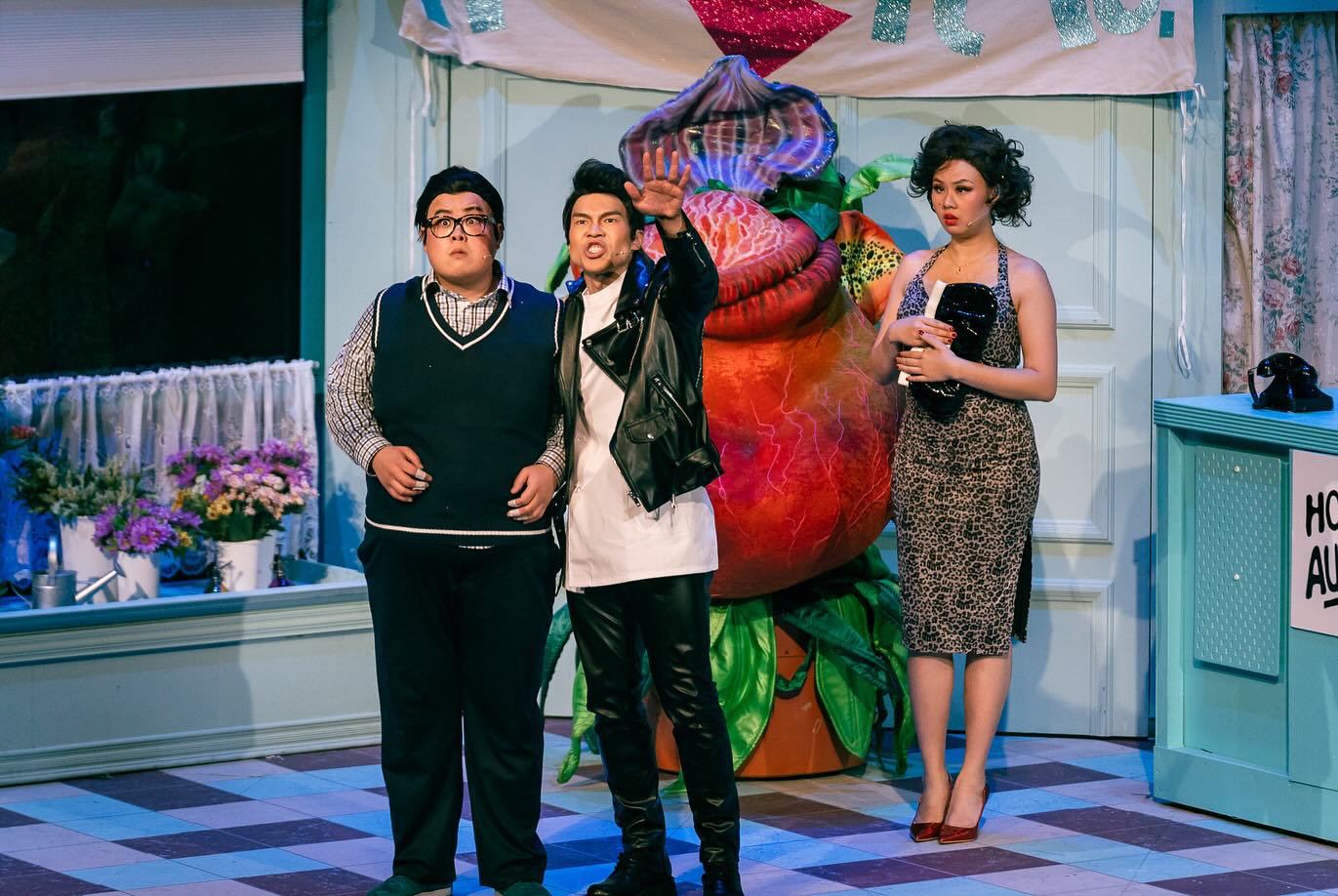
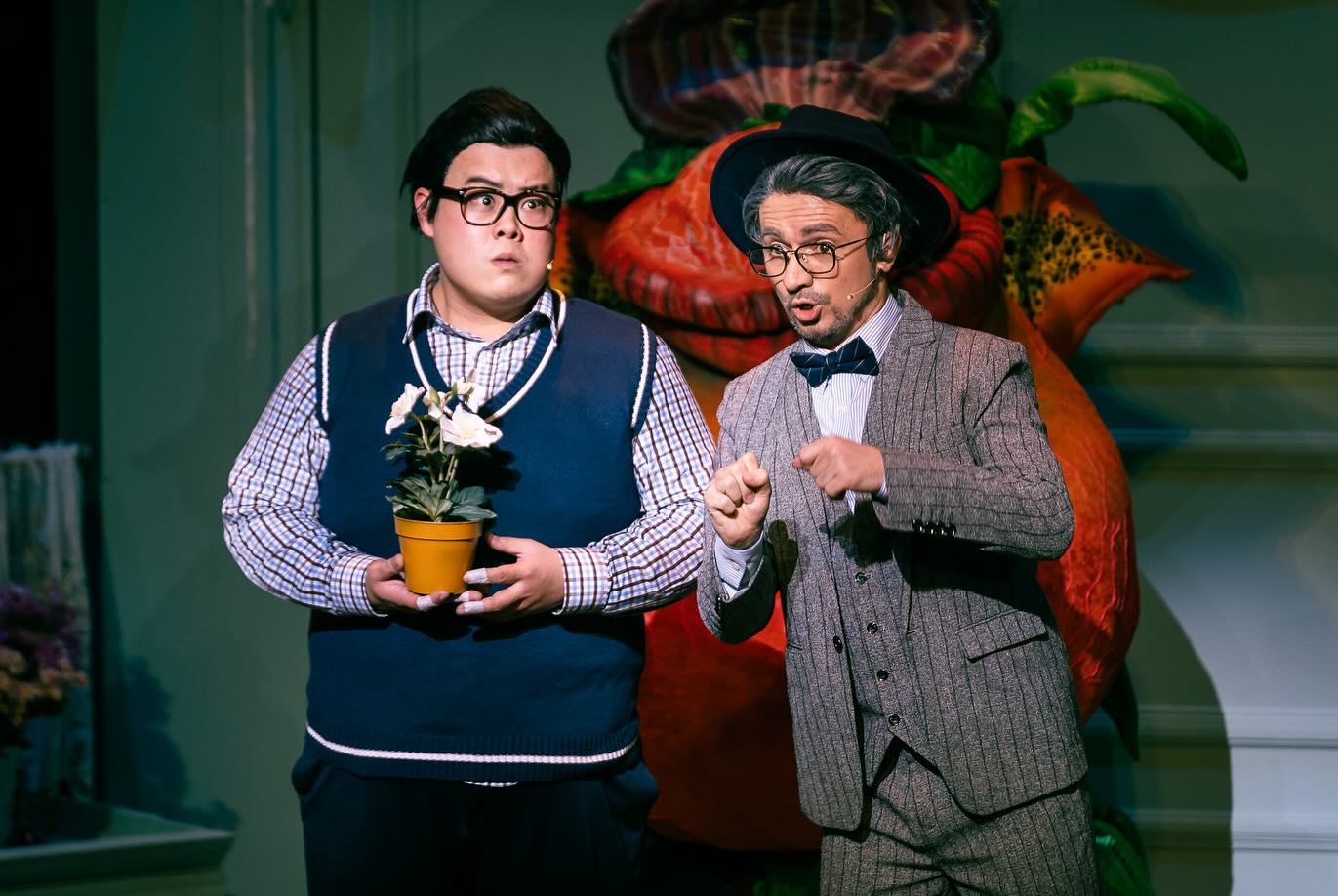
Photo: Poh Yu Khing / Sing’Theatre

Photo: Poh Yu Khing / Sing’Theatre

Theatre review: Stellar vocals and comedic timing in Little Shop Of Horrors by Charmaine Lim, The Straits Times Life!

Sing’theatre’s Little Shop of Horrors delivers a gritty charm and stellar performances by Xiao Xing Wan, TimeOut

‘Little Shop of Horrors’ review: Audience will eat up every note of this musical by Sing’Theatre by Beverly Anne Devakishen, SG Magazine

Sing’theatre’s ‘Little Shop of Horrors’ is a Musical Feast by Derrick Lim, The Flying Inkpot

[Theatre Review] The Chair by ITI: Not at the Edge of One’s Seat

A woman demands justice from the mayor as her husband holds her back / Photo: Bernie Ng

Tensions run high between the mayor and James’s mother / Photo: Bernie Ng

The butcher mulls on the grave task ahead / Photo: Bernie Ng

Other Reviews

“Review: ‘The Chair’ by Intercultural Theatre Institute explores the death penalty, justice and grief in a twisted small town” by Yaiza Canapoli, SG Magazine

Review: The Chair by ITI 2023 Graduating Cohort by Philippe Pang

★★★☆☆ Review: The Chair by Intercultural Theatre Institute by Bakchormeeboy

[Interview] Pulling Up a Chair with Li Xie and ITI Students

Digital Programme of The Chair

[Theatre Review] The Tug and Tussle of Relationships in Tender Submission by Checkpoint Theatre

Photo: Joseph Nair / Courtesy of Checkpoint Theatre

Unlike Brown Boys Don’t Tell Jokes, which takes us on explosive highs and lows, Lucas Ho’s Tender Submission—as the title suggests—is dramatically meek. But the unearthing of human frailties and desires in the context of faith and marriage is no less affecting. 

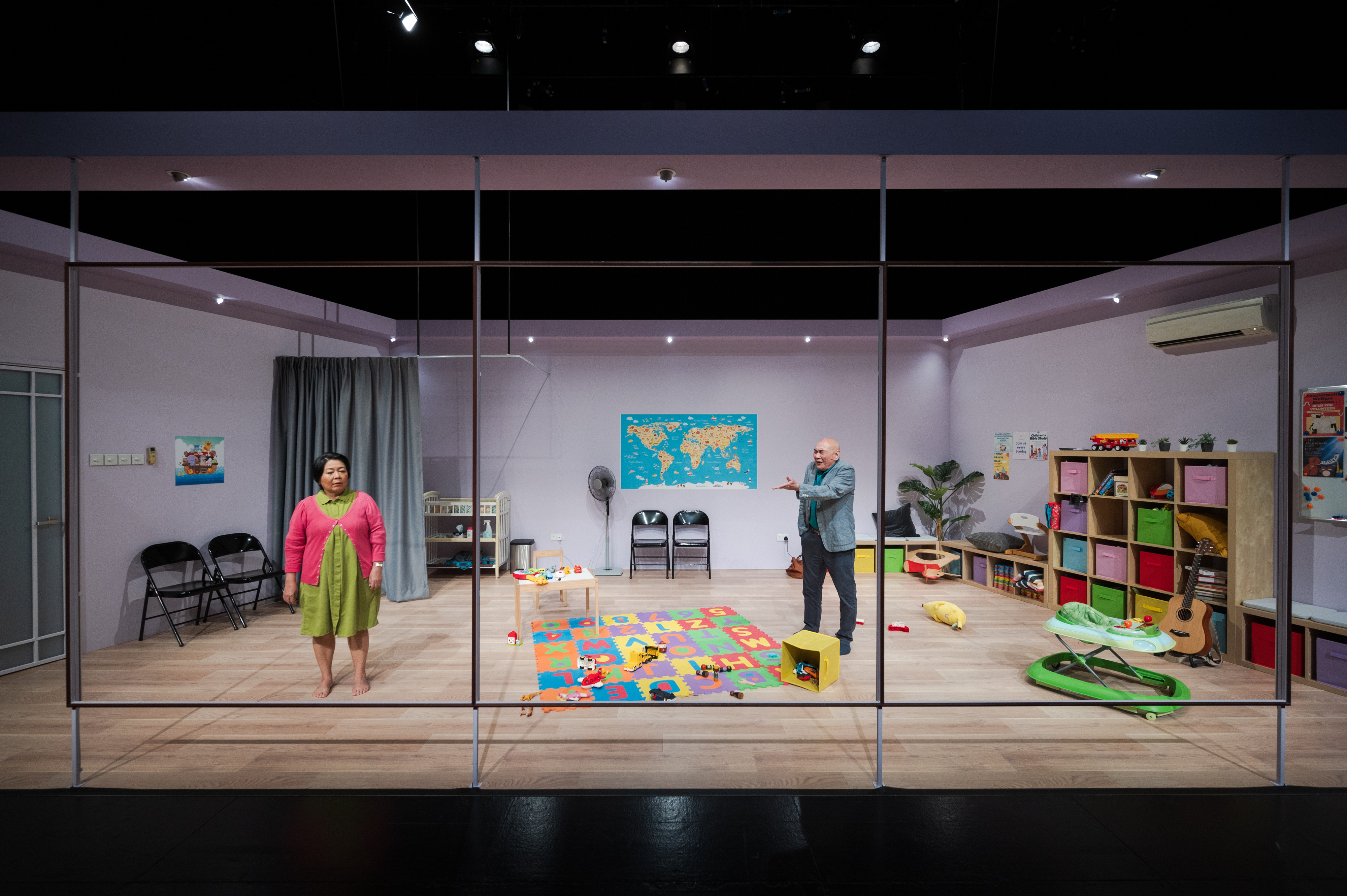
Failure to understand and articulate one’s needs / Photo: Joseph Nair / Courtesy of Checkpoint Theatre

Neo Swee Lin and Lim Kay Siu play out every push and pull of a relationship / Photo: Joseph Nair

“Theatre review: Stellar acting in Tender Submission, but it preaches to the choir” by Shawn Hoo, The Straits Times Life

“Review: ‘Tender Submission’ delves deep into the heart of faith and marriage” by Yaiza Canopoli, SG Magazine

“Review: Azura Farid on Tender Submission by Lucas Ho (Checkpoint Theatre)” by Azura Farid, Critics Circle Blog

“‘Tender Submission’ by Checkpoint Theatre” by Corrie Tan, the intimate critic

Tender Submission by Naeem Kapadia, CrystalWords

“Theatre Review: Tender Submission, An Original Singaporean Story That Probes Deeply Into Relationship And Religion” by Xushuang Chen, Weekender

“In Praise of Growing Through Checkpoint Theatre’s Tender Submission: A Review” by Charmaine Tan, Men’s Folio

“Review: Tender Submission by Checkpoint Theatre” by Bakchormeeboy

[Interview] Lucas Ho talks about his latest play, Tender Submission

[Theatre Review] ‘Brown Boys Don’t Tell Jokes’ by Checkpoint Theatre: The Joke’s on All of Us

Photo: Joseph Nair / Courtesy of Checkpoint Theatre

Brown Boys Don’t Tell Jokes
Checkpoint Theatre
24 March 2023
Drama Centre Black Box 
23 March–2 April 2023

A musician, an activist, an academic, and a therapist walk into a politician’s house on the eve of an election. The showdown that ensues is unexpected as the characters, save for the politician, thought this was just a group of friends catching up for old time’s sake.

There may be a sense of camaraderie in the shorthand that one develops with friends, but without examining the intention and context that underlie them, the in-jokes, nicknames, and quips soon become barbs. 

As Tesh, an aspiring member of parliament, enlists the help of his friends due to a looming political scandal, friendships are pushed to the limits, and intentions are questioned, as old or unresolved conflicts emerge. Barbs and hands fly quick and fast. 

It is in this messy slugfest that playwright Myle Yan Tay interrogates race, politics, class, and censorship. Issues such as minority representation in media and politics; what constitutes the brown community; and whether cancel culture is going too far—among other topics—are unleashed on us in unrelenting waves.  

The topics covered might make the production seem like an argumentative essay in costume, but it is far from that. The topics are raised organically, depending on what the characters clashed about, and we are not brow-beaten into any position. 

But where we really see the playwright’s skill is that as we lean towards all the characters being complex and irreducible to a set of identity markers, we are yanked back to the reality that there are some issues affecting all of them simply on the basis of their skin colour. One is unsure of one’s stand, but as a Chinese man, I find myself keenly absorbing every nuance and complexion presented.

Not turning a provocative play into something overly didactic or having a woe-is-me protagonist, while offering several insights to mull on is difficult for any playwright, let alone for one debuting his first full-length play. 

L-R: Dev (Krish Natarajan), Adam (Shahid Nasheer), Tesh (Gosteloa Spancer), Scott (Ebi Shankara), Fizzy (Adib Kosnan)
Photo: Joseph Nair / Courtesy of Checkpoint Theatre

As most of the stage time mirrors real time, and all the action occurs in Tesh’s living room, it is easy for the show to be derailed into an endless shouting match. The sophistication in Huzir Sulaiman’s direction coupled with the sheer commitment from the wonderful cast mean that every moment is filled with pregnant intensity. 

Our attention is drawn to different parts of the room when the fissures occur. But if one were to cast an eye on the other characters observing the situation, you can feel the simmering tension, as you wonder what would happen next. 

Gosteloa Spancer’s portrayal of Tesh may be slightly tentative initially. But by the time he delivers the key monologue, he has the audience latching on to every word. 

Ebi Shankara’s Scott, a therapist who moved to the US, may be the most easy-going of the lot, as he bears the brunt of jokes about him escaping Singapore or adopting Americanisms. However, domestic troubles gradually bubble to the surface. Witnessing how Shankara allows his character to stew in his problems until the inevitable revelation is a delight. 

Krish Natarajan plays Dev, a musician who provided most of the comic relief due to his cheeky demeanour. But one should look out for the handling of Dev’s character arc as he becomes more circumspect when Tesh’s predicament compels him to reflect on his past.

Watching Adib Kosnan play Fizzy—an ardent activist seeking to effect change via social media—is a refreshing change to his mild-mannered character in a previous collaboration with Checkpoint Theatre, Keluarga Besar En. Karim. This is also a testament to his versatility as an actor.

Adam, a jaded academic caught in an unjustified social media maelstrom caused by Fizzy, is understandably sceptical and guarded. Shahid Nasheer’s keen sense of timing allows Adam to play devil’s advocate as he curtly interrogates everyone’s intentions.

The other cast members—Isabella Chiam (Marina, Tesh’s wife); Lareina Tham (Caroline, Tesh’s assistant); Vishnucharan Naidu (Ravi, Tesh’s intern);  Hang Qian Chou and Chaney Chia (cameramen)—serve to emphasise how politics is heavily reliant on optics.

The Singapore theatre canon is no stranger to tackling race issues. Only time will tell if Brown Boys Don’t Tell Jokes will be added to it.

However, with so much to think about, the joke’s on all of us if we don’t move the conversation forward on race issues, and figure out ways to coëxist better. 

Other Reviews

“Theatre review: Brown Boys Don’t Tell Jokes offers detailed characterisation and serious themes” by Ong Sor Fern, The Straits Times Life! (Review is behind a paywall. Read a partial transcript here)

Brown Boys Don’t Tell Jokes by Naeem Kapadia, Crystalwords

“Review: Dia Hakim on Brown Boys Don’t Tell Jokes by Myle Yan Tay (Checkpoint Theatre)” by Dia Hakim, Critics Circle Blog

[Theatre Review] ‘The Puppets are Alright’ by The Finger Players: Puppets Revealing Humanity’s Frailties

Doreen Toh in ‘My Father The AI Machine’ / Photo: Benson Lim / Courtesy of The Finger Players

The Puppets are Alright
The Finger Players
26 February 2023
Drama Centre Black Box 
22–26 February 2023

In my email interview with the creatives of The Puppets are Alright, the common theme of working towards a piece in which the puppet is crucial to the story-telling came up consistently. 

The puppets used in the triple-bill are created by Sim Xin Feng, Loo An Ni, and Marilyn Ang during their respective year-long residencies at The Maker’s Lab. 

When the audience enters the black box, they will see Sim Xin Feng’s puppet seated at the dining table, facing them directly. It is the size of a large doll, its head resembling a bald, bespectacled, middle-aged man. 

With its big eyes and indecipherable mouth, it has an enigmatic presence throughout My Father The AI Machine. In the piece, it is a machine which supposedly contains the brainwaves and memories of a deceased man, an innovation by the government-backed Revive the Dead Programme.

The man’s wife (Doreen Toh) treats it like her actual husband, and takes on multiple jobs, hoping to eventually afford the upgrades to make this machine more human-like. This leaves the son (Neo Hai Bin) contending with treating the machine like his father, and not having a proper relationship with his mother.

Neo Hai Bin plays the son who is unwilling to treat the machine as his father
Photo: Benson Lim / Courtesy of The Finger Players

With its movable eyes, controlled by a joystick, and a button at the mouth to print ten words at a time on a ticker tape, dispensed through its chest, the puppet is not completely inanimate, but hardly human. 

The liminality of the puppet is the crux of this poignant human drama in which one is clinging on to what is lost at the unknowing expense of slowly losing what one has.

Playwright Chong Tze Chien keeps the plot and world-building of a near future simple, which allows us to focus on the human drama. Unfortunately, Liew Jia Yi’s direction and the performance by the actors is just short of realising the drama to its fullest potential. 

For a woman who desperately wants to keep her husband alive, and treats the machine as her husband, Doreen Toh is slightly tentative in handling the puppet as they slow dance to the couple’s favourite song. Even when the son threatens to destroy the machine, her desperate pleas do not feel like her son has just threatened to kill his father with a long knife in hand. 

At the end of the play, when the son makes an irrational decision that contradicts his previous beliefs, Neo Hai Bin portrays the son to make that decision a little too easily. 

That said, the play is engaging and touches on a very human struggle. 

Alvin Chiam plays a man who is haunted by the spectre of his wife / Photo: Benson Lim / Courtesy of The Finger Players

As a counterpoint to the opening piece, Loo An Ni’s puppet in Parting only appears in the middle of the piece. Instead of using the original puppets she created for her residency, she created a new one based on insights gained from her research into modularity. 

While I am slightly disappointed as she is modest in her ambitions with the life-sized female mannequin with detachable limbs,—as opposed to her original interests in exoskeletons and modularity—the puppet serves as the spectre that confronts us with our sins. 

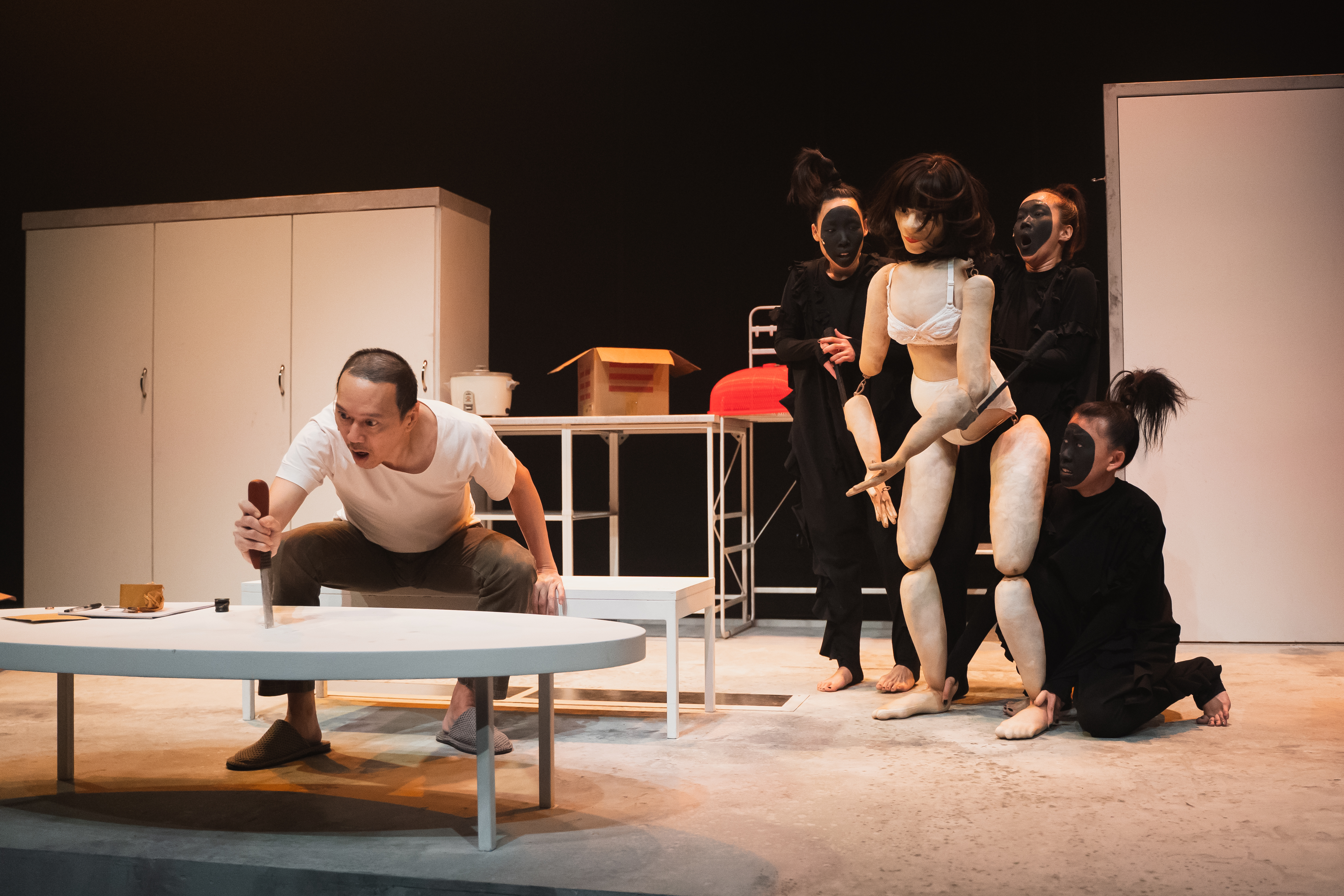
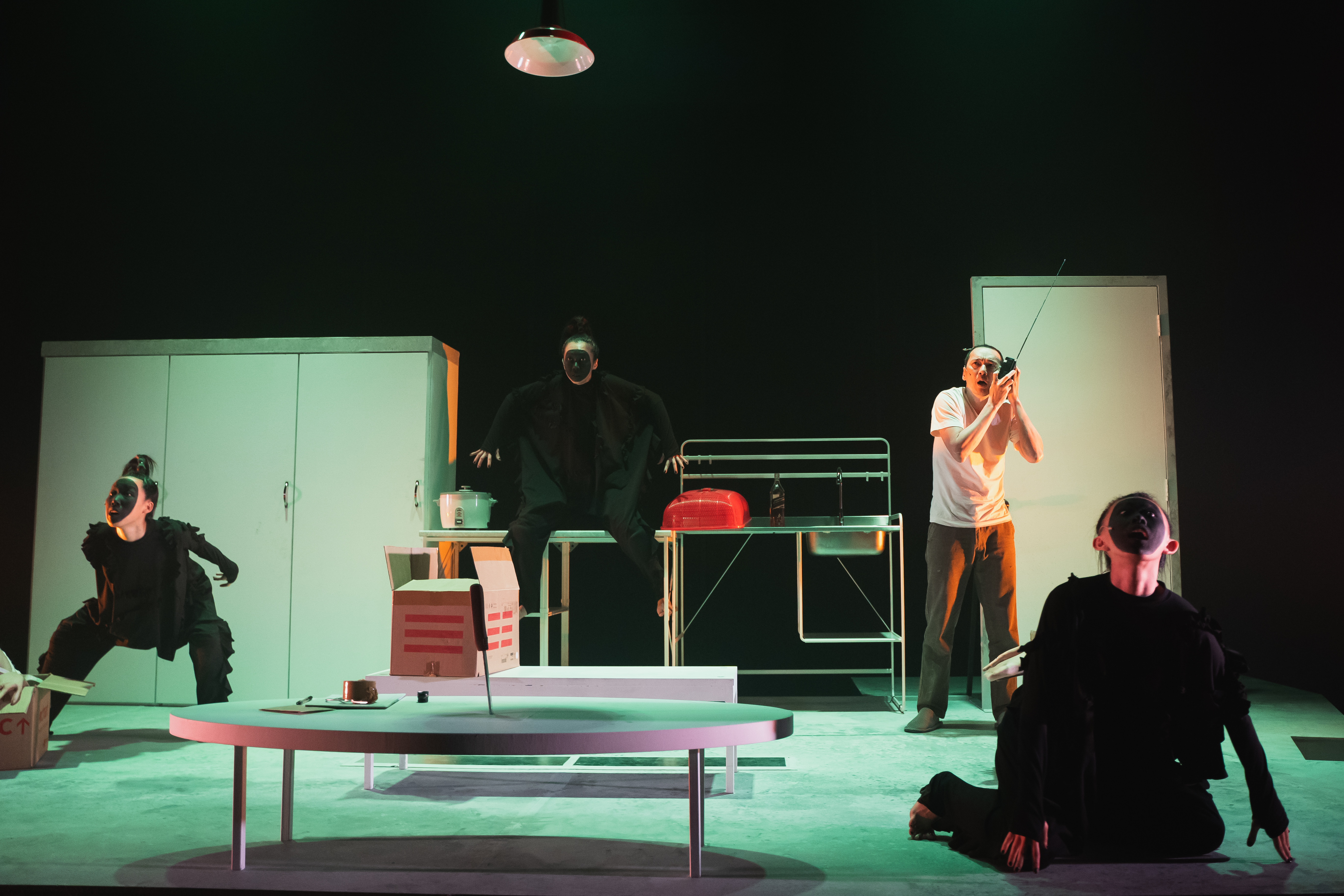
In this non-verbal piece conceived and directed by Oliver Chong, a man (Alvin Chiam) writes a parting letter to his wife and removes his wedding ring. Three creatures (Angelina Chandra, Jo Kwek, Rachel Nip) dressed in black appear and they seem to represent the man’s personal demons. As they scamper and scramble about the room to frolic and cause mischief, the man gets increasingly affected.

The timing between the creatures shifting the body parts of the puppet, and the man wondering they are constantly being misplaced, is incredibly taut. This brings out a sense of dark humour. We get the horror trope of things moving about and seeing the dark forces causing mischief, while also getting the comedic element of child-like creatures playing pranks.

The creatures (Angelina Chandra, Jo Kwek, Rachel Nip) seem to represent the man’s personal demons
Photo: Benson Lim / Courtesy of The Finger Players

Chiam’s slightly understated approach is a nice touch as this contrasts with the creatures suggests how he is trying to control what is going on internally as manifested by the creatures on stage.

The creatures also double as puppeteers. When the mannequin is assembled, it becomes the spectre of the man’s wife, and he is confronted with what he did. As the ultimate act is committed, the puppet is crucial in showing how violent we can be. This may be a little too uncomfortable if such violence is enacted on a human actor. 

The promotional materials describe this piece as “high octane”, but the initial menacing quality of the piece is not ramped up towards the climax. While one might worry about how much the audience can take, I think there is still more room to push this further. 

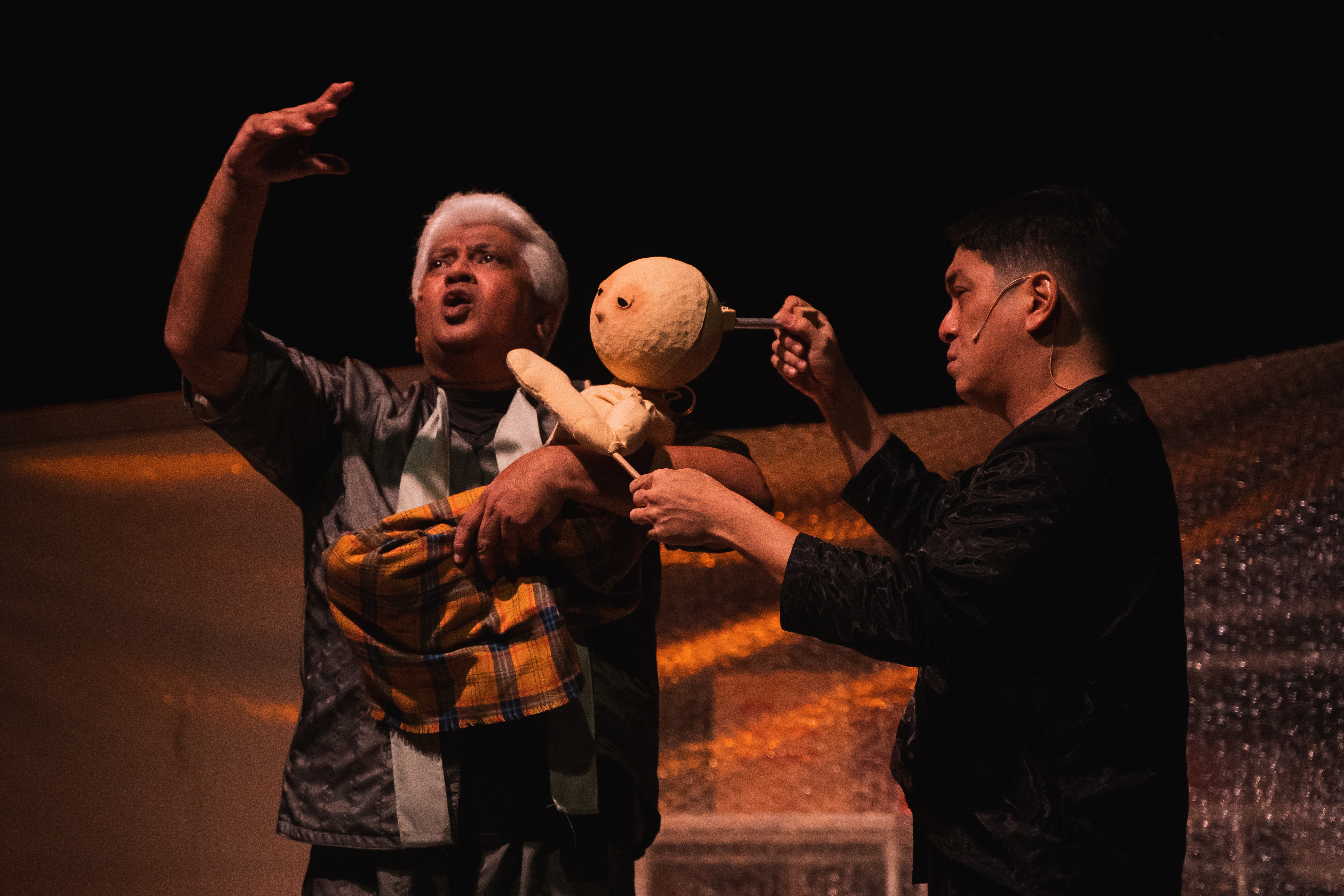
Ian Tan handles and gives voice to the rod puppet, Paul. T. Saitharan plays Paul’s father
Photo: Benson Lim / Courtesy of The Finger Players

The Bench brings us back to familiar ground with Marilyn Ang’s rod puppet which plays the son, Paul, whose relationship with his father (T. Sasitharan) is strained.

Having lost his wife, the father has to raise his son alone and tries to connect with him by creating an environment that the father thinks is beautiful—building a bench that can play sounds when touching different parts of it, and telling him stories or quotes by luminaries of the past whenever Paul needs some guidance. 

Paul drifts from his father as he tires of the cryptic wisdom provided by his father, which does not seem to help him navigate through the thickets of life. 

In this wistful play, written by Ellison Tan and directed by Myra Loke, we see Paul grow from an infant to a young adult through the sensitive puppeteering and line delivery by Ian Tan. 

One of the key features in Marilyn Ang’s design of Paul is a mechanism in the chest which allows it to emit bubbles. At a few points in the play, we see Paul emitting a stream of bubbles from his chest, as if he is pouring his heart out. Just like the stories and quotes from his father, they appear beautiful, but are fleeting and do not exist long enough for a connection to be made. 

Delicate performances from T. Sasitharan and Ian Tan / Photo: Benson Lim / Courtesy of The Finger Players

T. Sasitharan, as Paul’s father, has an unmistaken presence and one could listen to him tell stories for hours. Despite him likening acting with and reacting to puppets as a high-wire act sans safety net, he does it effortlessly.

However, even when the relationship is fraying, the father still resorts to quotes and anecdotes to communicate with his son. One wishes that the audience with some sort of indication—either through the text or direction—as to why the father could not speak from the heart, despite being very eloquent in relaying wisdom from the past.

With a few beautiful moments sprinkled in the piece, which brings out Marilyn Ang’s exploration of tactility and bubbles, the piece is an elegy of father-son relationships, and the missed opportunities for connection. 

Despite needing a few tweaks, everyone involved in the triple-bill must be congratulated for creating works that incorporate the puppets in an organic way, while throwing humanity’s needs, desires, and frailties into sharper relief. 

Other Reviews

“Theatre review: The Puppets Are Alright is sophisticated storytelling about grief and love” by Charmaine Lim, The Straits Times Life! (Review is behind a paywall.)

“To Make is To Care” by Lee Shu Yu, harmonicstagebeams

“The Puppets Are Alright” by The Finger Players—and I know the outgoing artistic directors will be alright too” by Corrie Tan, the intimate critic

“Response: Alex Li on The Puppets Are Alright by Ellison Tan, Oliver Chong, and Chong Tze Chien (The Finger Players)” by Alex Li, Critics Circle Blog

Further Reading

[Interview] Creatives shed light on ‘The Puppets are Alright’ by The Finger Players

[Interview] Ellison Tan and Myra Loke celebrate their stint as co-artistic directors of The Finger Players with The Puppets are Alright

Programme booklet of The Puppets are Alright

[Theatre Review] Puppet Origin Stories by The Finger Players: Of Remembrance and Reïnvention

Courtesy of The Finger Players / Photo: Tuckys Photography

Puppet Origin Stories
The Finger Players
9 November 2022
One-Two-Six Cairnhill Arts Centre
9–13 November 2022

The site of Cairnhill Arts Centre was originally an estate surrounded by nutmeg plantations. The building was also once Anglo-Chinese School and the Teachers’ Training College, among other things.

I am aware of those facts not because I am well-versed in local history, but it was shared with us by the co-artistic directors of The Finger Players, Ellison Tan and Myra Loke, as the prelude to Puppet Origin Stories, a triple bill of performances by artists from various disciplines using puppets from the company’s repository.

With that rather surprising prologue, Puppet Origin Stories is more than a puppetry experimentation or reïnvention; it is also about remembrance and the company’s way of looking back at its history. 

Remembrance and reïnvention are present in all three works.

Chai Jean Yinn as Shadow (left) while Liew Jia Yi manipulates Peng (right) / Photo: Tuckys Photography

In “Jabber”, movement artist Hairi Cromo takes his childhood experiences and creates a piece whereby a boy interacts with a strange creature, which is a physical manifestation of his unresolved feelings. 

Liew Jia Yi deftly handles Peng, the puppet of the boy, by slipping into his feet like slippers while manipulating his hands and head through the rods attached to them. Liew’s movement work is quite detailed as she successfully creates nuances in the boy’s movements such as creating the illusion of distance as the boy greets his friends when they pass him by in school.

Chai Jean Yinn plays the teacher, who strips the boy of his prefect position after he was caught playing a fool in class, and the amorphous creature, Shadow, that haunts the boy. The former is portrayed by wearing a mask, while the latter is portrayed by Chai wearing a headscarf made from different cloths and an oval cookie tin for a face.

Apart from the sweeping movements which creates a ghost-like quality in the creature, Chai also haunts the boy by collapsing her body which lends the creature an amorphous quality.

While one can see the resemblances to Lewis Carroll’s Jabberwocky, which is one of the main inspirations for the piece, it does not have enough thrust in which the boy is working through his feelings. As it stands the boy has a slight revelation and asks the creature to leave him. 

One hopes that this piece will be developed further in future and, if it could really tell the story from the boy’s point of view, it will fulfil the main goal of emphasising the importance of adult’s acknowledging the feelings of children.

Tan Beng Tian visits Ah Ma (handled by Yazid Jalil) in a museum / Photo: Tuckys Photography

“AH MA” by film-maker Tan Wei Ting remembers the past and invents a (hopefully) fictional future when puppetry is no longer practised, and it exists only as artefacts inside a museum display. A puppet, Ah Ma, is chosen to be preserved, but when Tan Beng Tian realises that Ah Ma is unhappy, a museum heist ensues.

Ah Ma is a rod puppet created for A.i.D, Angels in Disguise (2010). As she is suffering from dementia in the original production, she has a jewel inside her head that represents her memories. With a flick, expertly done by a puppeteer, the jewel is flung out, and Ah Ma loses her memories.

The theme of remembrance manifests in many ways. In the context of the piece, will we suffer a kind of cultural dementia as our performance practices die out from the lack of support? Are we truly remembering a performance tradition if it is no longer practised? Is curation a kind of reïnvention?

Tan Wei Ting traverses the past and the imagined future through the interplay of archival footage of A.i.D and having Tan Beng Tian—veteran puppeteer who was involved in handling Ah Ma in A.i.D, and has been with The Finger Players since the beginning—perform in the piece as she navigates a world in which puppetry is dead.

Yazid Jalil doubles up as the bureaucratic curator and the grumpy, but sympathetic security guard who assists in the heist. He displays versatility in both puppetry work and acting as he has to switch characters at a (sometimes literal) drop of a cap.

The duo also showcased some sensitive puppeteering. As the lines of Ah Ma are delivered through a voiceover, the timing has to be absolutely right with details such as breathing or crying added in.

Apart from a sense of poignancy, there is also a sense of child-like playfulness. While Ah Ma steals the show, there is also some—for a lack of a better term— “informal puppetry” going on. 

Tan would sometimes hold and move the curator’s spectacles or security guard’s cap while Yazid delivers his lines before quickly changing characters. This harkens back to the games of make-believe we play as children—perhaps carelessly moving a soft toy while giving it voices might be our very first contact with puppetry.

Mitchell Fang (left) and Deonn Yang (right) handle Moon Baby as it stands on the body of Becca D’Bus / Photo: Tuckys Photography

In line with the provocative title, “Suck Sweat Dry, Baby!”, drag queen Becca D’Bus does not hold back and questions the premise of the whole endeavour. In her first monologue of the piece, she asks what is there to remember for a company with slightly over 20 years of history, and suggests that something only has monetary value if it has a history. 

While that might be incredibly cynical, one cannot help but wonder if there is a kernel of truth when most arts companies are so reliant on state funding, and they have to constantly justify their value to stay afloat.

Beyond the usual drag act of lip-syncing to Johnny Cash’s Ring of Fire, the provocation continues in a pastiche of scenes with different puppets. 

In one scene we see Moon Baby hiking up Bukit Timah Hill, represented by the contours of D’Bus’ corseted body. In the course of people-watching, a taxonomy of hikers is created, as Moon Baby wonders about human behaviour and the image that we are trying to portray to others.

In another scene, we see Sponge Girl inadvertently hooking up with Samsui Woman. And we soon see both puppets laying on top of each other while Deonn Yang and Mitchell Fang, who are in full drag, create sound effects that suggest copulation.

In most puppetry traditions, the puppets are often seen as performers themselves and are often treated with a sense of reverence. As such, it might be initially uncomfortable to see the puppets in this new context, which veers into the profane. 

But it is the same reverence that allows us to imbue them with human qualities, and the provocation soon becomes an exploration of human frailties and desire.  

One leaves the piece unsure of what one has just witnessed, but there is a tacit understanding of the need for human connection. 

With Puppet Origin Stories set to be a yearly fixture, the premise and overall direction of the first instalment is a good start. I cannot wait to see how this platform evolves in years to come. 

Other Reviews

Theatre review: Open-ended challenges in Puppet Origin Stories that linger” by Charmaine Lim, The Straits Times Life! (Review is behind a paywall.)

“关于守护的问题——观 ‘Puppet Origin Stories'” by 杨明慧, 剧读 thea.preter

到经禧艺术中心作客—— 观《偶起源故事@126》” by 梁海彬, 剧读 thea.preter

“Teaching an Old Puppet New Tricks” by Lee Shu Yu, harmonicstagebeams

Further Reading

[Interview] Puppet Origin Stories: Same Puppets, New Stories — My interview with the creators of the pieces.

Digital Programme of Puppet Origin Stories

Puppet Origin Stories: Peng — An article about how Peng, which is featured in “Jabber”, came to be.

Puppet Origin Stores: Faceless Maiden — An article about how Faceless Maiden, which is featured in “Jabber”, came to be.

Puppet Origin Stories: Ah Ma — An article about how Ah Ma, which is featured in “AH MA”, came to be.

Puppet Origin Stories: Moon Baby — An article about how Moon Baby, which is featured in “Suck Sweat Dry, Baby!”, came to be.

Puppet Origin Stores: Sponge Girl — An article about how Sponge Girl, which is featured in “Suck Sweat Dry, Baby!”, came to be.

Puppet Origin Stories: Samsui Women — An article about how Samsui Woman, which is featured in “Suck Sweat Dry, Baby!”, came to be.