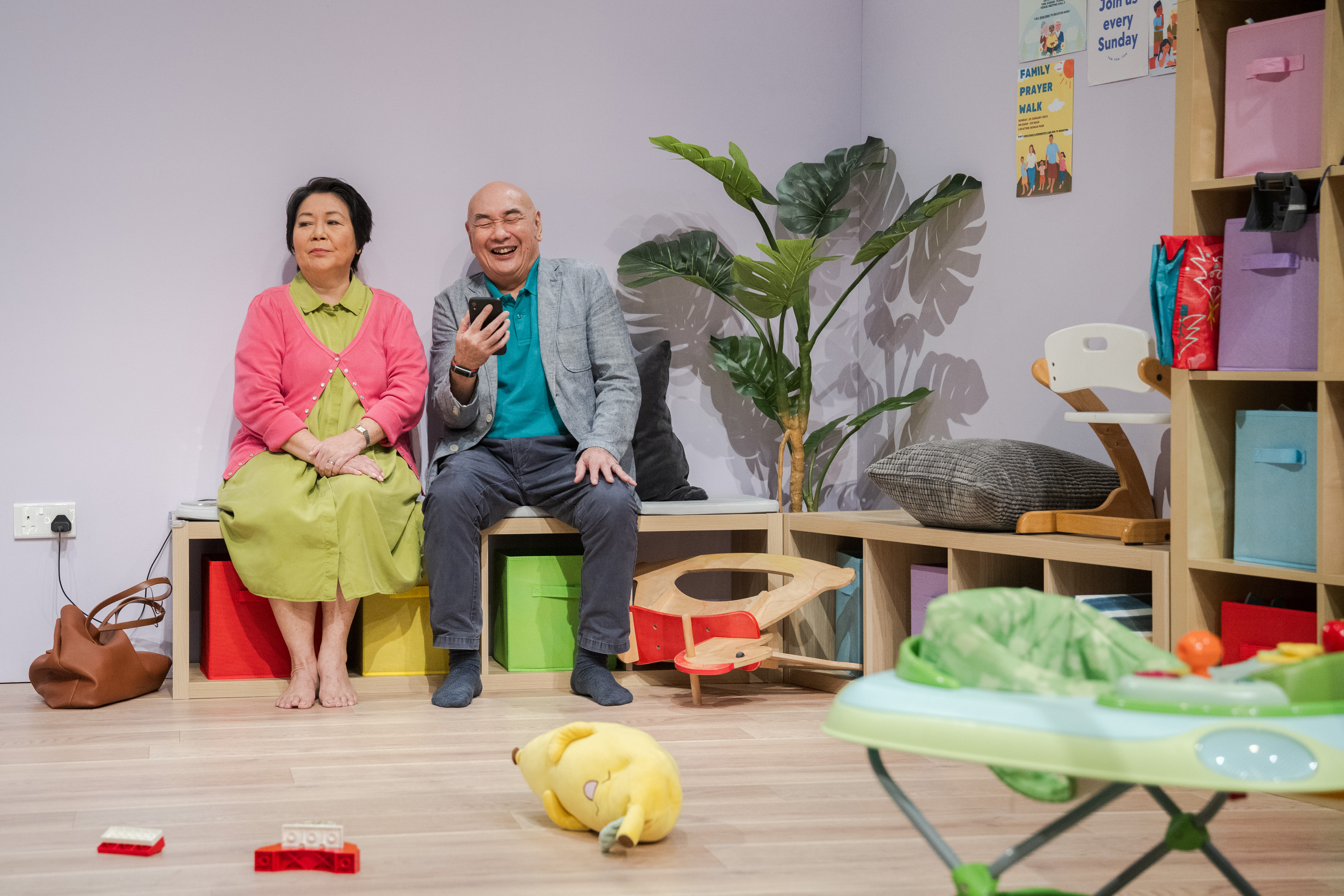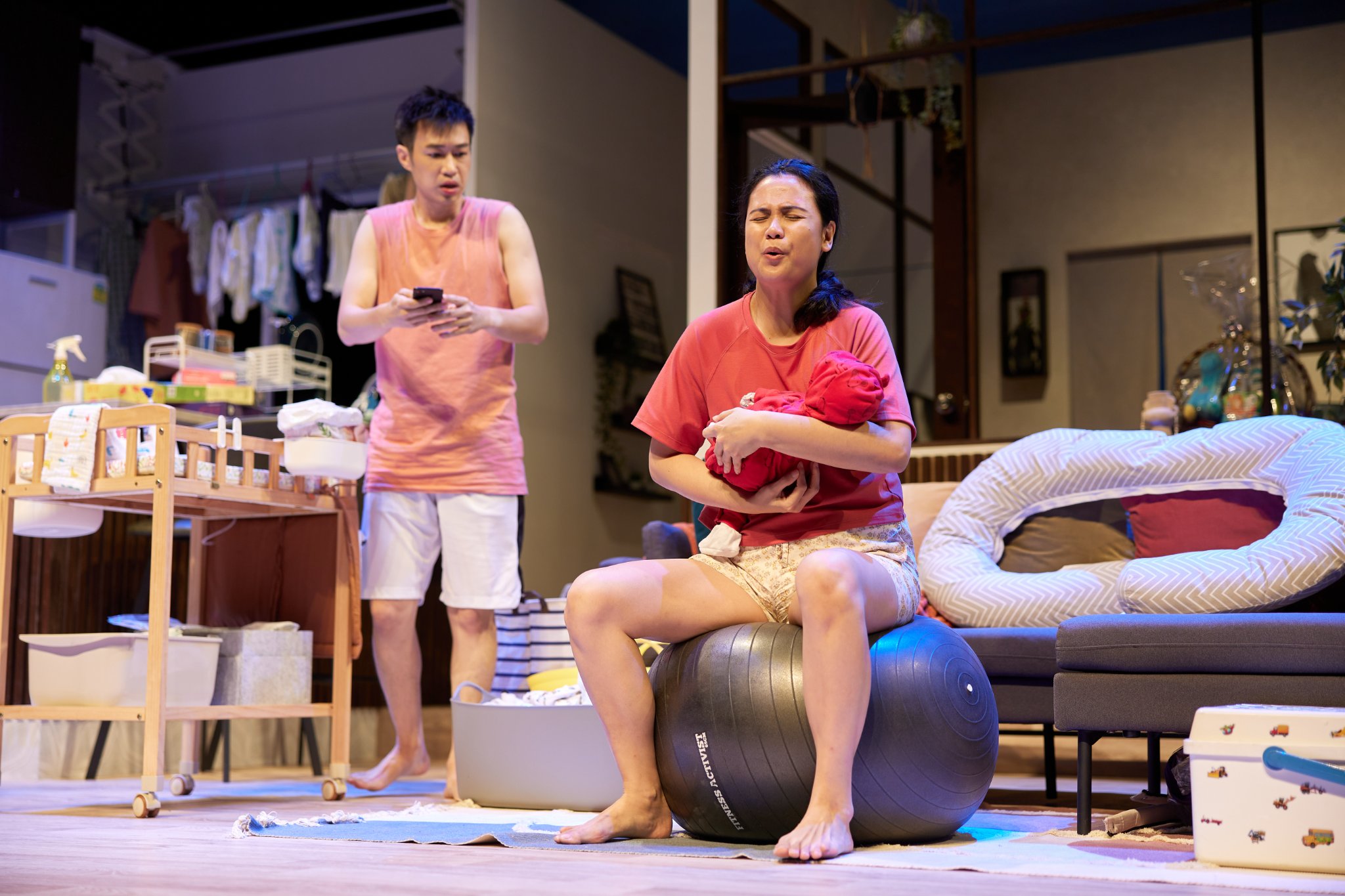
[Interview] Myle Yan Tay on his latest play, “Statement Piece”

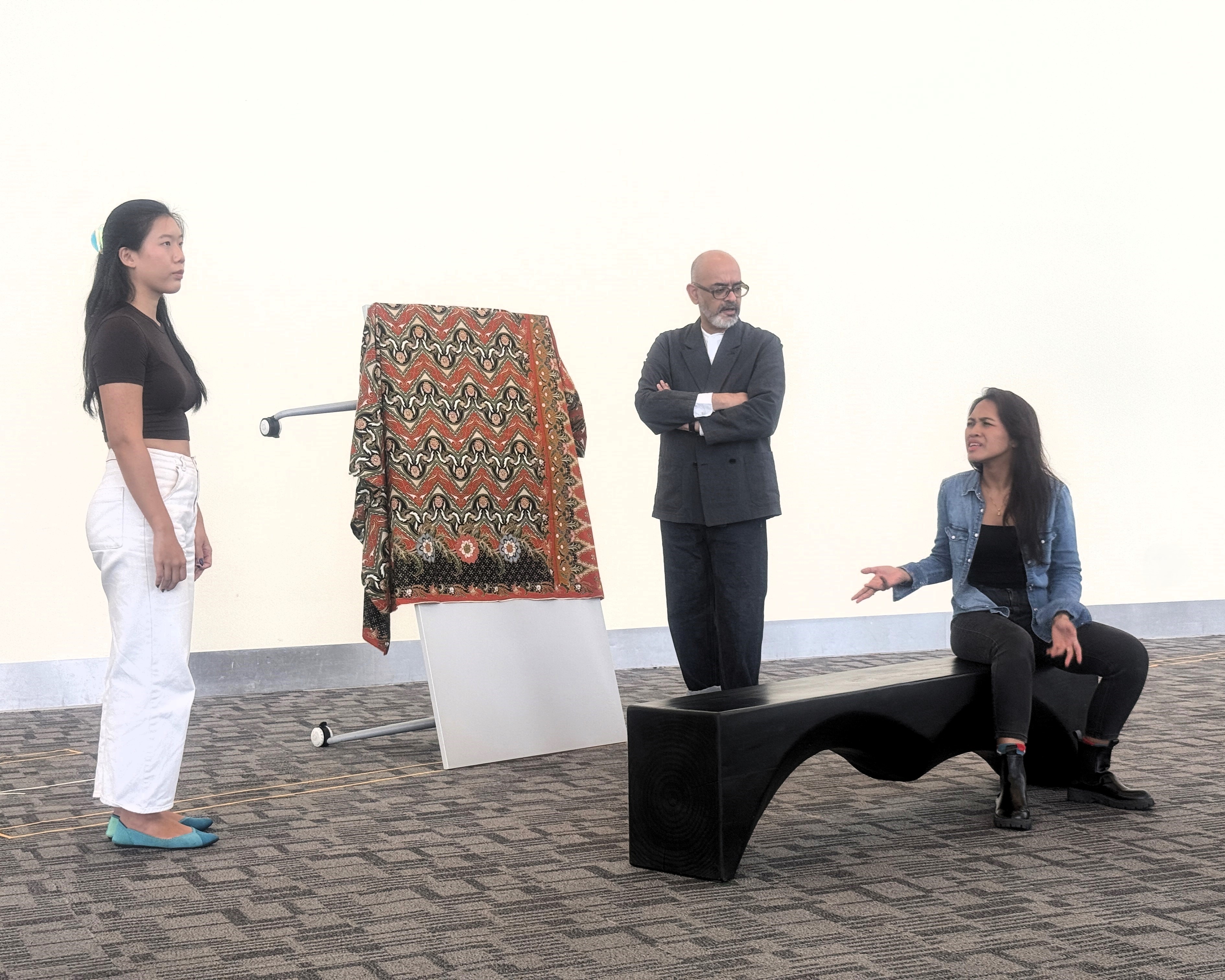
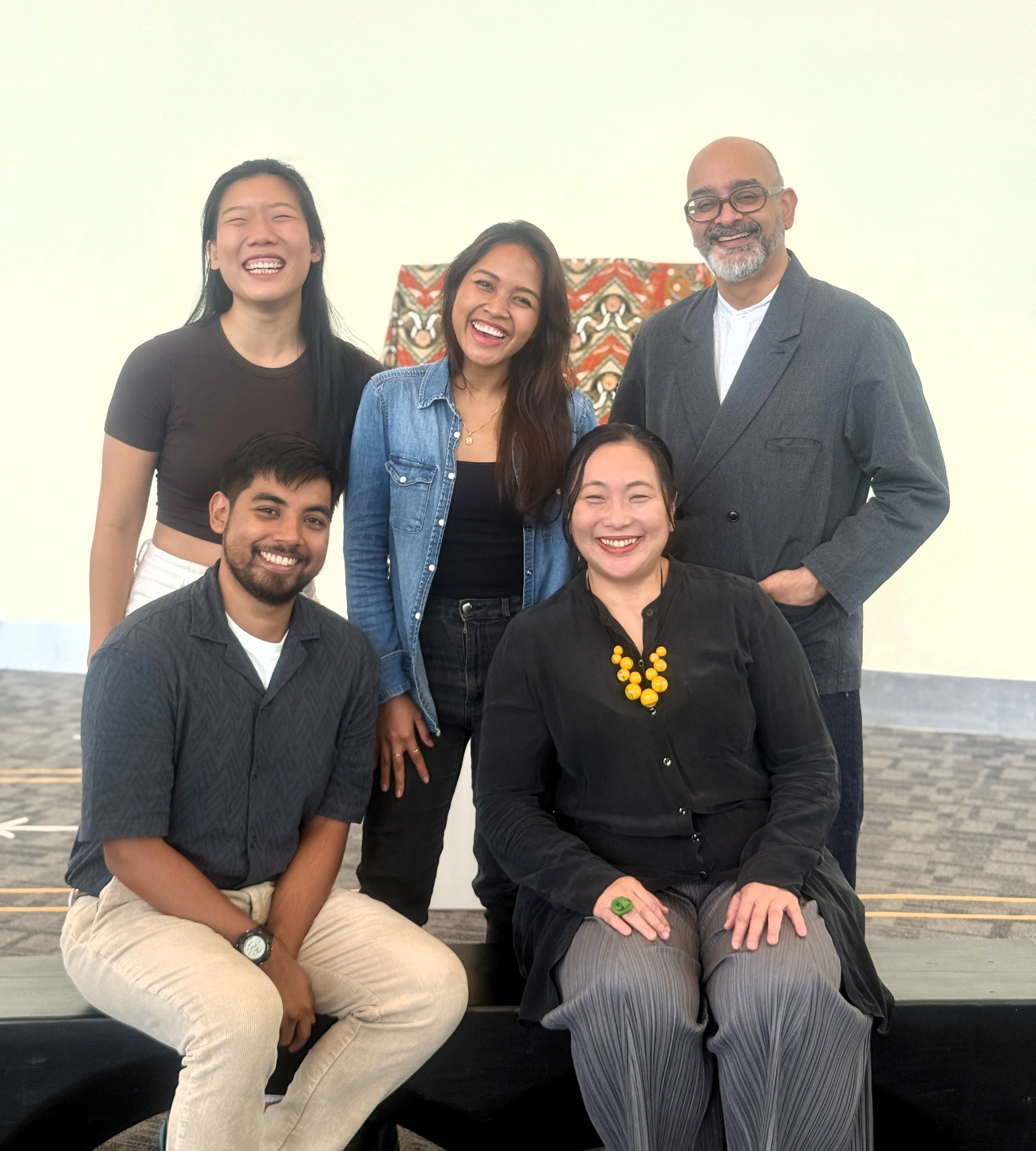
Playwright Myle Yan Tay (seated left) with director Claire Wong (seated right) and the cast (standing L-R): Tricia Tan, Rusydina Afiqah, and Huzir Sulaiman (also the dramaturg). / Courtesy of Checkpoint Theatre

After the the success of Brown Boys Don’t Tell Jokes (2023) in which playwright Myle Yan Tay looks at male friendships, race, and politics, he is back with a new play, which focuses on the purpose of art in Statement Piece.

I write prose and plays, review movies, and host a podcast about comic booksmedium is always on my mind. What does one medium do that another can’t? Plays don’t have page-turns, comic books don’t have line breaks, and the central painting in Statement Piece has no dialogue.

The cast rehearsing Statement Piece. / Courtesy of Checkpoint Theatre


[Theatre Review] Hard Mode by Checkpoint Theatre: Heartfelt Mission with Too Many Side Quests

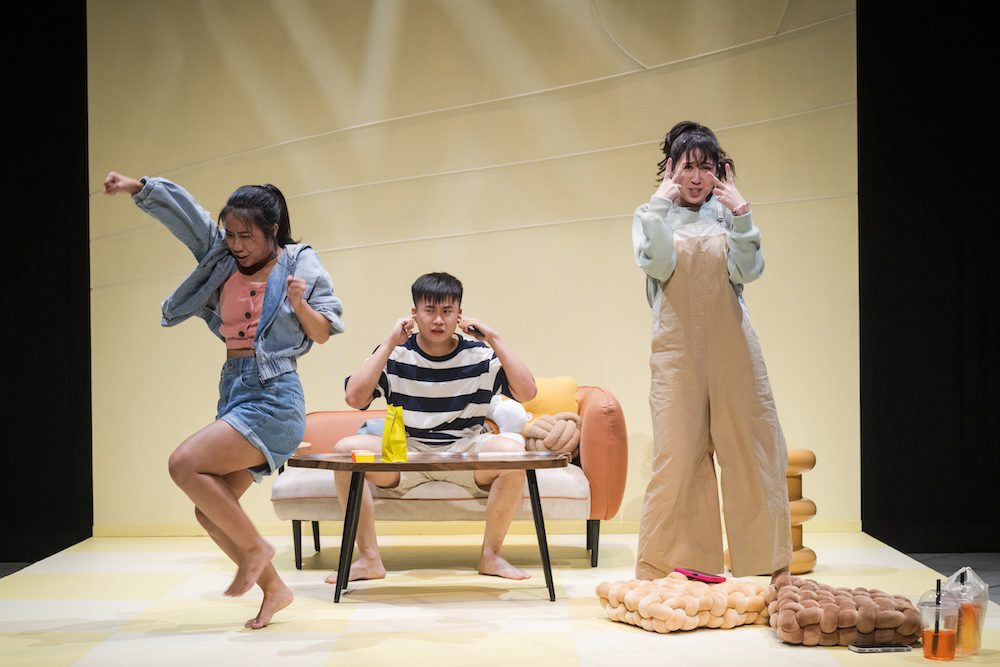
L-R: Arissa (Janine Ng), Adam (Chaney Chia), Maya (Kyra Lefebvre) / Photo: Joseph Nair / Courtesy of Checkpoint Theatre

Photo: Joseph Nair / Courtesy of Checkpoint Theatre

This makes me wonder how do d/Deaf audience members experience the show as it is difficult to watch both the interpreters and actors at the same time. 

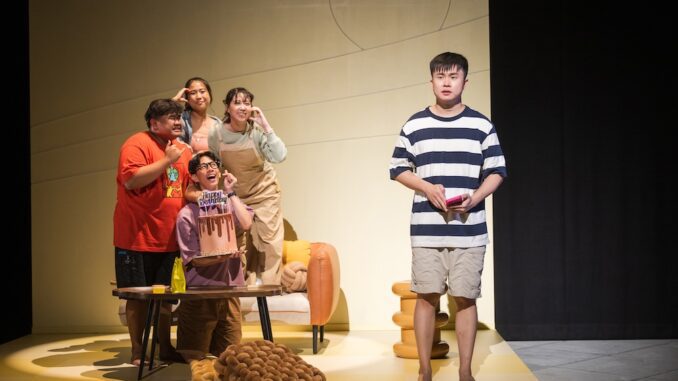
Sengkang Squad: Rian (Izzul Irfan), Adam (Chaney Chia), XY (Matthias Teh) / Photo: Joseph Nair / Courtesy of Checkpoint Theatre

Seeing the teenagers in the theatre taking countless selfies and hand swiping to APT. by Rosé and Bruno Mars, it is easy to dismiss them as disruptive and irrational.

But be it going to BTS’s Magic Shop or retreating to nostalgic reverie; a quest to the boss level or life’s odyssey—perhaps it is about embracing these polarities and truly listening to each other so that life need not be on hard mode all the time.  

Programme booklet for Hard Mode

“Checkpoint Theatre’s Hard Mode takes Gen Zers and Gen Alphas on their own terms” by Clement Yong, The Straits Times Life!

“Theatre review: Hard Mode gives youth and its obsessions full, unprejudiced treatment” by Clement Yong, The Straits Times Life! (Review is behind a paywall. Read the partial transcript here.)

“Review: Wong Yong En on Hard Mode by Faith Ng (Checkpoint Theatre)” by Wong Yong En, Critics Circle Blog

“[Theatre Show Review] Finally, a realistic depiction of Singapore’s family units in ‘Hard Mode’, a play about Gen Alpha” by Marcus Goh

[Interview] Playwright-Composer weish and Director Huzir Sulaiman on Secondary: The Musical

weish: In response to our trailer someone had joked, “Ah, the weish chord”! That really tickled me. But if it was any indication that there is something signature to my sound in the ears of others, I am glad. The show is a mix of spoken scenes—naturalistic and otherwiseand 15 original songs. I have had the pleasure of working with Ian Lee and Daniel Alex Chia from independent music label PK Records as my arrangers and producers, and they’ve breathed new life into the music in ways that balance my own sensibilities. The music is quite alternative and unconventional to the musical theatre style, but still accessible, and very lyric-driven. Genres range from folk to hip-hop to electronic, but what I hope ties them together is a rawness of emotion and sincerity. And, perhaps, a “weish chord”…

Photo: Daryl Eng / Courtesy of Checkpoint Theatre


Catch It!

[Theatre Review] The Tug and Tussle of Relationships in Tender Submission by Checkpoint Theatre

Photo: Joseph Nair / Courtesy of Checkpoint Theatre

Unlike Brown Boys Don’t Tell Jokes, which takes us on explosive highs and lows, Lucas Ho’s Tender Submission—as the title suggests—is dramatically meek. But the unearthing of human frailties and desires in the context of faith and marriage is no less affecting. 

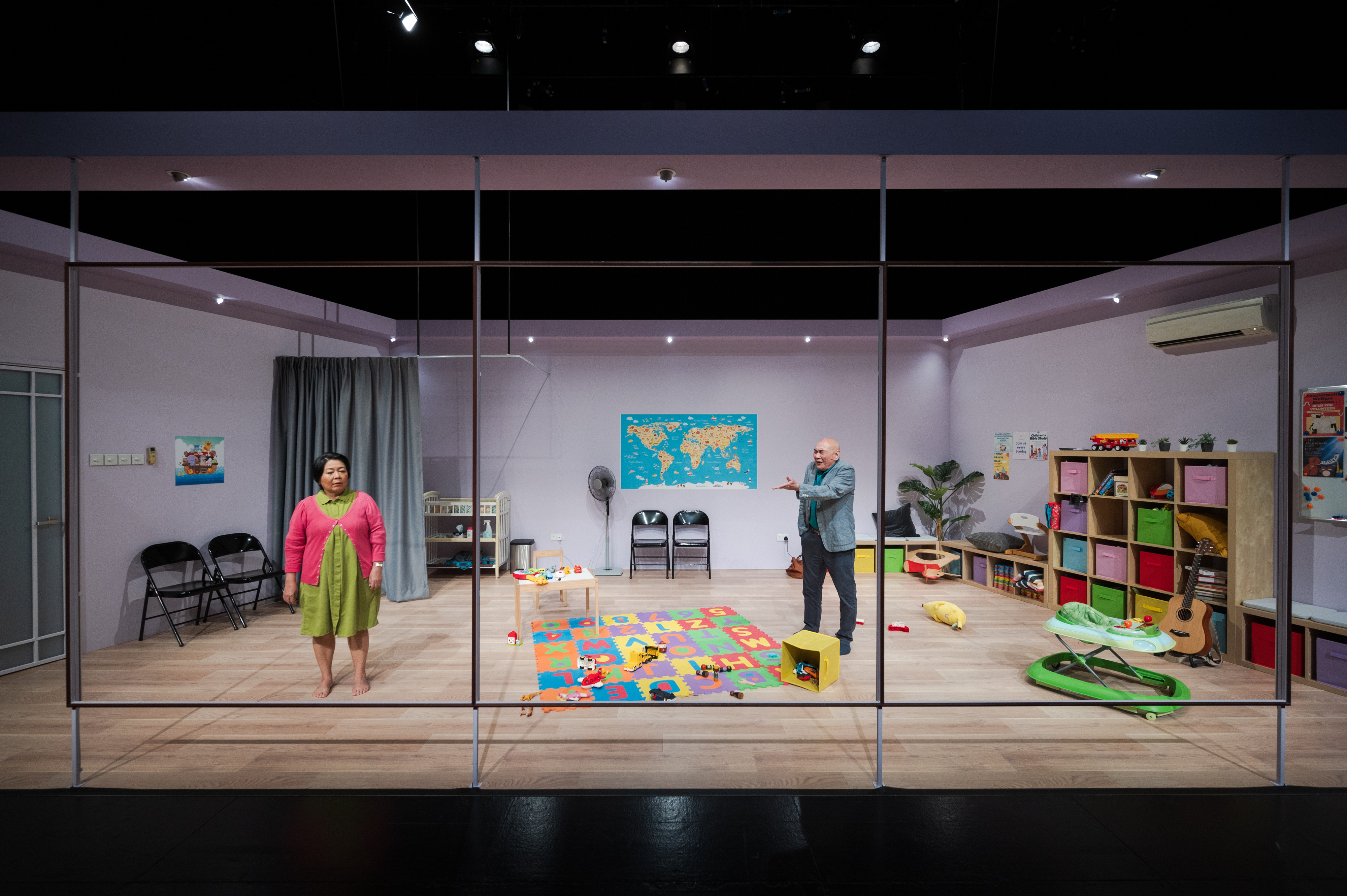
Failure to understand and articulate one’s needs / Photo: Joseph Nair / Courtesy of Checkpoint Theatre

Neo Swee Lin and Lim Kay Siu play out every push and pull of a relationship / Photo: Joseph Nair

“Theatre review: Stellar acting in Tender Submission, but it preaches to the choir” by Shawn Hoo, The Straits Times Life

“Review: ‘Tender Submission’ delves deep into the heart of faith and marriage” by Yaiza Canopoli, SG Magazine

“Review: Azura Farid on Tender Submission by Lucas Ho (Checkpoint Theatre)” by Azura Farid, Critics Circle Blog

“‘Tender Submission’ by Checkpoint Theatre” by Corrie Tan, the intimate critic

Tender Submission by Naeem Kapadia, CrystalWords

“Theatre Review: Tender Submission, An Original Singaporean Story That Probes Deeply Into Relationship And Religion” by Xushuang Chen, Weekender

“In Praise of Growing Through Checkpoint Theatre’s Tender Submission: A Review” by Charmaine Tan, Men’s Folio

“Review: Tender Submission by Checkpoint Theatre” by Bakchormeeboy

[Interview] Lucas Ho talks about his latest play, Tender Submission

[Interview] Lucas Ho talks about his latest play, Tender Submission

For the second production of their 2023 season, Checkpoint Theatre will stage Tender Submission by Lucas Ho. I caught up with him to find out more about his brand new play that cuts across faith, marriage, and commitment.

Synopsis
In the quiet of their church’s cry room, Catherine and David anxiously await the results of an important vote. As the crucial decision hangs in the balance, the life they have built together over the last 30 years comes under sharp scrutiny, and they are compelled to confront the very basis of their relationship.

Tender Submission bears witness to the unspooling of a decades-long marriage. When faith and purpose diverge, what truly lies at the heart of a relationship? Can a new path be found together?

Under Huzir Sulaiman and Chen Yingxuan’s taut, vivid direction, veteran actors and real-life couple Neo Swee Lin and Lim Kay Siu bring honesty and nuance to these complex characters as they navigate unspoken doubts, fears, and desires.

With precision and deep compassion, Lucas Ho’s new play grapples with the tensions between the institutional and the individual, and asks what it really means to commit to something greater than yourself.

What inspired you to write Tender Submission?

Thematically, I wanted to explore how religious beliefs are situated within the Singapore context—do they intermingle, improve, impinge, or impoverish; or all at once? In my case, Christianity is the religion I’m most familiar with. How do those who are religious attempt to balance the need to proselytise with the reality of being part of a society that appears secular at its very foundation? What are the means by which some will attempt  to exert influence, and do the ends justify those means?

It also started as a technical challenge for myself, reducing theatre to its absolute minimum: two people in a room, no scene cuts, no flashbacks, no additional characters to shift the dramatic vector. How much storytelling could happen? How far could I take it? And would it be compelling theatrically? I found that these restrictions forced me to dig deeper into the inner lives of the characters, and really compelled me to be deft and delicate about how to create a sense of forward momentum for the plotting. I hope it works!

One theme the play explores is how far one would go to act on one’s convictions. What made you decide to explore that theme in the context of a couple, and their Christian faith?

Centering it upon a couple was my way of finding a narrative conduit through which it became viable to tell a story about religion, in dramatic form.

And, as I was writing the play, I also found myself curious about an older couple from an anthropological perspective. I had grown up in church around these accomplished, well-spoken, and well put together married couples. They always seemed to know what they were doing and always had a ready answer to any question, religious or not. I began to imagine how they came to be, and wondered who they were when they were alone with each other.

In the press release, you mentioned that you wrote this play as an ‘invocation’. Could you elaborate more on that? What do you hope to invoke through the audience’s experience of the play?

It’s often been said that what keeps human individuals motivated and hopeful and alive is for them to be aligned with and committed to something other than, or larger than, themselves. It could be a social endeavour, or a communal engagement, or a religious activity.

An invocation in this regard is thus on one level an appeal to that core need within us. And, on another level, it’s also an appeal to the authority that said core need has over us.

One more sense of the word ‘invocation’ that’s very much on my mind, is “a cry for help”.

How has the process of writing this play informed you of your own personal struggles?

I’ve recently realised that one common fixture in all my plays is a character who is a middle-aged Chinese man. Maybe I’m trying to examine why the middle-aged Singaporean Chinese man looks and talks and thinks in a particular way; maybe I’m trying to figure out if that’s my future self, and if so, how to do better.


Catch It!

Tender Submission runs from 17 to 27 August 2023 at Drama Centre Black Box.
[Theatre Review] ‘Brown Boys Don’t Tell Jokes’ by Checkpoint Theatre: The Joke’s on All of Us

Photo: Joseph Nair / Courtesy of Checkpoint Theatre

Brown Boys Don’t Tell Jokes
Checkpoint Theatre
24 March 2023
Drama Centre Black Box 
23 March–2 April 2023

A musician, an activist, an academic, and a therapist walk into a politician’s house on the eve of an election. The showdown that ensues is unexpected as the characters, save for the politician, thought this was just a group of friends catching up for old time’s sake.

There may be a sense of camaraderie in the shorthand that one develops with friends, but without examining the intention and context that underlie them, the in-jokes, nicknames, and quips soon become barbs. 

As Tesh, an aspiring member of parliament, enlists the help of his friends due to a looming political scandal, friendships are pushed to the limits, and intentions are questioned, as old or unresolved conflicts emerge. Barbs and hands fly quick and fast. 

It is in this messy slugfest that playwright Myle Yan Tay interrogates race, politics, class, and censorship. Issues such as minority representation in media and politics; what constitutes the brown community; and whether cancel culture is going too far—among other topics—are unleashed on us in unrelenting waves.  

The topics covered might make the production seem like an argumentative essay in costume, but it is far from that. The topics are raised organically, depending on what the characters clashed about, and we are not brow-beaten into any position. 

But where we really see the playwright’s skill is that as we lean towards all the characters being complex and irreducible to a set of identity markers, we are yanked back to the reality that there are some issues affecting all of them simply on the basis of their skin colour. One is unsure of one’s stand, but as a Chinese man, I find myself keenly absorbing every nuance and complexion presented.

Not turning a provocative play into something overly didactic or having a woe-is-me protagonist, while offering several insights to mull on is difficult for any playwright, let alone for one debuting his first full-length play. 

L-R: Dev (Krish Natarajan), Adam (Shahid Nasheer), Tesh (Gosteloa Spancer), Scott (Ebi Shankara), Fizzy (Adib Kosnan)
Photo: Joseph Nair / Courtesy of Checkpoint Theatre

As most of the stage time mirrors real time, and all the action occurs in Tesh’s living room, it is easy for the show to be derailed into an endless shouting match. The sophistication in Huzir Sulaiman’s direction coupled with the sheer commitment from the wonderful cast mean that every moment is filled with pregnant intensity. 

Our attention is drawn to different parts of the room when the fissures occur. But if one were to cast an eye on the other characters observing the situation, you can feel the simmering tension, as you wonder what would happen next. 

Gosteloa Spancer’s portrayal of Tesh may be slightly tentative initially. But by the time he delivers the key monologue, he has the audience latching on to every word. 

Ebi Shankara’s Scott, a therapist who moved to the US, may be the most easy-going of the lot, as he bears the brunt of jokes about him escaping Singapore or adopting Americanisms. However, domestic troubles gradually bubble to the surface. Witnessing how Shankara allows his character to stew in his problems until the inevitable revelation is a delight. 

Krish Natarajan plays Dev, a musician who provided most of the comic relief due to his cheeky demeanour. But one should look out for the handling of Dev’s character arc as he becomes more circumspect when Tesh’s predicament compels him to reflect on his past.

Watching Adib Kosnan play Fizzy—an ardent activist seeking to effect change via social media—is a refreshing change to his mild-mannered character in a previous collaboration with Checkpoint Theatre, Keluarga Besar En. Karim. This is also a testament to his versatility as an actor.

Adam, a jaded academic caught in an unjustified social media maelstrom caused by Fizzy, is understandably sceptical and guarded. Shahid Nasheer’s keen sense of timing allows Adam to play devil’s advocate as he curtly interrogates everyone’s intentions.

The other cast members—Isabella Chiam (Marina, Tesh’s wife); Lareina Tham (Caroline, Tesh’s assistant); Vishnucharan Naidu (Ravi, Tesh’s intern);  Hang Qian Chou and Chaney Chia (cameramen)—serve to emphasise how politics is heavily reliant on optics.

The Singapore theatre canon is no stranger to tackling race issues. Only time will tell if Brown Boys Don’t Tell Jokes will be added to it.

However, with so much to think about, the joke’s on all of us if we don’t move the conversation forward on race issues, and figure out ways to coëxist better. 

Other Reviews

“Theatre review: Brown Boys Don’t Tell Jokes offers detailed characterisation and serious themes” by Ong Sor Fern, The Straits Times Life! (Review is behind a paywall. Read a partial transcript here)

Brown Boys Don’t Tell Jokes by Naeem Kapadia, Crystalwords

“Review: Dia Hakim on Brown Boys Don’t Tell Jokes by Myle Yan Tay (Checkpoint Theatre)” by Dia Hakim, Critics Circle Blog

[Interview] Myle Yan Tay explores the evolution of male friendships in ‘Brown Boys Don’t Tell Jokes’

Courtesy of Checkpoint Theatre

Checkpoint Theatre kicks off its 2023 season with the premier of Brown Boys Don’t Tell Jokes, a play by its associate artist, Myle Yan Tay.

With the play being promised as a “nuanced and unflinching examination of friendship, race, and masculinity in our country”, I caught up with the playwright to find out more about his inspirations behind the play.

Synopsis

The eve of an election. A politician, a musician, an activist, an academic, and a therapist reunite after several years.

As the five friends catch up on the different paths their lives have taken, they realise their rose-tinted memories might be the only thing holding them together.

With secrets unravelling, old conflicts reawakening, and a threat looming, the five are forced to confront the boys they once were, and the men they want to become.

What was the inspiration behind Brown Boys Don’t Tell Jokes? Was there a particular incident that compelled you to explore male friendships?

The emotional inspiration was hanging out with my friends and thinking about what our conversations will be like in 15–20 years. Will we still laugh at the same things? Will we still be as close? What secrets will we have? That was the first step, but the characters are very far from my friends. They were the initial spark for me to start thinking about friendship and male intimacy.

The more artistic inspirations were two plays: The Boys in the Band by Mart Crowley and One Night in Miami by Kemp Powers. Both plays look at masculinity in such a specific way, concerned with larger societal issues, but located within this group of very human characters. And both works take place over a single evening, as these lifelong friendships become forever altered. That constraint was very appealing to me, to see how a situation like that can devolve.

What is the significance of the title?

I’ve been telling jokes my whole life. Some of them are funnier than others. Some have been hurtful. Jokes are often seen as funny and lighthearted but can also be used to deflect, distract, empower, and attack someone.

In a group of friends (who happen to be brown), what are the jokes that harm individuals and/or friendships? What are they laughing at? Who are they laughing with? That’s what the title is about, it’s about the confluence of race, masculinity, and comedy in Singapore. The jokes that are told can reveal a lot about the relationship between oneself and the relationships one has with others

What was the biggest challenge you faced while writing the play?

One of the biggest difficulties was trying to figure out when I was crossing the line. I knew I wanted the play to step into some taboo territory, but it was also trying to navigate when it should happen, when I should step back, and very often, when I had to go a few steps further.

Did you gain any new insights into your own friendships in the process of writing the play?

It’s definitely had me thinking about the concept of “growth”. That’s a major theme of the play, something I was intentionally exploring when writing Brown Boys Don’t Tell Jokes.

But seeing the actors bring it to life and make those friendships tangible puts it even more in focus—because these are five men who have grown together and grown apart. Now that they’re together again, they’re regressing to those older versions of themselves.

So the thing I’ve been thinking about is how can friendship allow transformation? And how does it encourage stagnation?

What is one advice you would give a young man transiting into adulthood?

Gosh, I hardly feel qualified to do that. I guess it would be to think about your position. What biases are you carrying because of how you exist in the world? What are you allowed to get away with because you’re a man? And how can you help people from your position?


Catch It!

[Theatre Review] The Fourth Trimester by Checkpoint Theatre Brings Up Gravid Issues

Samantha (Isabella Chiam) and Aaron (Joshua Lim) struggle to care for their newborn / Photo: Crispian Chan

The Fourth Trimester
Checkpoint Theatre
4 August 2022
Drama Centre Theatre
4–14 August 2022

Getting pregnant and giving birth may seem like the most natural thing to some of us. But to do so safely and ensuring the child thrives can be absolutely mind-boggling.

Faith Ng’s The Fourth Trimester features three couples and a single woman who span the spectrum of circumstances regarding pregnancy. 

Samantha (Isabella Chiam) and Aaron (Joshua Lim) struggle to care for their newborn. In contrast, their neighbours, Sofia (Rusydina Afiqah) and Johan (Al-Matin Yatim) struggle to conceive. While Lisa (Julie Wee) and Daniel (Hang Qian Chou) seem to be doing fine with two children, their communication problems regarding intimacy issues strain the marriage. Having just come out of a relationship, Ann (Oon Shu An), who is Lisa’s sister, strives to be independent as she faces the attendant pressures of being a single woman in Singapore.

While medicine has progressed by leaps and bounds, pregnancy is still a very personal process with each body responding in different ways. As someone who has yet to witness the pregnancy of a partner, the choices that Samantha and Sofia have to consider are bewildering. 

The acronyms and abbreviations of various readings or medical processes rattled off by the characters will give any rapper a run for his money. And the pump-and-rest routine, recommended by the lactation expert for Samantha, sounds like a manic choreography created by an evil robot. 

Add the emotional burden of self-doubt; comparing oneself to others; and familial and societal expectations, it sounds nothing short of a messy ordeal. 

Far from avoiding it, Ng takes a deep dive into the messiness of human relationships and writes them in very affecting ways.

From the audience members cooing in sympathy with the opening scene to the countless post-show Instagram stories yapping about how “relatable” the play is, it is clear that the audience is in for the ride at every second of the three-hour emotional odyssey. 

However, all these knee-jerk reactions overlook something that director Claire Wong has done that is rarely achieved. She allows the scenes to breathe and run its emotional course. Many directors often cut their scenes short after a revelation or climax, almost apologetic about taking up the audience’s time.

This is complemented by the actors experiencing every crinkle of emotion. Witness Isabella Chiam as Samantha going from anxiousness to anguish, before picking herself up; or Julie Wee’s Lisa starting with annoyance, but ending with red-faced rage. 

The other characters have similar moments as they cycle through the whole gamut of emotions, undergirded by an inability to articulate, or expecting the other to know and fulfil one’s physical and emotional needs. This makes the relationship familiar and infuriating, yet all too human.

That said, how everything settles into the ending is a little unsatisfactory. As we are taken to such emotional highs and lows, the way the show ends feels as if it is because the allotted time of three hours is up. 

At the curtain call, director Claire Wong mentioned that the production took many trimesters for it to be put together. For a play that makes one feel so much and reflect on so many issues, it will be remembered for many more trimesters hence. 

Other Reviews

“Theatre review: The Fourth Trimester is a must-watch play about parenthood” by Olivia Ho, The Straits Times Life! (Review is behind a paywall. Read the partial transcript here.)

“Pandemic era’s first essential Singapore play” by Helmi Yusof, The Business Times (Review is behind a paywall. Read the partial transcript here.)

“[Review] Parenthood™️ and Other Rites of Passage — The Fourth Trimester” by Cheryl Charli, Arts Republic

“★★★☆☆ Review: The Fourth Trimester by Checkpoint Theatre” by Bak Chor Mee Boy

“Theatre review: The Fourth Trimester play at the Drama Centre Theatre” by Amanda Broad, HoneyKids

[Interview] Jo Tan talks about her latest play, Session Zero

In December, Checkpoint Theatre will be staging its first live production for the year, a premier of Session Zero by Jo Tan. The play revolves around a couple trying to save their marriage by playing the fantasy role-playing game, Dungeons & Dragons.

Intrigued by the premise of the play, I spoke to Jo Tan to find out more about the show.

What inspired you to write a play about a couple trying to save their marriage?

I don’t know what it was about the pandemic, although I saw friends less, I managed to fall out with several of them… pretty hard. We had common passions about common issues, but the gap between how these issues affected us differently suddenly seemed an uncrossable chasm. I had a hard sleepless time understanding how these relationships had fallen apart so thoroughly, and I wanted to use this play, and the marriage in it, to try and figure out whether any differences are truly irreconcilable.

Why did you decide to choose the game, Dungeons & Dragons, as a main feature of the play?

Dungeons & Dragons got me through a large part of the pandemic – I couldn’t go out or act much, but I could escape to a different body and fantasy land in my head. And it just fascinated me how people (including myself) played their game characters. You could see how it was a tool for them to express how they could have been if only things were a little different. What if the play’s hopelessly estranged couple could be other people for a day?

As you are an avid player of the game itself, has the process of creating this piece made you appreciate new facets of the game?

I generally play with actors (which make up three-quarters of my social circle), and you tend to take it for granted that they will be quite unabashed when inhabiting the characters. However, when my co-actor Brendon led everybody in the show’s crew in a game as part of the rehearsal process, it was quite incredible to watch how playing the game characters empowered some of the more reserved personalities to make dramatic flourishes, laugh out loud, and take up more space. That’s the magic of the theatre of the mind.

As you are also performing in the show, has the rehearsal process made you see the story and characters you created in a new light?

Definitely. I always tend to separate my playwright self and my actor self, since the playwright just sets things on paper while the actor is generally a tool and channel for the visions of many people – the director, the writer, the designers.

You always see different things when performing something than when writing it. In both this and previous things I’ve written, I’ve definitely tried to say some lines which made me go, “who the heck wrote that?” But just walking through the story as opposed to living it in your head makes you understand them better, so I even have to empathise with the aggressors.

How does one win in a game of love and marriage?

Try to equate the two. That’s probably most important.


Catch It!

Session Zero by Checkpoint Theatre runs from 2 to 19 December 2021 at 42 Waterloo Street.

[Theatre Review] ‘The Karims’ Explores the Burdens and Warmth of Familial Ties

Photo: Checkpoint Theatre

Keluarga Besar En. Karim (The Karims)
Checkpoint Theatre
Online, Sistic Live
29 September–15 October 2021

If one were asked, “What makes a family a family?” How many of us would be able to provide an insightful answer beyond displaying birth certificates and family trees?

In Keluarga Besar En. Karim (The Karims), playwright Adib Kosnan explores the dynamics of a Singaporean Malay family through the new addition of a son-in-law, Aqil. Likened to a new player joining a football team, he wades through the entanglements and expectations of his new family, as long-held resentments surface. 

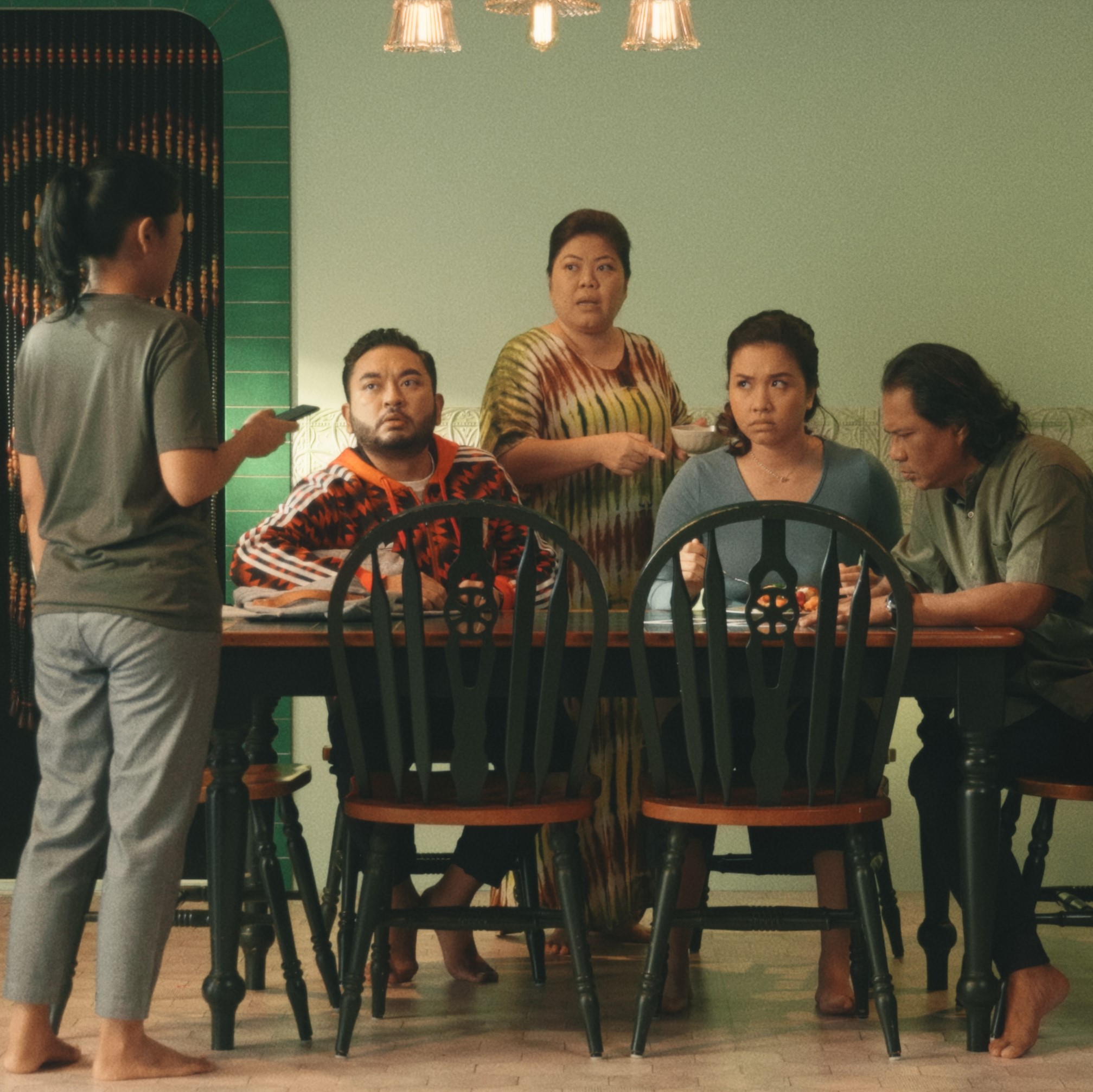
In his new team, Aqil (Adib Kosnan) has to contend with his father-in-law, Karim (Rafaat Hj Hamzah), who expects everyone to attend to familial obligations, sometimes at the expense of their desires. This leaves his sister-in-law, Rinny (Rusydina Afiqah), seething in resentment as she believes her father will never understand her.

Normah (Dalifah Shahril), his mother-in-law, may appear to be a typical housewife obsessed with K-dramas, her maternal instincts keep her own family drama from spiraling out of control. His wife, Balqis (Farah Lola), is trying to put off being independent from her family as Aqil is considering emigration. 

While the conversation is seemingly quotidian and the show feels like a dish in a slow cooker, there are several plot lines that untangle quite quickly as we move along. Through Claire Wong’s sensitive direction and Adib’s knack for storytelling, we see tensions rising to the surface only to be dispelled or deferred just before it veers into melodrama. 

With the bulk of cinematography, directed by Joel Lim, consisting of very tight close-ups, there is no space for the actors to hide except to inhabit their characters with complete sincerity. On that score, the actors really stepped up to the plate. I find myself being fully involved; ardently wishing for Karim and Rinny to meet each other halfway or giggling with the women as the daughters discuss their mother’s taste in men. 

Speaking of cinematography, this production resists any neat categorisations such as theatre for film or a short film. Despite the tight shots, it does not try to convince you that it is filmed in an actual apartment and there are a couple of scenes in a car, depicted by the well-worn conventions of actors sitting close together with some cursory miming from Karim as he seems to drive on a very straight road. 

The shot occasionally zooms out and we see an empty square which represents the grave of Diana, the child that the Karims lost. In a scene where we see Karim and Aqil performing a ritual while tending to the grave, the camera focuses on the hands and multiple shots are superimposed, forming a kind of palimpsest. Such gestural language is characteristic of Checkpoint Theatre’s productions.

Yet, this also points to unrealised possibilities—if the creative team does not want this to strictly be a short film, why not make better use of the Esplanade Theatre Studio and introduce more theatrical conventions to enhance the storytelling?

Throughout the show, we gradually learn about the motivations of different characters as well as the backstory of some events, and all of them come to a head at a family dinner. As all of this has been on a slow simmer, it is slightly discordant that they are resolved so quickly by Alqis’s comments about the importance of family. 

It is as if playwright Adib Kosnan is apologetic about taking too much of his audience’s time that he quickly deploys Alqis-Ex-Machina to take all the messy strands and tie them into a bow.

Despite that minor flaw, we are more than compensated by a stunning performance by Rafaat Hj Hamzah as he portrays Karim shrinking from an obstinate patriarch to a scared and broken man. His strident voice at the beginning of the dinner shrivels into a whimper as he reveals his fears.

Looking up from my screen as the credits roll, I cannot help but wonder which character I resemble most in my own family. Just as an ‘outsider’ casts a light on something that the Karims took for granted, this fictional family would do the same for many others who have the privilege of paying them a visit.

Further Reading

Interview with Playwright Adib Kosnan about Keluarga Besar En. Karim (The Karims)

Other Reviews

“Theatre review: In-law tensions in finely wrought family drama The Karims by Ong Sor Fern, The Straits Times Life!