[Interview] Playwright Cherilyn Woo and Director Deonn Yang on Phinny & Wally: Echoes of Home

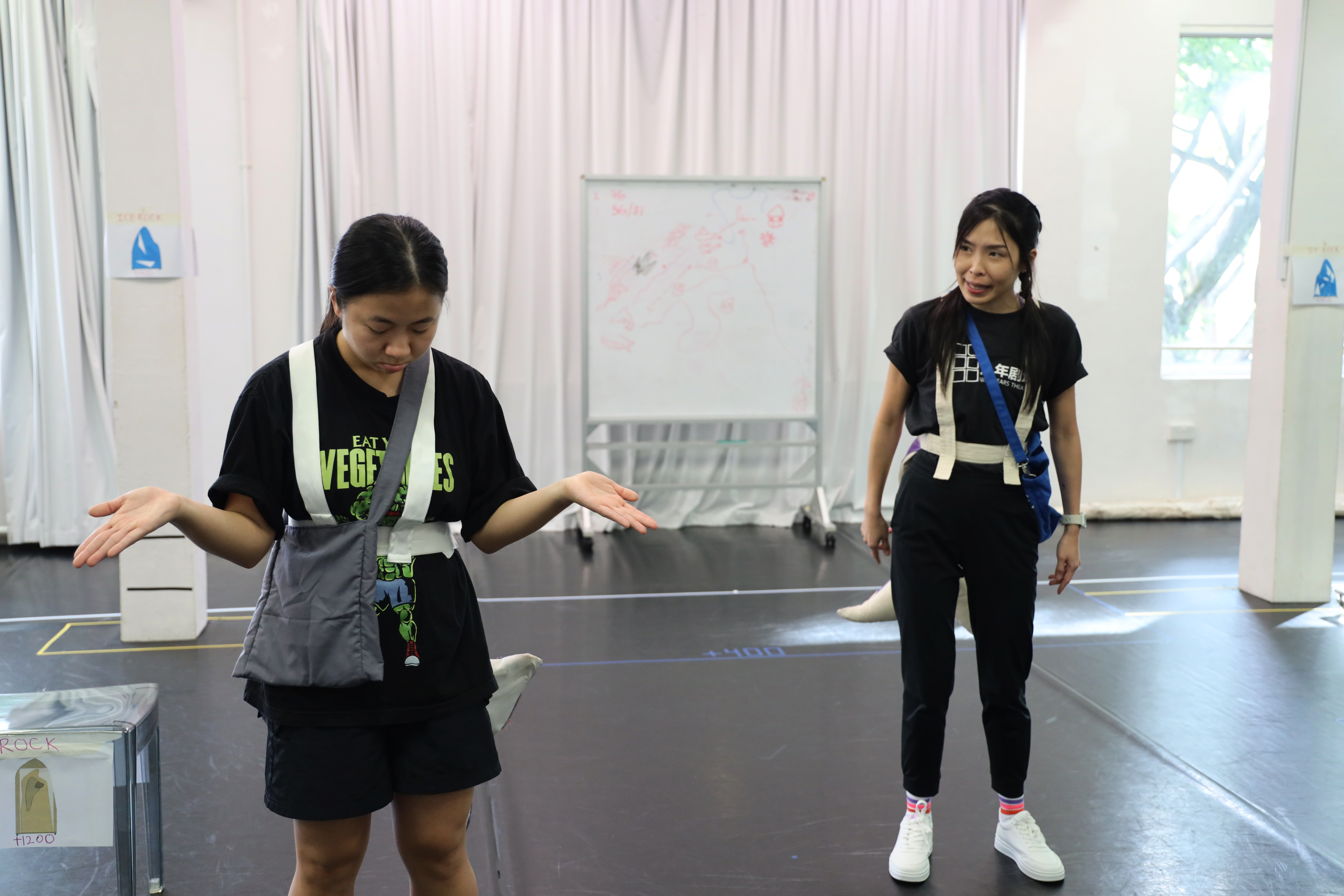
L-R: Cheryl Ho (Phinny), Vester Ng (Arlo), and Jodi Chan (Wally) in rehearsal for Phinny & Wally: Echoes of Home /
Courtesy of Nine Years Theatre

Courtesy of Nine Years Theatre

Courtesy of Nine Years Theatre


[Theatre Review] No Man’s Land by The Necessary Stage: Soapbox Contestations

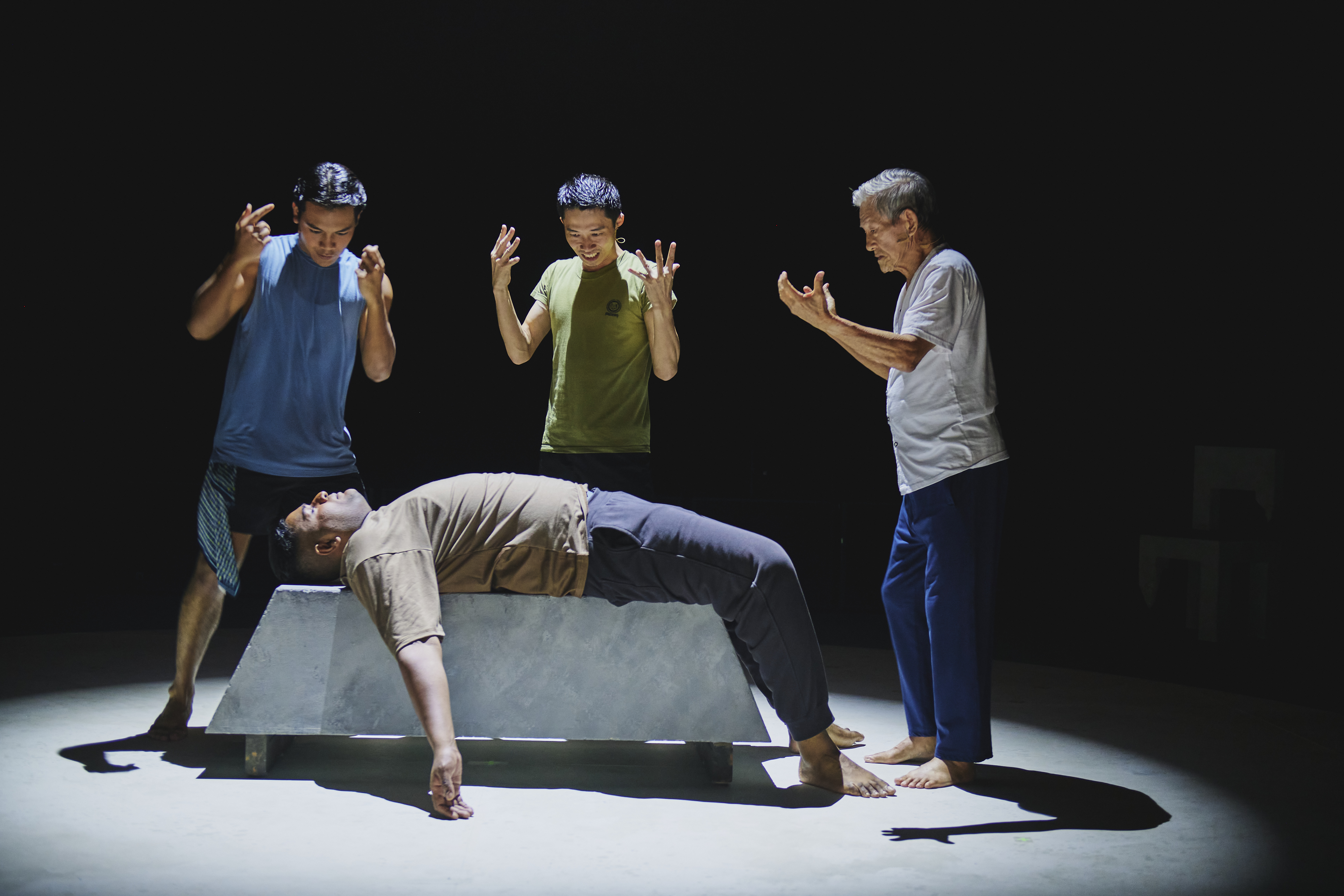
Dissecting masculinity / Photo: Tuckys Photography / Courtesy of The Necessary Stage

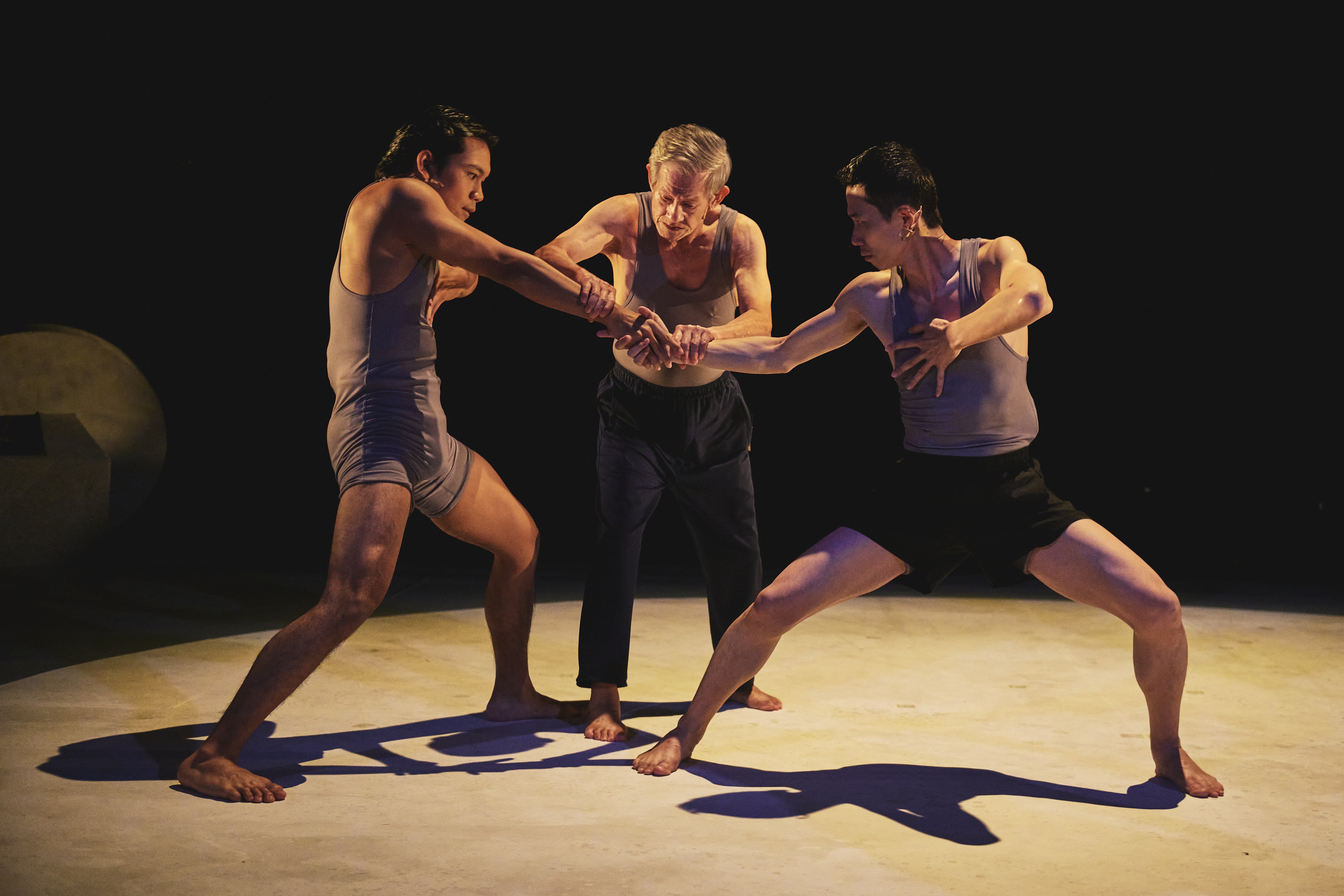
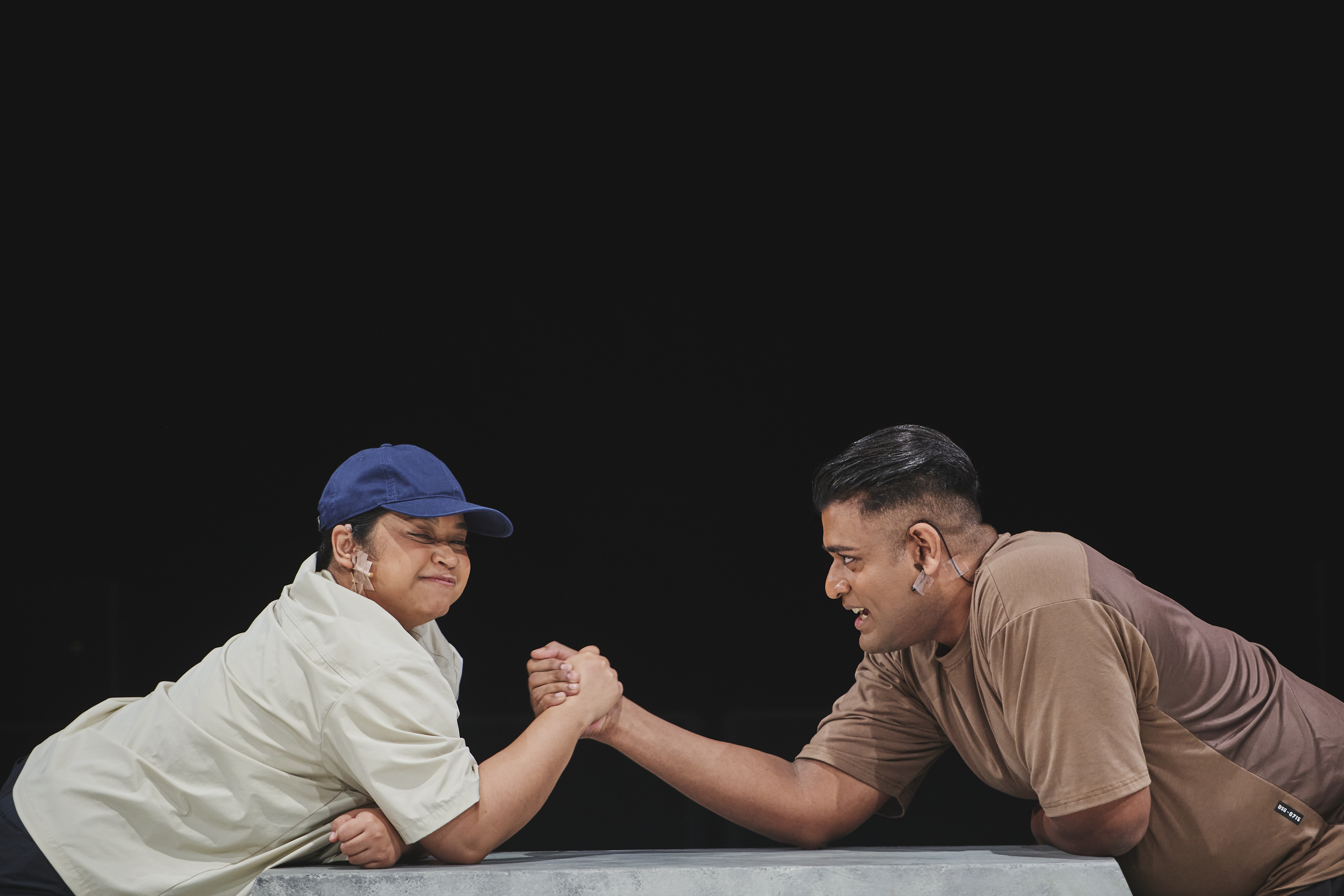
Flexed muscles and tensed sinews of Shahizman Sulaiman (left), Michael Tan (centre), and Neo Hai Bin (right) /
Photo: Tuckys Photography / Courtesy of The Necessary Stage

Men behaving badly / Photo: Tuckys Photography / Courtesy of The Necessary Stage

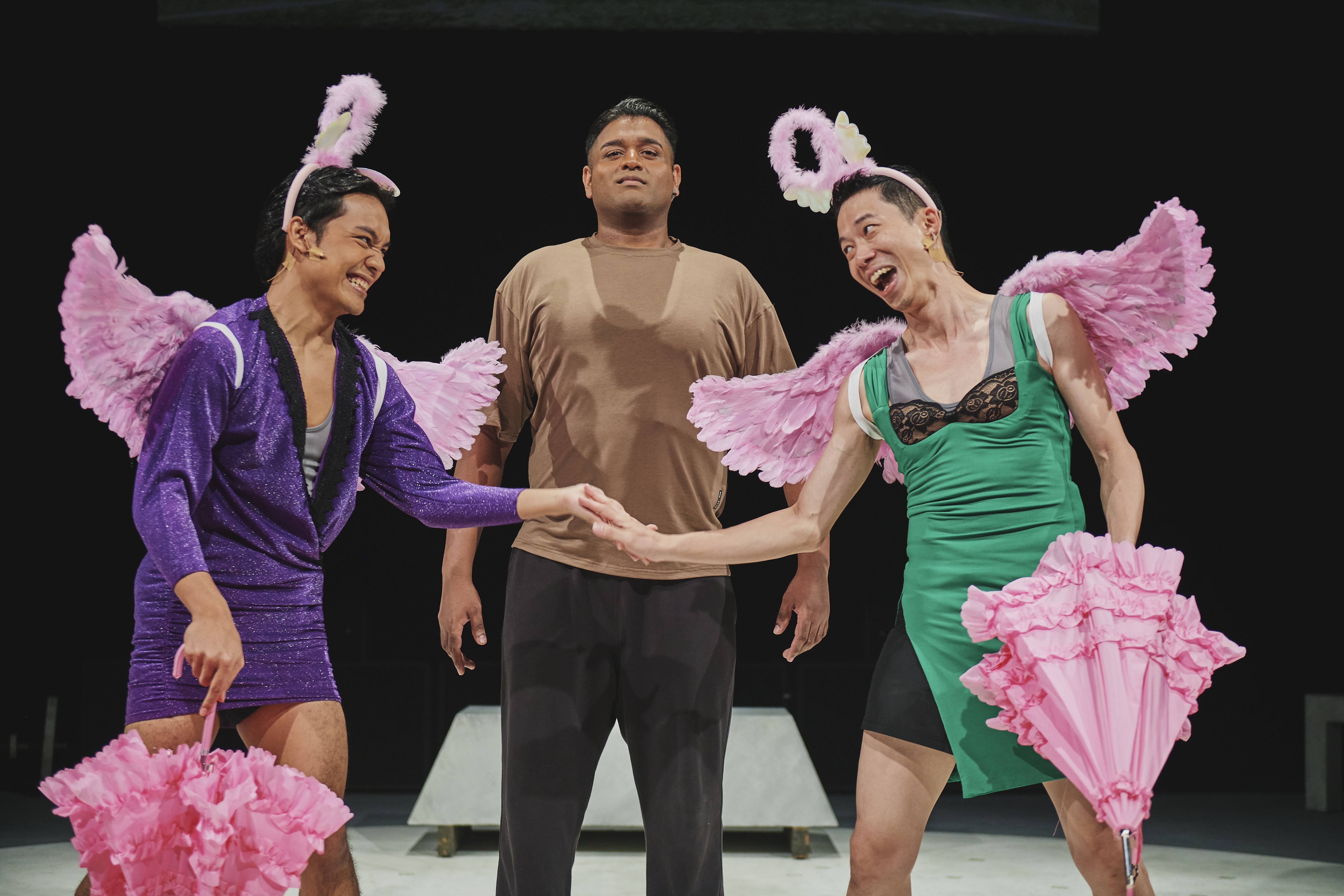
The lesbian sister (Suhali Safari) and her gay brother (Vishnucharan Naidu) deciding if she should return to Singapore /
Photo: Tuckys Photography / Courtesy of The Necessary Stage

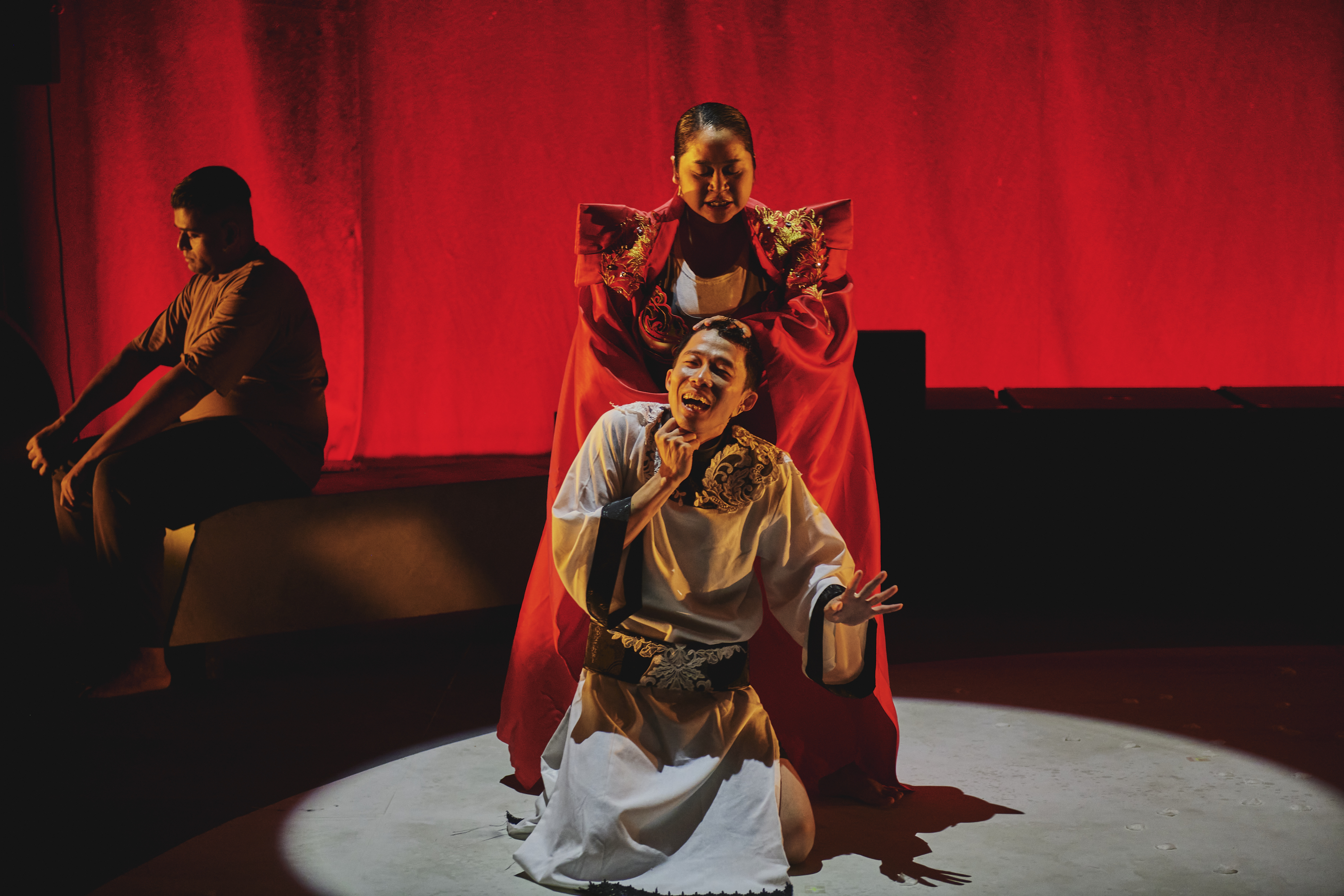
The Empress Dominatrix (Suhaili Safari) controls her Eunuch Client (Neo Hai Bin) /
Photo: Tuckys Photography / Courtesy of The Necessary Stage

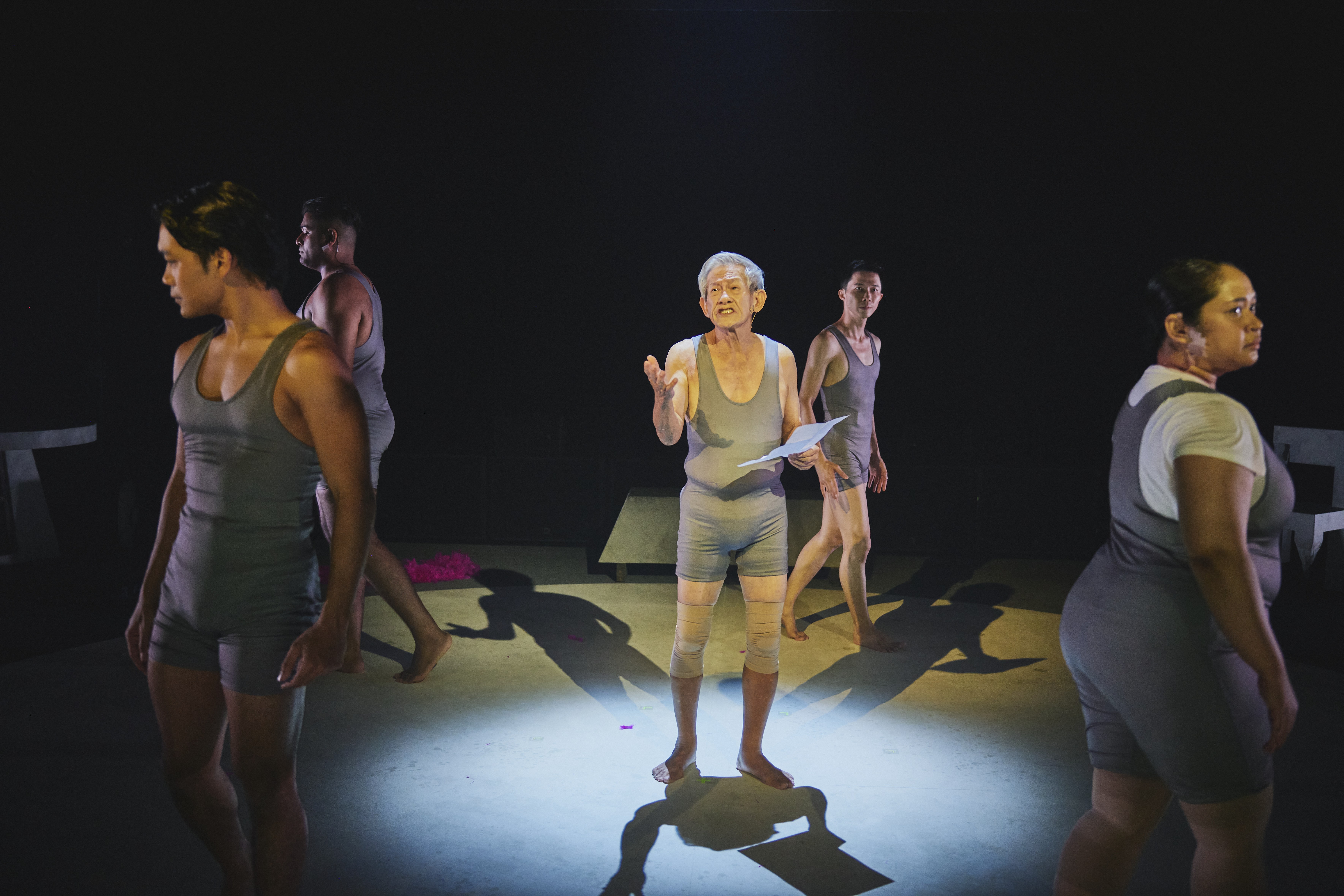
Michael Tan (centre) tenderly reflects on his journey as a man in a letter to his younger self /
Photo: Tuckys Photography / Courtesy of The Necessary Stage

Shahizman Sulaiman (left) and Neo Hai Bin (right), teach Vishnucharan Naidu (middle) how to behave like a man /
Photo: Tuckys Photography / Courtesy of The Necessary Stage

Programme booklet for No Man’s Land

“Theatre review: Theatrical and funny, No Man’s Land questions ideas of manhood” by Clement Yong, The Straits Times Life! (Article is behind a paywall)  | Transcript of review

“【艺评】《无人之境》的意义在第四堵墙裂缝之处” by 孙靖斐, Lianhe Zaobao

“Review: Suria on No Man’s Land by Sim Yan Ying “YY”, Alvin Tan & Danial Matin (The Necessary Stage)” by Suria, Critic’s Circle Blog

“Review: Cheng Nien Yuan on No Man’s Land by Sim Yan Ying “YY”, Alvin Tan & Danial Matin (The Necessary Stage)” by Cheng Nien Yuan, Critic’s Circle Blog

No Man’s Land: Siapa ajar lelaki jadi begini?” by Pengkritik Sandiwara

No Man’s Landby Naeem Kapadia, Crystalwords

“Review: Review: No Man’s Land (The Necessary Stage)” by Aileen Tang, The Flying Inkpot

“[Theatre Review] The Necessary Stage’s “No Man’s Land” Takes on Modern Masculinity, Perfect Watch for Lonely Male Dudes This Father’s Day Weekend” by Alvin Lim, Alvinology

[Theatre Review] Dream of the Red Chamber by The Finger Players—Beautiful Fuzzy Dream

Photo: Poh Yu Khing / Courtesy of The Finger Players

Photo: Poh Yu Khing / Courtesy of The Finger Players

Photo: Poh Yu Khing / Courtesy of The Finger Players

Photo: Poh Yu Khing / Courtesy of The Finger Players

Programme booklet of Dream of the Red Chamber by The Finger Players

“Theatre review: Dream Of The Red Chamber re-enacts Chinese classic with masks and puppetry” by Clement Yong, The Straits Times Life! (Article is behind a paywall)

“The Finger Players’ Dream of the Red Chamber: The Love of Craft and the Craft of Love” by Ang Kia Yee, Popspoken

“Xu Caifang on “Dream Of The Red Chamber” by The Finger Players” by Xu Caifang, Critics Circle Blog

[Theatre Review] ‘Brown Boys Don’t Tell Jokes’ by Checkpoint Theatre: The Joke’s on All of Us

Photo: Joseph Nair / Courtesy of Checkpoint Theatre

Brown Boys Don’t Tell Jokes
Checkpoint Theatre
24 March 2023
Drama Centre Black Box 
23 March–2 April 2023

A musician, an activist, an academic, and a therapist walk into a politician’s house on the eve of an election. The showdown that ensues is unexpected as the characters, save for the politician, thought this was just a group of friends catching up for old time’s sake.

There may be a sense of camaraderie in the shorthand that one develops with friends, but without examining the intention and context that underlie them, the in-jokes, nicknames, and quips soon become barbs. 

As Tesh, an aspiring member of parliament, enlists the help of his friends due to a looming political scandal, friendships are pushed to the limits, and intentions are questioned, as old or unresolved conflicts emerge. Barbs and hands fly quick and fast. 

It is in this messy slugfest that playwright Myle Yan Tay interrogates race, politics, class, and censorship. Issues such as minority representation in media and politics; what constitutes the brown community; and whether cancel culture is going too far—among other topics—are unleashed on us in unrelenting waves.  

The topics covered might make the production seem like an argumentative essay in costume, but it is far from that. The topics are raised organically, depending on what the characters clashed about, and we are not brow-beaten into any position. 

But where we really see the playwright’s skill is that as we lean towards all the characters being complex and irreducible to a set of identity markers, we are yanked back to the reality that there are some issues affecting all of them simply on the basis of their skin colour. One is unsure of one’s stand, but as a Chinese man, I find myself keenly absorbing every nuance and complexion presented.

Not turning a provocative play into something overly didactic or having a woe-is-me protagonist, while offering several insights to mull on is difficult for any playwright, let alone for one debuting his first full-length play. 

L-R: Dev (Krish Natarajan), Adam (Shahid Nasheer), Tesh (Gosteloa Spancer), Scott (Ebi Shankara), Fizzy (Adib Kosnan)
Photo: Joseph Nair / Courtesy of Checkpoint Theatre

As most of the stage time mirrors real time, and all the action occurs in Tesh’s living room, it is easy for the show to be derailed into an endless shouting match. The sophistication in Huzir Sulaiman’s direction coupled with the sheer commitment from the wonderful cast mean that every moment is filled with pregnant intensity. 

Our attention is drawn to different parts of the room when the fissures occur. But if one were to cast an eye on the other characters observing the situation, you can feel the simmering tension, as you wonder what would happen next. 

Gosteloa Spancer’s portrayal of Tesh may be slightly tentative initially. But by the time he delivers the key monologue, he has the audience latching on to every word. 

Ebi Shankara’s Scott, a therapist who moved to the US, may be the most easy-going of the lot, as he bears the brunt of jokes about him escaping Singapore or adopting Americanisms. However, domestic troubles gradually bubble to the surface. Witnessing how Shankara allows his character to stew in his problems until the inevitable revelation is a delight. 

Krish Natarajan plays Dev, a musician who provided most of the comic relief due to his cheeky demeanour. But one should look out for the handling of Dev’s character arc as he becomes more circumspect when Tesh’s predicament compels him to reflect on his past.

Watching Adib Kosnan play Fizzy—an ardent activist seeking to effect change via social media—is a refreshing change to his mild-mannered character in a previous collaboration with Checkpoint Theatre, Keluarga Besar En. Karim. This is also a testament to his versatility as an actor.

Adam, a jaded academic caught in an unjustified social media maelstrom caused by Fizzy, is understandably sceptical and guarded. Shahid Nasheer’s keen sense of timing allows Adam to play devil’s advocate as he curtly interrogates everyone’s intentions.

The other cast members—Isabella Chiam (Marina, Tesh’s wife); Lareina Tham (Caroline, Tesh’s assistant); Vishnucharan Naidu (Ravi, Tesh’s intern);  Hang Qian Chou and Chaney Chia (cameramen)—serve to emphasise how politics is heavily reliant on optics.

The Singapore theatre canon is no stranger to tackling race issues. Only time will tell if Brown Boys Don’t Tell Jokes will be added to it.

However, with so much to think about, the joke’s on all of us if we don’t move the conversation forward on race issues, and figure out ways to coëxist better. 

Other Reviews

“Theatre review: Brown Boys Don’t Tell Jokes offers detailed characterisation and serious themes” by Ong Sor Fern, The Straits Times Life! (Review is behind a paywall. Read a partial transcript here)

Brown Boys Don’t Tell Jokes by Naeem Kapadia, Crystalwords

“Review: Dia Hakim on Brown Boys Don’t Tell Jokes by Myle Yan Tay (Checkpoint Theatre)” by Dia Hakim, Critics Circle Blog

[Interview] Myle Yan Tay explores the evolution of male friendships in ‘Brown Boys Don’t Tell Jokes’

Courtesy of Checkpoint Theatre

Checkpoint Theatre kicks off its 2023 season with the premier of Brown Boys Don’t Tell Jokes, a play by its associate artist, Myle Yan Tay.

With the play being promised as a “nuanced and unflinching examination of friendship, race, and masculinity in our country”, I caught up with the playwright to find out more about his inspirations behind the play.

Synopsis

The eve of an election. A politician, a musician, an activist, an academic, and a therapist reunite after several years.

As the five friends catch up on the different paths their lives have taken, they realise their rose-tinted memories might be the only thing holding them together.

With secrets unravelling, old conflicts reawakening, and a threat looming, the five are forced to confront the boys they once were, and the men they want to become.

What was the inspiration behind Brown Boys Don’t Tell Jokes? Was there a particular incident that compelled you to explore male friendships?

The emotional inspiration was hanging out with my friends and thinking about what our conversations will be like in 15–20 years. Will we still laugh at the same things? Will we still be as close? What secrets will we have? That was the first step, but the characters are very far from my friends. They were the initial spark for me to start thinking about friendship and male intimacy.

The more artistic inspirations were two plays: The Boys in the Band by Mart Crowley and One Night in Miami by Kemp Powers. Both plays look at masculinity in such a specific way, concerned with larger societal issues, but located within this group of very human characters. And both works take place over a single evening, as these lifelong friendships become forever altered. That constraint was very appealing to me, to see how a situation like that can devolve.

What is the significance of the title?

I’ve been telling jokes my whole life. Some of them are funnier than others. Some have been hurtful. Jokes are often seen as funny and lighthearted but can also be used to deflect, distract, empower, and attack someone.

In a group of friends (who happen to be brown), what are the jokes that harm individuals and/or friendships? What are they laughing at? Who are they laughing with? That’s what the title is about, it’s about the confluence of race, masculinity, and comedy in Singapore. The jokes that are told can reveal a lot about the relationship between oneself and the relationships one has with others

What was the biggest challenge you faced while writing the play?

One of the biggest difficulties was trying to figure out when I was crossing the line. I knew I wanted the play to step into some taboo territory, but it was also trying to navigate when it should happen, when I should step back, and very often, when I had to go a few steps further.

Did you gain any new insights into your own friendships in the process of writing the play?

It’s definitely had me thinking about the concept of “growth”. That’s a major theme of the play, something I was intentionally exploring when writing Brown Boys Don’t Tell Jokes.

But seeing the actors bring it to life and make those friendships tangible puts it even more in focus—because these are five men who have grown together and grown apart. Now that they’re together again, they’re regressing to those older versions of themselves.

So the thing I’ve been thinking about is how can friendship allow transformation? And how does it encourage stagnation?

What is one advice you would give a young man transiting into adulthood?

Gosh, I hardly feel qualified to do that. I guess it would be to think about your position. What biases are you carrying because of how you exist in the world? What are you allowed to get away with because you’re a man? And how can you help people from your position?


Catch It!

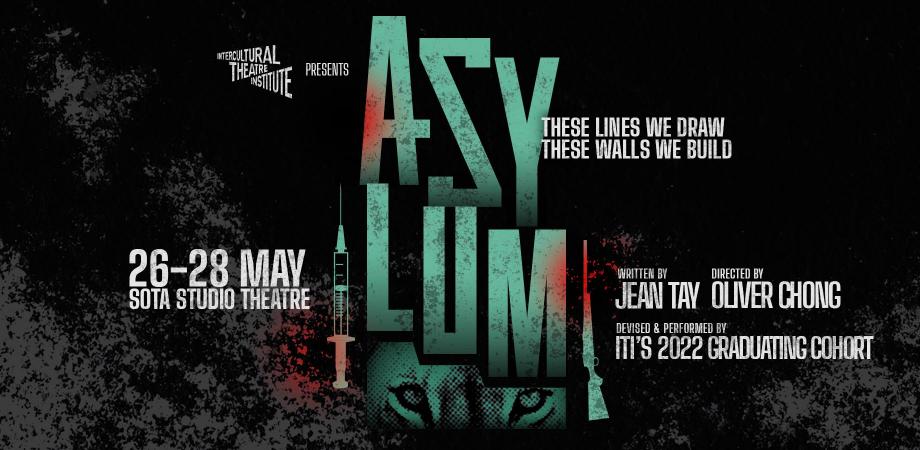
[Interview] Jean Tay and Oliver Chong on Creating Asylum with Intercultural Theatre Institute

Asylum marks the first time the Intercultural Theatre Institute (ITI) presents a graduation show in a venue at full capacity in two years. Having come out of the other side of the COVID-19 pandemic, Asylum is inspired by the the long-forgotten histories of Singapore’s old quarantine sites.

To find out more about the show, I interviewed playwright Jean Tay and director Oliver Chong about the creative process and their thoughts about the COVID-19 pandemic.

What inspired you to look into the history of quarantine sites in Singapore?

Jean Tay: I have long been intrigued by old quarantine sites, like the one at St John’s Island. The idea of quarantine always seemed a somewhat distant one, popular in colonial times, but increasingly regarded as a blunt tool given the advances in medicine and technology over the years. As I started to explore further, as part of a research residency with the National Library Board, I came across some incredible hidden stories, from the old leper asylum, Trafalgar Home, in Yio Chu Kang. To me, it was fascinating (and heartbreaking) to see how people dealt with their fear of illness and each other, and how that ended up breaking up families and relationships, but also created new relationships amongst the inmates themselves.

What were some difficulties in creating this show?

Jean Tay: My challenge was having to create a piece that would feature 12 distinct and diverse characters. Fortunately, I was able to work with the final-year students closely to improvise individual characters, loosely based on some of the historical research and different characteristics… we must have come up with over 40 of them! And then from there, I narrowed in on the most compelling characters with the greatest potential and used that as a basis to develop the narrative to see what would happen to these characters when put under pressure. As I did so, the script also moved into a more creative realm, so that it’s not leprosy we’re talking about anymore, but a fictional illness, set in a fictional asylum, in a fictional country.

Oliver Chong: The self-imposed agenda is to give a fair share amount of space to showcase all of the 12 students. This is a challenge I often face when creating graduation shows with a large group of students. There is the pressure of being fair to everyone while knowing that it would be impossible to flesh out all characters, and hence be unfair to all.

As the actors are trained in a myriad of art forms across various cultures, are you tapping into their training to create this show? If so, how?

Oliver Chong: The aim is not about displaying the myriad of art forms that the actors are trained in. Rather, I believe it should be about distillation, that is discovering the core in the different art forms and fusing the training into a melting pot to find meaningful contemporary applications.

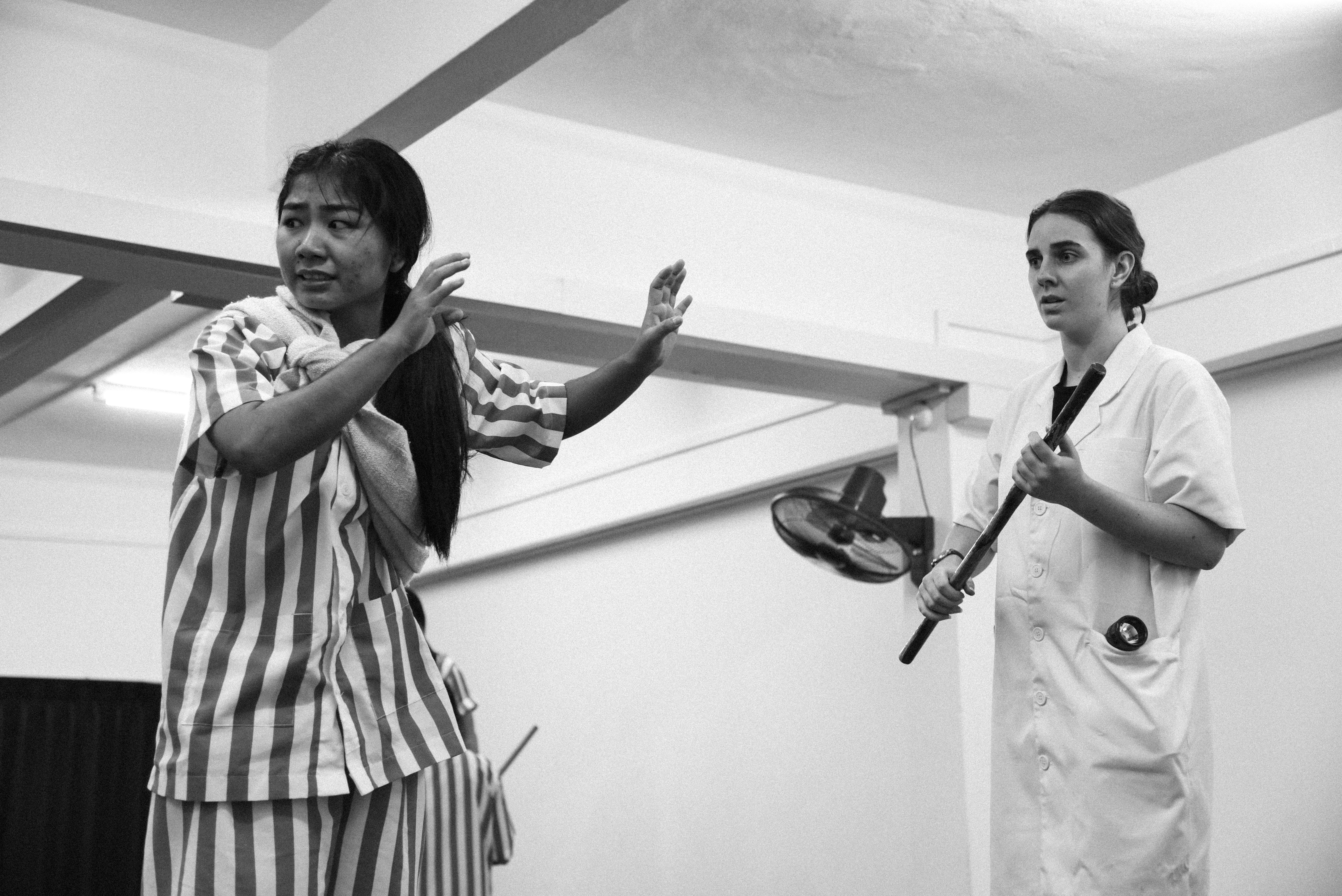
Courtesy of Intercultural Theatre Institute

Were there any interesting discoveries during the rehearsal process?

Jean Tay: It is easy to lose track of characters when one is working with such a large cast. Fortunately, my director, Oliver Chong, has come up with the brilliant concept of keeping all the cast onstage at all times, regardless of whether they are featured in the scene. So it means that we get to see what is happening with the other characters, even when they are not actively highlighted in one particular scene, and I love the little discoveries in seeing these “unwritten scenes” come to life, as the characters continue to live and breathe “off-stage”.

Oliver Chong: Not because of the rehearsal process per se but moving along with the development of the pandemic as we rehearse, we have observed that it is the impact of the disease on our livelihoods and ways of life. The disruptions, reaction, and the overreaction of society that is no less detrimental to the interests and mental health of most people. This is unequivocally no less frightening than contracting the disease itself.

How has the process of looking into old quarantine sites and the country’s attempt to deal with epidemics affect your view of the current COVID-19 pandemic?

Jean Tay: The ongoing COVID-19 pandemic has certainly brought quarantine back into the spotlight, and brought fresh resonance to this issue, especially seeing how people had to deal with the challenges brought on by an enforced quarantine. It’s a little sad to realise how, even after years of technological and medical advances, it is so easy to revert back to a very basic and primal fear of the unknown, and of each other, when confronted when an unknown disease once more. But even in the midst of that fear, it’s also eye-opening to see the moments of compassion and courage, when individuals reach out beyond themselves to extend a helping hand, even when it puts themselves at risk.

Oliver Chong: Cross-referencing leprosy and the Trafalgar Home with the pandemic and quarantine facilities now, the knee-jerk reaction of rounding up and ostracising the unknown and its carriers remains the same. It is a defence mechanism in the name of the greater good. The question remains as to whether we have done better in compassionate quarantine and isolation.


Catch It!

Asylum runs from 26-28 May 2022 at SOTA Studio Theatre.

[Interview] Director Hawk Liu on Creating an Abridged Version of Verdi’s Macbeth

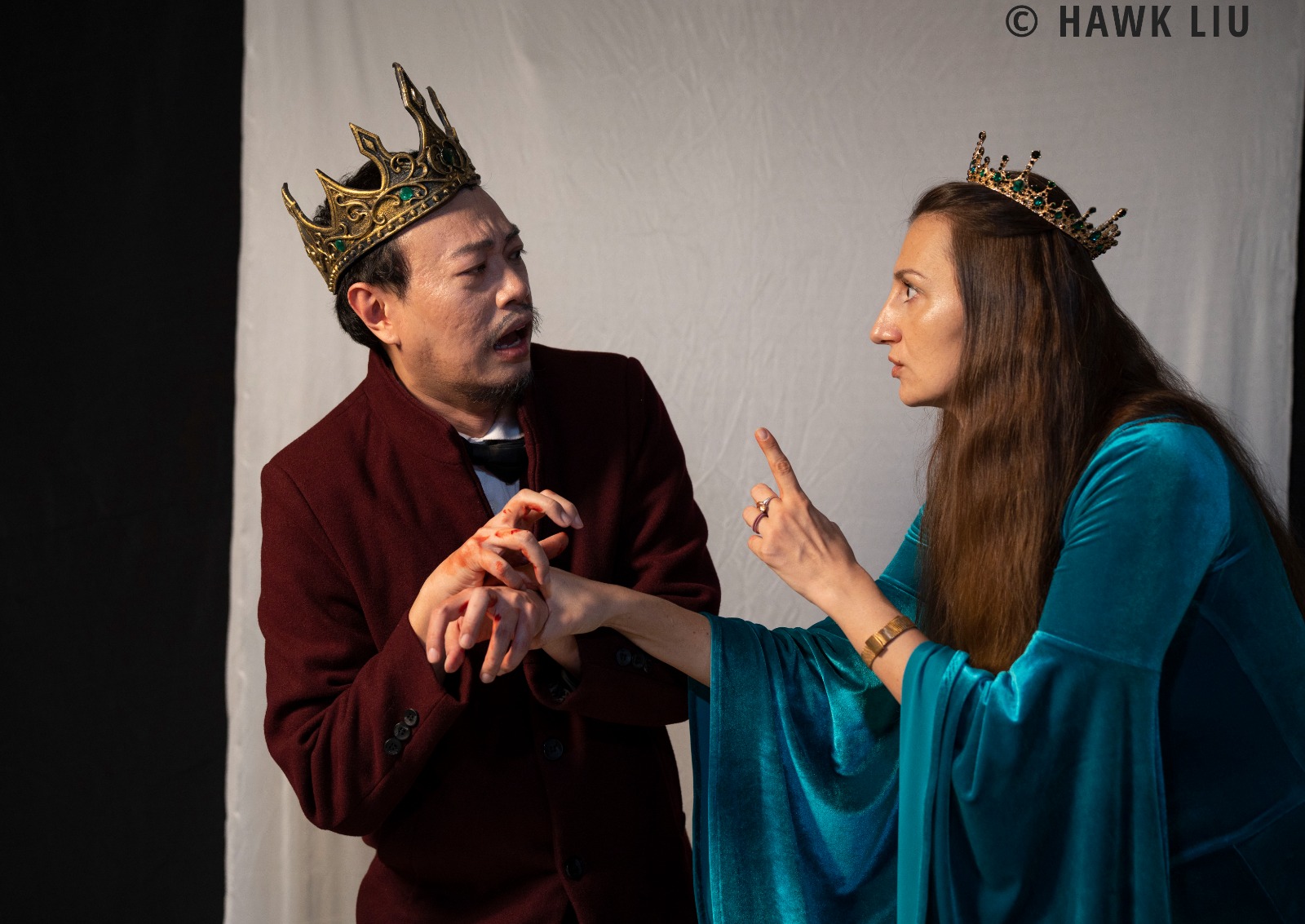
Steven Ang as Macbeth and Tatiana Konovalova as Lady Macbeth / Photo: Hawk Liu

Over the years, The Mad Scene has been reviewing operatic, musical theatre, and classical music performances. Spurred by the uncertainties of the COVID-19 pandemic, Steven Ang, founder of The Mad Scene, decided to seize the moment and produce an abridged version of Verdi’s Macbeth, an opera that he has longed to perform in for many years.

To realise his vision, he brought Hawk Liu on board to direct the show. I spoke to Liu to find out more about the show.

What is it about Verdi’s Macbeth that attracted you to direct it?

When Steven Ang approached me to direct the opera, I said yes immediately. It’s a delicious opera to direct with so much potential for drama, and my own temperament suits the intensity of expression that this opera demands. I wanted a visually driven drama piece that uses physical manifestations of the internal emotions of the characters. I told the cast that I wanted to audience to see what they feel and I think that is coming along nicely.

What are some of the difficulties in working on this adaptation?

For me, the difficulty in creating anything is to start from zero. It means I need to workshop quite a bit in order to see something stronger in my mind coming to life. But once I get going and have something to work with, I can build a lot more from there. That has been my experience in this production as well.

As I am a dancer, I wanted the singers to feel where the music is coming from in order to put the flow of the music into their movements. There is quite a bit of working with movements to get the visual effect I wanted, especially so when the music drives the drama so much. It can be a subtle thing but I think it can make a lot of difference in the visual and emotional experience.

There was also the issue of how to bring about a completeness of staging in an abridged opera. I had numerous discussions going back and forth with Steven Ang, the producer, about how we wanted the drama to play out given there will be no crowd scenes, etc.

I feel the main difficulty in a modest production like ours, is working with accompaniment tracks during rehearsals. Trying to start and stop the action is most trying for me without a pianist when the music drives the action so much.

Tatiana Konovalova as Lady Macbeth / Photo: Hawk Liu

Were there any interesting things that happened during rehearsals?

The curious thing about a production like this specific one is whether we see a lot of bad luck happening. Yes, we did. Our Lady Macbeth, Tatiana Konovalova, was stuck in Russia for many months as she could not get a vaccination to get herself back to Singapore. A member of our cast had a heart problem and had to go for an operation. We wondered whether we had to hunt for a replacement, but thankfully, he’s still with us. In the props department, we ordered some swords and we sparred too hard and one of them broke into two pieces!

Our original Witch (yes, just one!) had to leave the production due to her own professional commitments, but we found a replacement – yourself, Isaac, a male actor. I was quite excited about the prospects of turning a witch’s role to a male one and after doing a few hours’ experiment, I think we got it!

If you are only given three words to describe the production, what would it be?

See for yourselves!


Catch It!

Macbeth will be performed on Saturday, 23 April 2022, at Goodman Arts Centre Black Box.
[Theatre Review] No Disaster on This Land by The Finger Players — What disaster? What land?

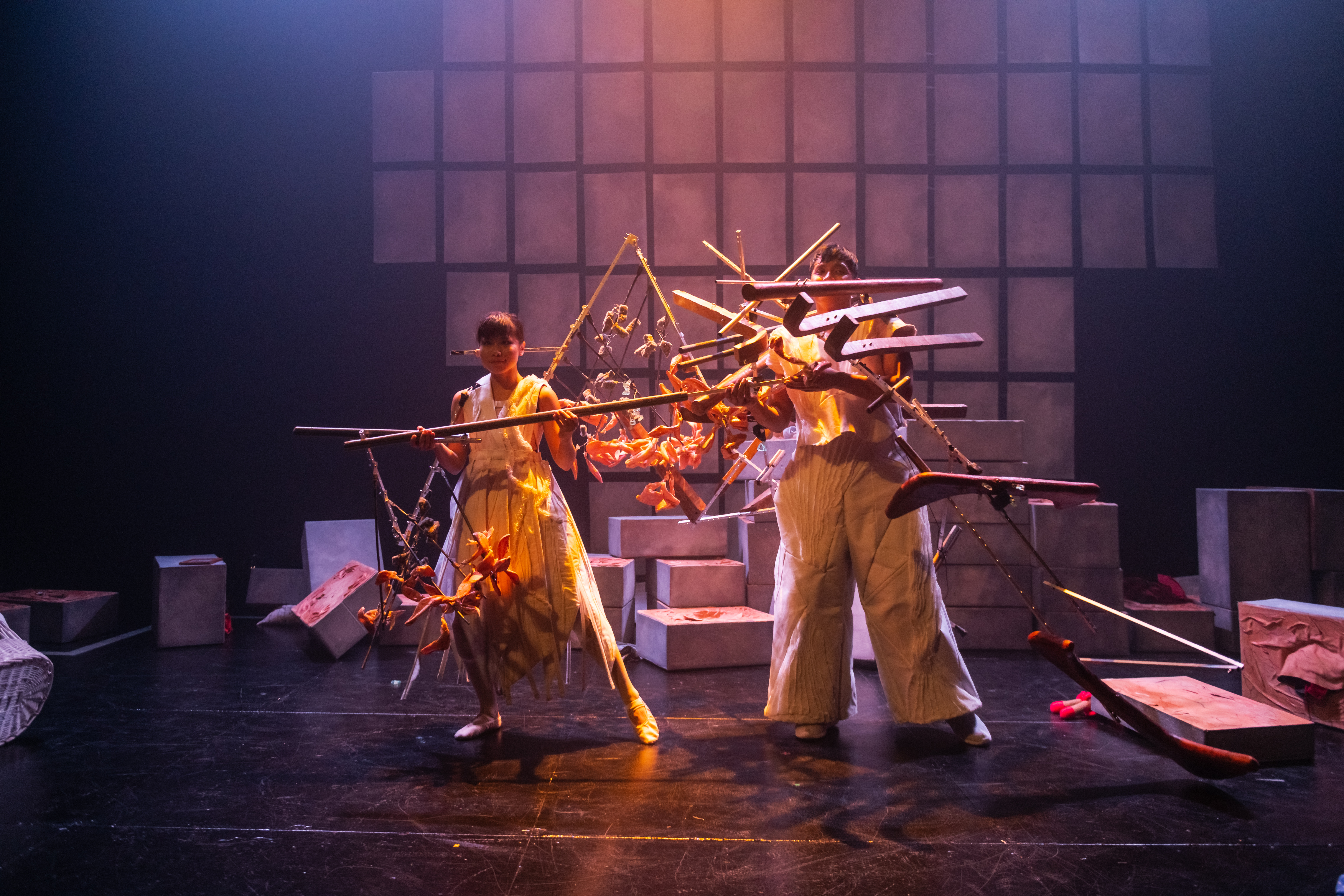
Hairi Cromo as Table Boy and Vanessa Toh as Debris Girl / Photo: Tuckys Photography

No Disaster on This Land

The Finger Players

25 February 2022

Drama Centre Black Box

24–27 February 2022

In its bid to place the process of puppetry construction at the forefront, The Finger Players decided to create No Disaster on This Land around the puppets crafted by Loo An Ni during her stint with The Maker’s Lab

The production is helmed by the co-artistic directors of the company as Myra Loke directs, while Ellison Tan came up with the general narrative through a workshopping process.

The two puppets featured are Table Boy and Debris Girl. Loo wanted to work on exoskeletons and a modular system which would allow one to easily make modifications to a base structure. This prevents wastage from creating a completely new puppet for every show. 

Both puppets have an exoskeleton with aluminium extensions. For Table Boy, different table legs are attached all along the extensions. For Debris Girl, intimations of flesh and concrete pieces are placed along the extensions. 

In the show, these two characters are placed in an apocalyptic scene with concrete bricks and a backdrop of a partial grid wall, as we see how they interact.

The information above was mostly gleaned from the digital programme booklet. The information that we should be getting from watching the production, however, is fuzzy. 

Who are the characters? What sort of world do they inhabit? Why are they there? These questions are hardly answered as we see two characters tentatively existing in the same space. 

Beyond the initial encounter, as the characters suss each other out, it is difficult to make out the dynamics of the relationship. What are they disagreeing about? How are these conflicts actually resolved? How did they fall in love? (I only know they fall in love because the synopsis mentions a “love story”.)

A love story? But how did it develop? / Photo: Tuckys Photography

What about the puppets themselves? Do we ignore the human puppeteers and take the built structure as characters? Or are the structures extensions of the puppeteers, and both man and mechanics form a creature?

Given the skeletal nature of the puppets, it would seem that the latter is the case. But what sort of creatures are they? What do the extensions do? Are they hands or do they have some sort of magical power? 

In terms of actual movements, the extensions are used to move the concrete bricks perfunctorily as the puppeteers still use their hands when not manipulating the extensions. 

To make matters worse, the general rigidity of straight aluminium rods for the extensions meant that there is a limit to what the puppeteers could do with them. In manipulating Table Boy, Hairi Cromo carries the structure like a shell. And the extension occasionally gets in the way of Vanessa Toh’s movement work as Debris Girl—she has to figure out how to tuck it away when she is on the floor. 

All these limitations mean that whatever metaphors or concepts that the show is trying to convey are not articulated clearly. For example, a baby doll and a cradle feature quite strongly in the show. Do they symbolise birth, rebirth, or a literal baby?

Despite all the flaws, there are a couple of lovely moments.

Lovely moments emanating from the anguish of Table Boy / Photo: Tuckys Photography

When we are first introduced to Table Boy we see Hairi Cromo seemingly struggling against the structure placed upon him. Despite the black box being a rather small space, the intensity of his physicality, coupled with the garish strains of the electric guitar and the distortion of Hairi’s voice provided by Ctrl Fre@k, amplifies the struggle to tectonic proportions.

In another moment of anguish later in the show, Hairi rears his puppet up like a pair of wings, and the table legs attached look as if they are floating above him. This seems to suggest a certain sense of implosion or disintegration. 

Unfortunately, those moments could not save the show that is vague in its intent and story-telling.

Further Reading

Interview with director, Myra Loke

Interview with Loo An Ni

[Interview] Jo Tan talks about her latest play, Session Zero

In December, Checkpoint Theatre will be staging its first live production for the year, a premier of Session Zero by Jo Tan. The play revolves around a couple trying to save their marriage by playing the fantasy role-playing game, Dungeons & Dragons.

Intrigued by the premise of the play, I spoke to Jo Tan to find out more about the show.

What inspired you to write a play about a couple trying to save their marriage?

I don’t know what it was about the pandemic, although I saw friends less, I managed to fall out with several of them… pretty hard. We had common passions about common issues, but the gap between how these issues affected us differently suddenly seemed an uncrossable chasm. I had a hard sleepless time understanding how these relationships had fallen apart so thoroughly, and I wanted to use this play, and the marriage in it, to try and figure out whether any differences are truly irreconcilable.

Why did you decide to choose the game, Dungeons & Dragons, as a main feature of the play?

Dungeons & Dragons got me through a large part of the pandemic – I couldn’t go out or act much, but I could escape to a different body and fantasy land in my head. And it just fascinated me how people (including myself) played their game characters. You could see how it was a tool for them to express how they could have been if only things were a little different. What if the play’s hopelessly estranged couple could be other people for a day?

As you are an avid player of the game itself, has the process of creating this piece made you appreciate new facets of the game?

I generally play with actors (which make up three-quarters of my social circle), and you tend to take it for granted that they will be quite unabashed when inhabiting the characters. However, when my co-actor Brendon led everybody in the show’s crew in a game as part of the rehearsal process, it was quite incredible to watch how playing the game characters empowered some of the more reserved personalities to make dramatic flourishes, laugh out loud, and take up more space. That’s the magic of the theatre of the mind.

As you are also performing in the show, has the rehearsal process made you see the story and characters you created in a new light?

Definitely. I always tend to separate my playwright self and my actor self, since the playwright just sets things on paper while the actor is generally a tool and channel for the visions of many people – the director, the writer, the designers.

You always see different things when performing something than when writing it. In both this and previous things I’ve written, I’ve definitely tried to say some lines which made me go, “who the heck wrote that?” But just walking through the story as opposed to living it in your head makes you understand them better, so I even have to empathise with the aggressors.

How does one win in a game of love and marriage?

Try to equate the two. That’s probably most important.


Catch It!

Session Zero by Checkpoint Theatre runs from 2 to 19 December 2021 at 42 Waterloo Street.

[Interview] Playwright Adib Kosnan talks about his new play, The Karims

The second half of Checkpoint Theatre’s Take It Personally season opens with a new digital production, Keluarga Besar En. Karim (The Karims).

Written by Adib Kosnan, the play looks at how a new son-in-law shifts the family dynamics, which reopens new wounds and surface new tensions.

I contacted Adib, who is also performing in the production, to find out more about the play.

What inspired you to write this play?

The inspiration for this play began with my own personal experience of coming into another family as an in-law. While talking to friends who went through the same situation, I found many similarities in terms of our experiences.

What struck me most was how certain attitudes, especially about gender roles, differed in varying degrees amongst families, but always hovered around the same archetypes—who was in charge of certain chores, or who got served first at the dining table. I found these family dynamics fascinating. That was the starting point for me, this constant re-negotiation of spaces and boundaries even as you create your own new culture as a married couple.

I’ve also found that as a Malay Singaporean,  there are certain cultural idiosyncrasies that are prevalent, and sometimes there are religious or cultural ideas that clash with your own set of personal beliefs—navigating these undercurrents was something else I wanted to explore through this story.

This production was initially meant to be staged live, however, it has since changed into a digital production. Has this impacted the way you write in any way?

The decision to stage it as a digital production initially brought mixed feelings for me. There was a sense of excitement and relief that the story could finally be told, but at the same time, I was very aware that certain theatrical moments and nuances I had envisioned would now need to be re-imagined. How do we maintain that feeling of intimate connection with the audience when they are now experiencing the story through a screen rather than sharing immediate space with the cast?

It was very interesting to refine the script while now considering the camera as the literal lens through which the story is experienced. For instance, certain moments could be amplified through a close-up of a facial expression rather than an actor embodying the emotion for the audience to understand. As we worked, I really began to appreciate all the possibilities and nuances that could be captured and portrayed through this new medium of presentation, while still keeping that original essence of the family that I wanted to express. I’m very excited for everyone to experience the final product in September.

As you are also acting in the production, have there been interesting discoveries in the rehearsal process that made you look at the story or the characters anew?

Being part of the performance process as an actor and working with our director, Claire Wong,  is something that I will cherish for a long, long time. Claire’s process of unearthing the depths of each character,  coupled with the other cast members’ layered and thoughtful portrayal of their characters, really helped me understand my own writing in a deeper way.

I discovered—or rather, rediscovered—the different sparks of inspiration that led me to craft these characters, which became a very emotional process for me because the stories came from real places of connection. There were times I even questioned myself whether it would have been better to maintain some distance from the work as its playwright, instead of immersing myself in it as an actor as well, because I was so affected by the words that were spoken. However, that would have meant missing out on an opportunity and process that really pushed me to grow as an artist.

Claire’s careful crafting of the rehearsal process allowed all the actors the space to explore and connect with each other as a family, as well as develop each character’s distinct voice. My character, Aqil, was originally written very much in my personal voice; the Aqil that you see in the play is quite different, but still retains the motivations and empathy that I initially envisioned for him. The challenge of exploring this expanded version of Aqil as an actor felt like a parallel to the play itself: the idea of entering a new group or family and having to adjust and adapt to foster a new dynamic.

Seeing how the other cast members resonated with their own characters, or hearing about the versions of each character that existed in their own families, not only helped to add depth to each character but also gave me a sense of personal validation—that these voices and stories that I was trying to represent by writing this play truly existed and should be told. This entire production has definitely left an indelible mark in my heart.

What is the one thing you love and hate about being in a family?

I think the one thing I both love and hate about being in a family is how connected we become. This connection can be nurturing and fulfilling, but also needs untangling as individuals go through different situations and evolve. Sometimes we continue to communicate with the versions of our family members that still exist in our heads, forgetting that they too may have changed, and that’s when conflict arises. Communication becomes miscommunication. It is easy to be understanding, but difficult to truly understand. But family is family—the love is there to help us get through these rough areas. At least I’d like to think it does, for the most part.


Catch It!

Keluarga Besar En. Karim (The Karims) will be shown online from 29 September to 15 October 2021.

The performance is in Malay and English (with English subtitles).