Hands Up Split Theatre 5 March 2021 Sigma Collective Space 5–7 March 2021
An actor in school uniform points to something ahead and above eye level. Another actor with a school top and red shorts holds him back. The former questions the latter. We do not know if the first actor is directing our attention to something, trying to touch something, or just wanting to reach out. We do not know if the second actor wants to stop the other from danger or prevent him from leaving.
The above scene from Split Theatre’s Hands Up—directed by Darryl Lim and Fadhil Daud— struck me because it encapsulates the whole show. This gutsy group of actors (Amanda Kim, Clement Yeo, Ella Wee, Mabel Yeo, Hoe Wei Qi, Xin Rui) may have something to say, but we do not know what exactly that is.
The show is purportedly divided into five sections: silence, self, pride, realisation, and death.
Take ‘Self’ for example. It consists of ten minutes of movement motifs that are repeated by the actors. They, perhaps, gesture towards struggle, conflict, connection, birth. Yet, there is no palpable sense of progression or stasis in the composition. The actors seem like microscopic organisms moving about in the rectangular petri dish of a dance studio.
Worse still, I am assuming the movement sequence just described belongs to ‘self’ rather than other sections simply because one is never sure. And wherever the other sections might be, they all proceed in the same vein of generic gesturing.
We have scraps of text that range from the prologue of Agamemnon to the very mundane question in Hokkien: ‘Have you eaten?’ We do not know if the characters mean what they say or if the piece is perhaps inclined towards absurdism and the emptiness of words.
We have bits of song that are perhaps veneers of the characters; occasional dance breaks that perhaps aid with transitioning to another section; and one could go on ad nauseum.
All of that is such a waste as the show actually started with some potential.
In ‘Silence’ (this I am sure because it is the first thing we see), the actors introduce themselves by writing their names on their individual whiteboards. Next, they inform us that it is difficult to interact because of COVID-19. They then attempt to strike a conversation by writing a question on their whiteboards and would shush anyone up if someone verbally answers them. The fact that fellow audience members could not help themselves but to answer, even after the first couple of instances, speaks of the innate, human need to connect and communicate.
But as with the carousel of vignettes that ensue, it is not developed any further.
With a show that offers perhaps, perhaps, perhaps, we are less inclined to put one’s hand up and more inclined to throw both up.
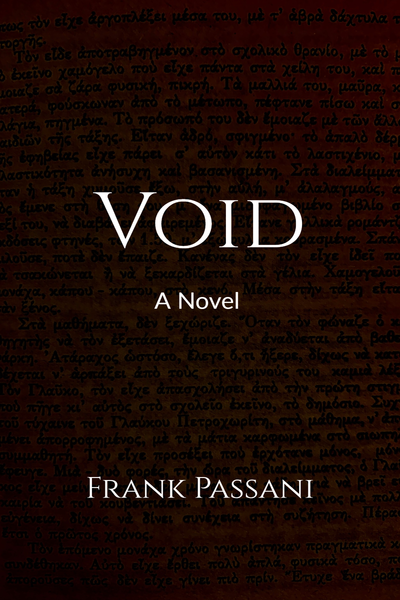
Passani’s cerebral novel revolves around Melpomene Lau, a Spanish literature professor teaching at the Singapore University of Literary Studies in 2032.
Through a series of vignettes presented in various literary forms (diary entries, dialogues, flash-back, flash-forward, reversals, speculative imaginings of utopia and dystopia), we see Lau dealing with the void that she feels, triggered by a suicide of a friend and the general ennui induced by the demands of modern life.
As hinted by the Lau addressing her diary as Transcendental Ego, we get more of an intellectual rather than an emotional exploration of this void. Initially, it might be difficult for most readers to have a handle on this as it is full of academic terms and references. However, Passani does leave some clues as to what he is doing towards the latter half of the novel.
Those who have any training in philology or literary studies will have a field day as Passani is unafraid to reveal the breadth and depth of his academic background through his protagonist. This book could easily double up as a reading list for anyone who wants to delve deeper into literary studies or world literature.
Lau would eventually go on to write a novel, Void. These and other self-reflexive elements in the novel seem to express Passani’s views on academia, literature, and even aspects of Singaporean society. However, rather than exploiting his protagonist to be a mere mouthpiece of his views, care is taken to weave that into the story.
A couple of areas in which I wished Passani would delve a little more into are Lau’s identity and the setting of Singapore in the near future.
In the novel, it is established that Lau’s father hails from Hong Kong, while her mother hails from Madrid. Her parents decided to settle in Brighton, which lends her sort of a triple identity. Add to the fact that her name is due to her mother specialising in Ancient Greek philology, and we get an interesting melange. With Singapore priding itself on being a multicultural society, it would be fascinating to see how someone with such a complex identity exist within that society.
Placing the novel in Singapore 12 years ahead from the present day allows Passani some leeway to invent certain elements, such as the university Lau is teaching at. That said, apart from mentioning COVID-27, I would love to see how he imagines other areas of Singapore—as a foreigner who has lived in Singapore for a decade—based on current trajectories.
On the whole, this novel requires a patient reader as one has to scale the mountain of academic references. However, Passani makes the journey a little less arduous with an engaging narrative and a thinly veiled explanation later on. If anything, it has sparked an interest in me to explore world literature to find out what inspired him to structure the novel that he did.
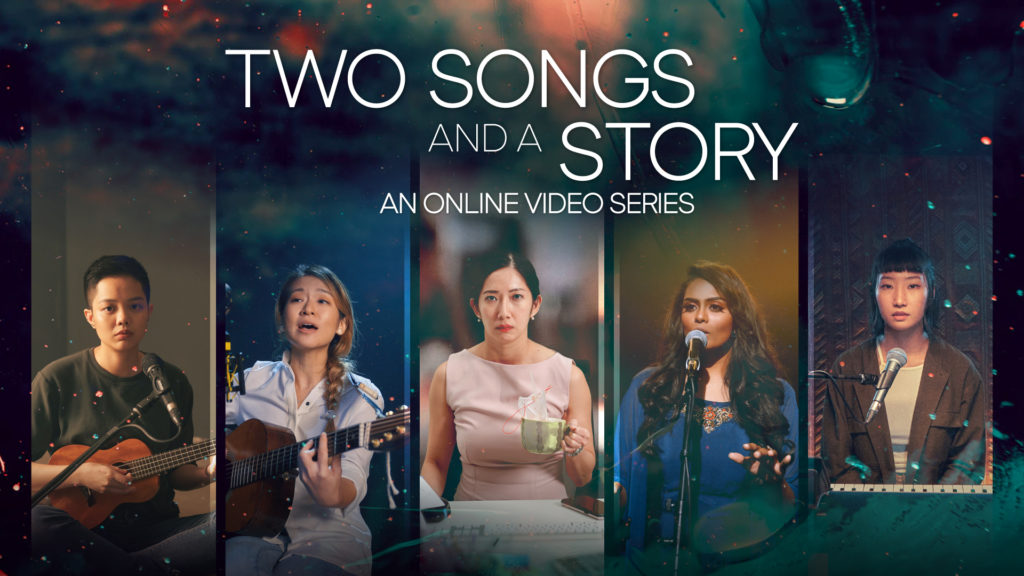
Two Songs and a Story Checkpoint Theatre Online, Sistic Live 6–31 August 2020
Apart from being a health crisis, the COVID-19 pandemic has turned out to be a life audit. We are forced to reëvaluate all aspects of our lives and confront uncomfortable truths that we would rather conveniently forget.
For Checkpoint Theatre, they cancelled their first production of the 2020 season and turned The Heart Comes to Mind and A Grand Design into audio presentations. Two Songs and a Story marks the company’s first major production conceived to be presented online in adherence to the government’s guidelines.
As the title suggests, we get five writer-performers taking stock of certain aspects of their lives with a monologue largely bookended with two songs.
While the format may sound like an open mic gig on film, directors Huzir Sulaiman and Joel Lim worked closely with the performers and the cinematography to ensure diverse and surprising modes of presentations.
ants chua performing “at least i have words now” / Photo: Courtesy of Checkpoint Theatre
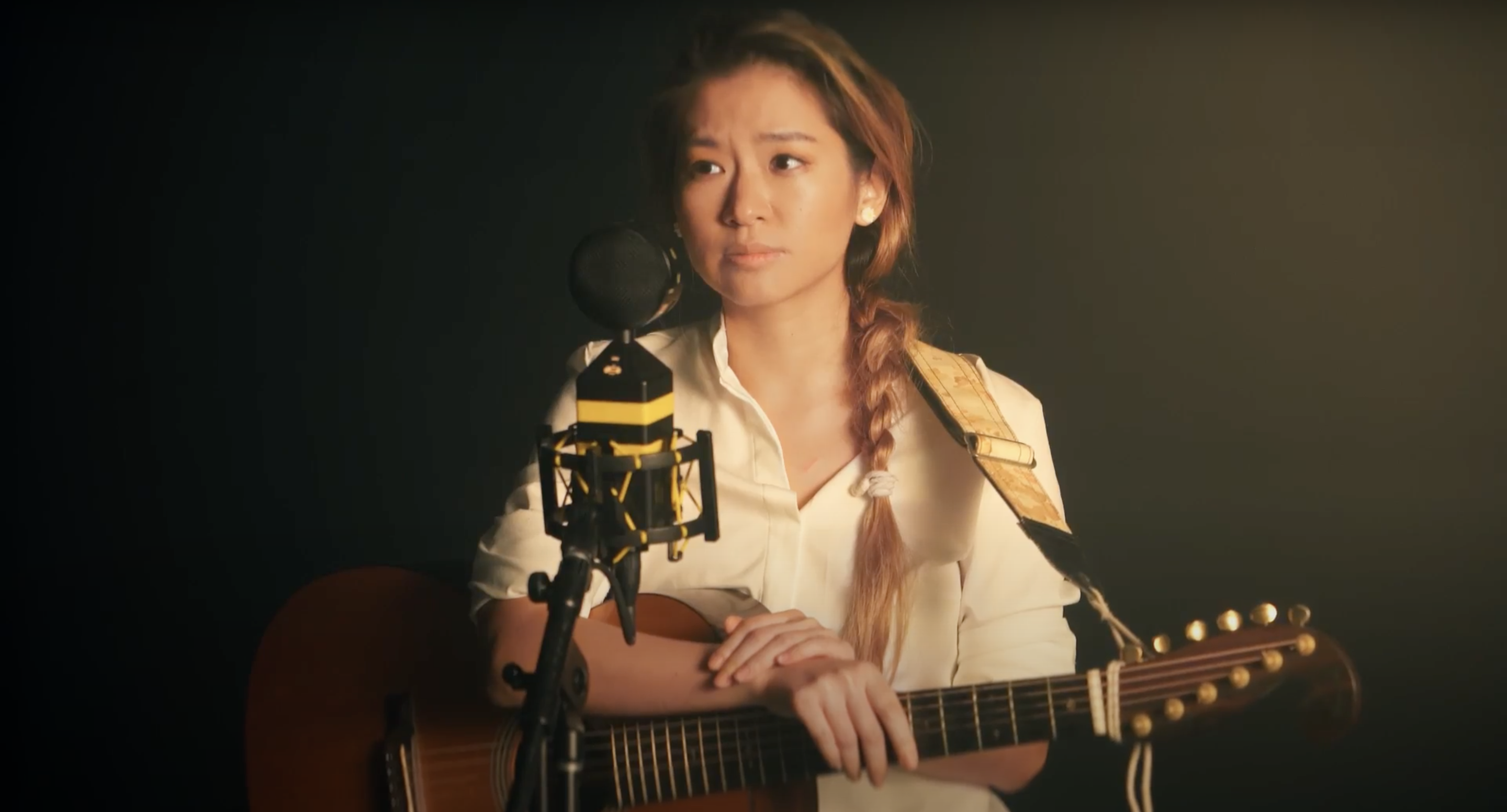
In “at least i have words now”, ants chua explores the dynamics of friendships vis-à-vis romantic relationships and how the former is much more ambiguous with lack of rituals and clear markers of beginnings and endings.
It is a wise choice to anchor the monologue with a childhood story about making friends on the school bus as a reflection—and almost an allegory—of the friendships made and lost later in life. The situation is simple enough to understand, but there is a sense that one carries a certain naïveté into later life, which results in hurting others. This is in stark contrast to chua’s insightful analysis of the difference between romance and friendships—a realisation for which chua has the words to articulate now.
chua’s restrained performance allows the text to breathe and sink in as we inevitably reflect on our own friendships.
Inch Chua performing “Super Q” / Photo: Courtesy of Checkpoint Theatre
It is easy to think of Inch Chua as a singer, but if her consistent forays into theatre over the past few years is not enough to rid you of the idea that she is merely “dipping her toes” in the theatre industry, then “Super Q” should do the trick.
Chua plunges into the heart of the COVID-19 crisis by relaying her experiences as a volunteer in sanitising operations. The disjuncture between the comforts of her home and the seemingly draconian measures at the workers’ dormitories is disconcerting to say the least.
Chua’s experimentation with rhythm and poetry in her text enhances the emotions of frustration and confusion it evokes. This is complemented by the cuts and lighting design in the way the video was edited.
If the first piece is contemplative, Chua is on the other end as she bores into your heart with original songs written for the show. She cries: “All this must mean something more / when you have the privilege to be bored.”
Jo Tan performing “A Bit” / Photo: Courtesy of Checkpoint Theatre
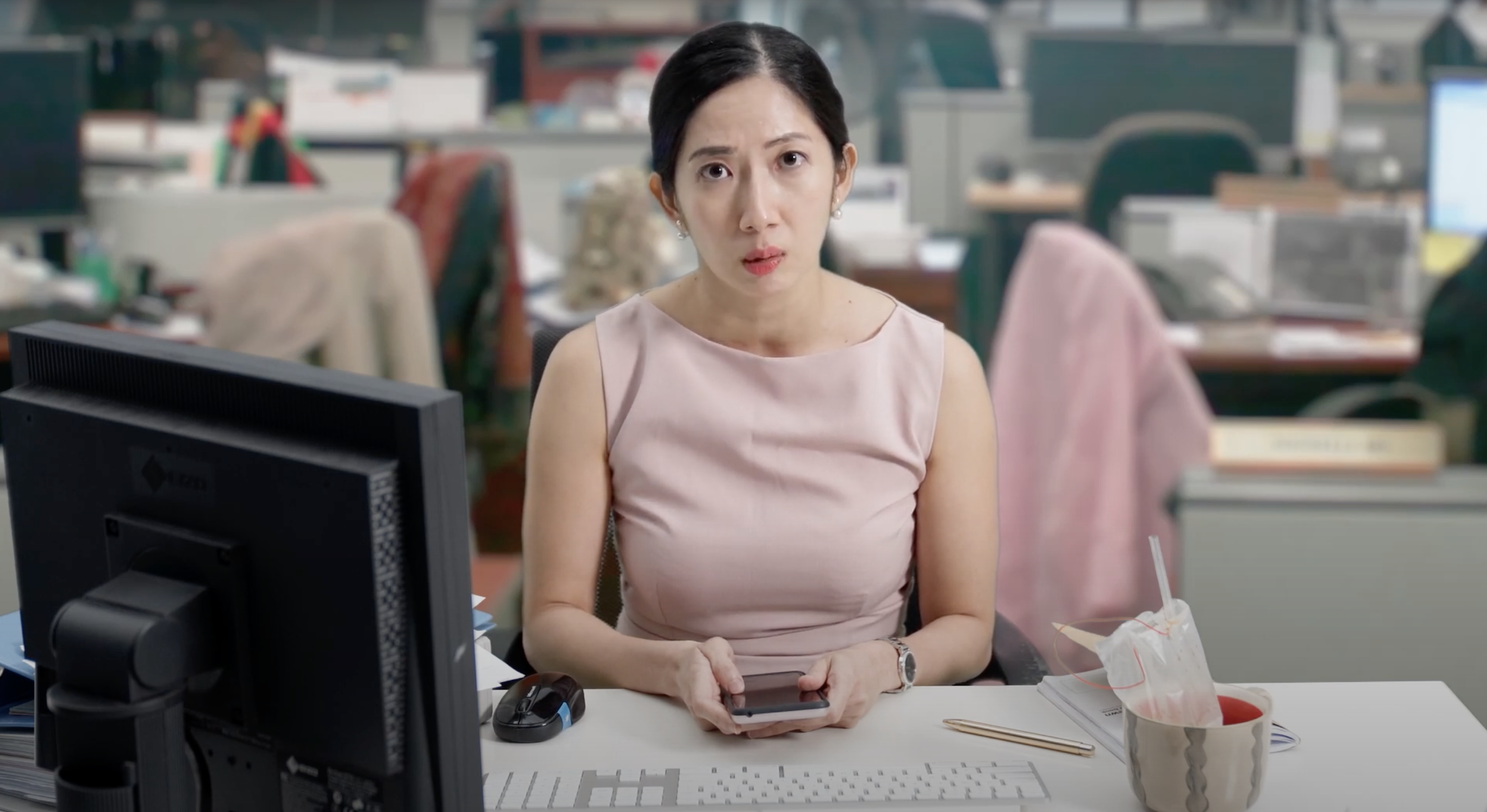
Ever since the success of Forked(2019), Jo Tan has been prolific in writing and performing monologues that feature quirky characters, but their experiences or desires reveal something insightful about the circumstances that we live in.
In “A Bit”, Tan plays Bit Wah. An unassuming office lady who gets through life merely doing what is expected of her. While her lack of ambition makes her existence seems mechanical, she finds solace in her favourite anime.
Tan’s comic timing makes this short piece a joy to watch, and the ending is oddly entertaining.
To a culture that glorifies productivity, watching anime may seem frivolous. But if all that hustling is akin to the conformity of the grey skyscrapers of Tokyo, perhaps Bit Wah has a point in wanting life to be a little bit more colourful.
Rebekah Sangeetha Dorai performing “And Then I Am Light” / Photo: Courtesy of Checkpoint Theatre
Rebekah Sangeetha Dorai’s “And Then I Am Light” is a refreshing change as the diagonal angle of the shot and the breezy delivery of her monologue feels like a casual interview as compared to the performative nature of the other pieces.
On the whole, it is heartfelt and life-affirming as she comes to terms with being able to accept herself and move on from her trauma of her childhood and past relationships.
However, with the breezy delivery and tight pacing of the editing, one does not feel the full gravity of her words. This results in the piece losing some of its bite as it sometimes feels like a behind-the-scenes interview for a sleek music video.
This is a pity as the potential of the monochromatic shot of her monologue transiting into full-blown colour when she sings in a beautiful blue costume with embroidery is lost. However, the option of turning on the captions and reading the text does compensate a little.
That said, this does not completely detract from the heart of the piece and Rebekah’s luscious vocals is always a treat.
weish performing “Be Here, With Me” / Photo: Courtesy of Checkpoint Theatre
Fresh from her collaboration with Checkpoint Theatre on Displaced Persons’ Welcome Dinner (2019), weish takes centre stage in “Be Here, With Me”. An evocative performance about her struggles with trying to get over a traumatic experience.
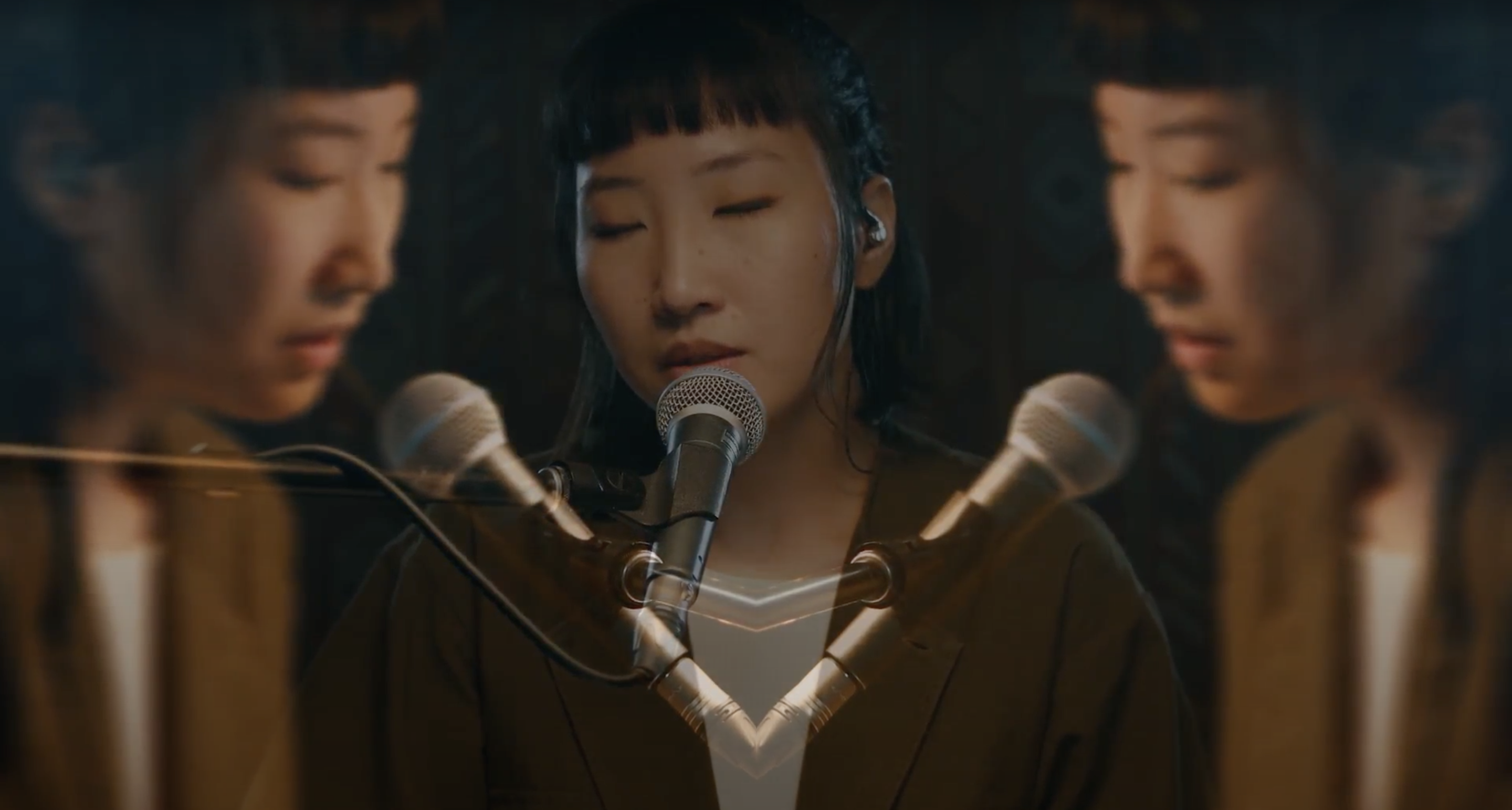
In her music practice, weish uses live loops of singing, vocal percussion, and instrumentation. While we see that here, it not merely a transposition of her forte into this piece. Instead, the live loops that are present in her songs and monologue become a soundscape of her mind.
This allows us to see how she tries to appear normal so not as to burden others, while desperately wanting affirmations from others, even though she knows that it does not assuage her insecurities, self-doubt, and blame.
Having the camera suddenly charge up to her face-on after her opening song is uncomfortably confrontational, but it creates a sense that she is speaking directly to us as a particular person rather than an audience in general.
This is an inspired move as we then get to see her slowly crumble as she tries to explain herself and her experience—a rather different side of her as compared to the one who is in absolute control of the sonic textures, rhythms, and tempo when she is singing.
Despite its seemingly simple premise, Two Songs and a Story proves that Checkpoint Theatre is equally adept at bringing their brand of producing local works for the digital medium.
A Grand Design (An Audio Experience) Checkpoint Theatre SpotifyandSoundcloud 1-12 July 2020
As the COVID-19 pandemic compels everyone to recalibrate their plans, rather than putting their season on hold, Checkpoint Theatre opts to tease their audience by reconceiving some of their shows as audio experiences.
A Grand Design was supposed to be a lecture-performance held at the Lee Kong Chian Natural History Museum as Cheyenne Alexandria Phillips educates and regales some of her experiences as an environmentalist and educator.
In this audio experience, sound designer Shah Tahir compensates for the lack of physical exhibits that we would have experienced in the museum by immersing us in his soundscapes. He plunges us into the depths of the ocean or plonks us amidst excited children as we look at orangutans with our minds’ eye. This is a nice contrast to the concrete jungle that one faces due to the current situation.
Phillips’s musings about the odd encounters when educating people about nature, or what drew her to environmental studies are entertaining and educational. She manages to go into some technical detail without turning someone like me, with very little science background, off.
But what makes this experience valuable are the surprisingly profound insights that one gains from her observations. In the last segment, what starts off as an explanation of a well-known event unexpectedly evolved into a meditation of life, survival, existence, and death.
Coïncidentally, it started to rain outside towards the last few minutes of my audio experience. Clearly, nature had to get in on the action and add its finishing touches to a well-designed experience.
There will be a live staging of A Grand Design in the near future. Please check Checkpoint Theatre’s website and their social media for updates.
Panama and Beyond: Letters from Cuba, Panama, and by steamship to and from Panama 1907–1914 Debby Detering Self-published (2019)/ 259 pp. To purchase the book, clickhere.
Letters and journal entries are useful sources which reveal the everyday lived experience of people who lived in the past. But a detailed chronicle of the construction of the Panama Canal and the going-ons of a ship does feel repetitive to the lay reader after a while.
In Panama and Beyond, Detering circumvents this by guiding the reader through assiduous research. Drawing from a variety of sources, she furnishes us with pictures and quotes to bring the minutiae in letters and journals to life.
Through a passage of eight years (1907-1914), we embark on a vicarious voyage through the letters and journals of Detering’s relatives. From a family gathering in Cuba; to the author’s grandfather, William Hobby, working on the Culebra Cut, the central section of the Panama Canal; and the return trip from Panama to San Francisco through Hobby’s journals.
Nothing seems to escape the letter-writers as they detail anything that catches their fancy; working conditions, foods, styles of dress etc. Paired with Detering’s research, we learn of interesting factoids such as Dr Gorgas’ hypothesis of fever being transmitted by mosquitoes and his work in preventing transmissions in Panama; Satsuma buttons; and a newsletter which details the amount of excavation done in the canal, thereby sparking a healthy competition amongst the workers.
Such details not only entertain the general reader with a healthy curiosity, but they also provide excellent starting points for research into a history of engineering, trade, labour, transportation, travel, and many more.
Additionally, the pairing of source material and research does not feel like a bombardment, but more of a knowledgeable aunt guiding you through the unveiling of her family album. This makes it easy to dip in and out of the book.
More importantly, despite a clear effort in the curation to produce a coherent timeline, Detering does not attempt to sanitise history despite it concerning her relatives. The sheer racist disdain of the other workers by Charles Potter may be hard to read, but it something we all have to come to terms with.
Ultimately, Panama and Beyond is an insightful read about an important slice of American history and expansion, while providing us with details about the sights and sounds of other countries in South America in the early 1900s.
Back of the Bus Java Dance Theatre (with local artists) 15 March 2020 Various places in Bukit Panjang 14‒22 March 2020 Part of Arts in your Neighbourhood 2020
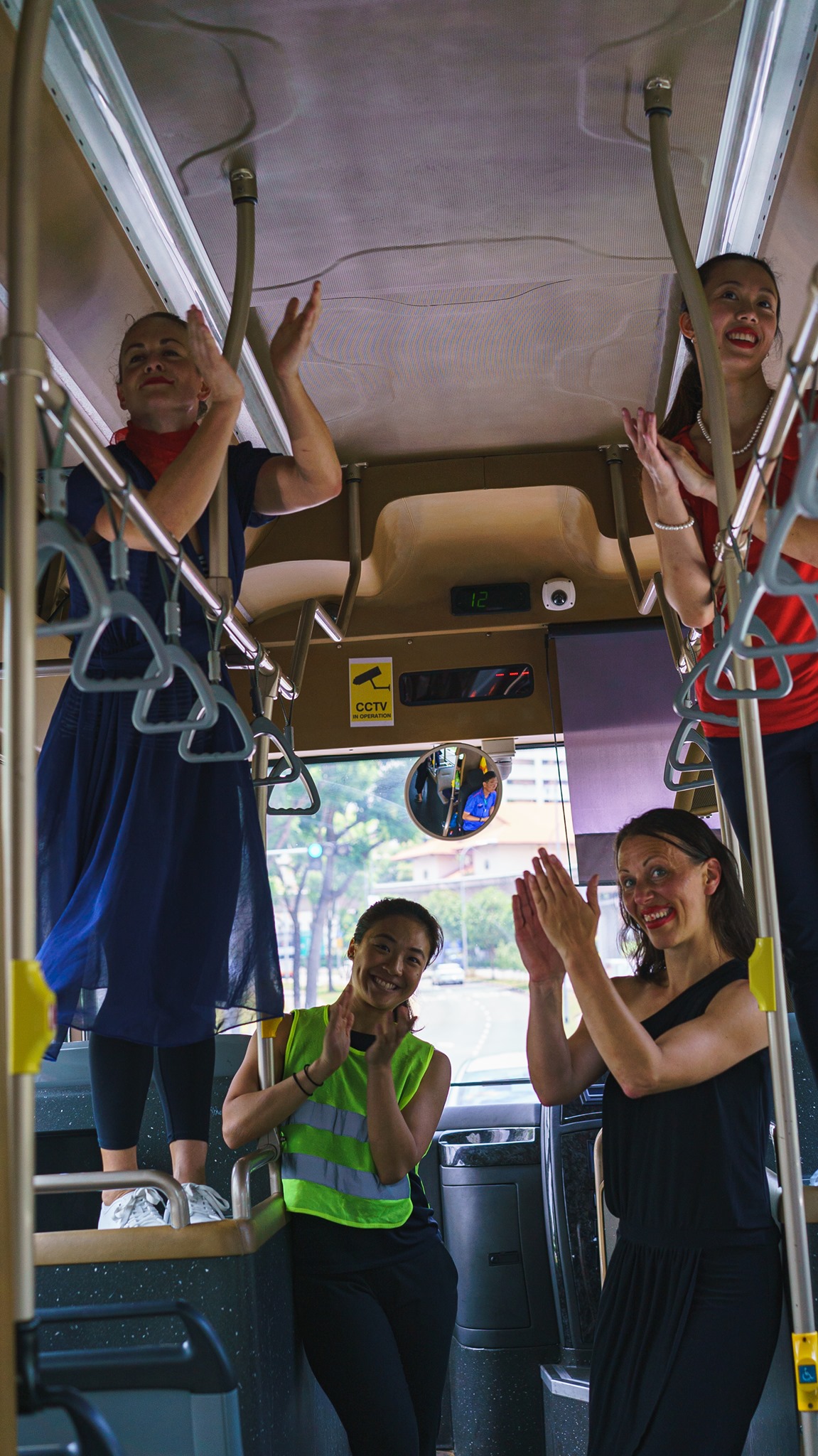
In the dreariness of our lives, some of us might wish that life could be a musical or a dance piece, even for a brief moment. New Zealand-based Java Dance Theatre grants such a wish to their audience, as we wonder how much dancing one can do on an ordinary moving bus.
The repertoire on this journey consists of character dances in relation to bus rides, contemporary work that takes place outdoors, and endearing moments of human-to-human connection which is part of the company’s ethos.
In this whimsical ride, we get a trio of dancers. Choreographer and performer Sacha Copland brings in the laughs with her rambunctious energy; her effort to pretend to struggle on the bus while ensuring she could actually balance is no mean feat. She also throws in a couple of surprises that are simple, but creative.
With her striped top and breezy movements to French music, Lauren Carr evokes the bliss of the French Riviera. While her movements are fluid and free-flowing, they are anchored by a certain precision in her extensions.
As a counterpoint, local dancer Adele Goh’s staccato movements relays the tension we feel on public transport in peak hour. In another piece, we see her display her contemporary dance pedigree in a heartfelt duo with Carr that seems to hint at longing and connection.
The pieces which sees the trio dancing together not only entertain but impress as the dancers perform athletic feats on the bus.
All this is complemented by local accordionist, Syafiqah ‘Adha and a cheerful host, Sabrina Sng.
The tour brings audience to various parts of Bukit Panjang which they might not know about. While the pit stops are relatively familiar to me, it allows one to look at the place in a fresh perspective.
While much more can be said about the planned bits of the show, the unplanned elements of the show do add to the experience.
The occasional honk of a car or scampering of a passer-by alerts one to the contrast between the performance and the quotidian. But it also emphasises what more can be experienced if one is simply open to the rhythms and atmosphere of wherever one is.
Throughout the trip, I have lost count of the number of drivers who stopped beside our bus, but their eyes were dead set ahead; completely oblivious to the seeming mayhem and wonderment that is happening right beside them. If only they looked up.
So it turns out that one could do a whole lot of dancing on a moving bus. And, to borrow a comment uttered by a French audience member, “c’est magnifique!”
I am honoured to be invited by Hawk Liu (singing teacher, singer, and actor) to share my thoughts on Cats by Andrew Lloyd Webber, brought to Singapore by Base Entertainment Asia.
In this spontaneous exchange, we talked about the background of the show; how it compares to previous stagings; and what we liked about the actual show that we watched on 19 December 2019.
Addenda
♦ TheGuardian articleI was referring to is by Katherine Hughes on T. S. Eliot’s Old Possum’s Book of Practical Cats.
Dance / Movement ♦ While we spoke mainly of ballet, there were elements of tap dance, jazz, and contemporary in this musical.
♦ A key element in the musical is audience interaction. The cats were scampering from the audience onto the stage. It may be easy to stand up and do a few cat-like twitches of the head. But the actors actually crawled up and down the aisles. The embodiment here is wonderful.
♦ There was a strong synchronicity and control in the cast.
Music
♦ Some may complain that the timbre of the music, with the multiple keyboards, may sound a little dated. But I think it still works for the musical as it creates an unnerving feeling created whenever Macavity is thought to be nearby.
♦ As with the dramaturgy, there is also a range of music styles present such as rock, music hall, pseudo-opera, and many more.
♦ “Memory” sung by Grizzabella is good, but slightly marred by the extreme jacking up of her mic’s sound level during the climax of the song. This limits the actor’s ability to expand her presence and voice. It becomes a little jarring.
More About Hawk Liu
Hawk has interviewed many actors and creatives of big musicals that were brought to Singapore. Visithis websiteto watch them.
If you are interested in singing, you can learn more about Hawk’s singing lessonshere.
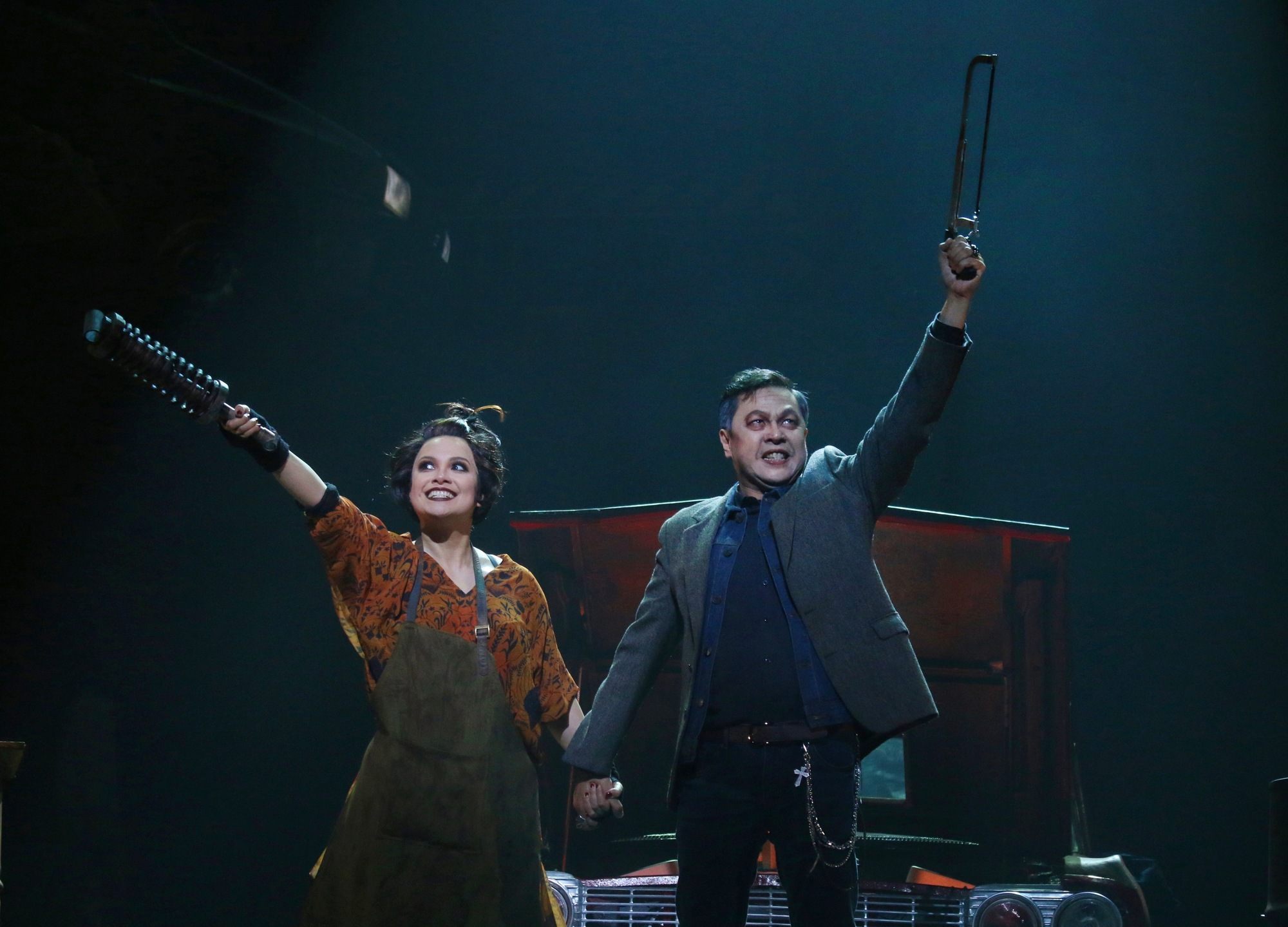
Sweeney Todd (Jett Pangan) and Mrs Lovett (Lea Salonga)
Sweeney Todd: The Demon Barber of Fleet Street Atlantis Theatrical Entertainment Group Presented by Singapore Repertory Theatre 3 December 2019 Sands Theatre, Marina Bay Sands 28 November‒8 December 2019
We all know that Mrs Lovett has the “worst pies in London”, but at least she could tell us what is in them.
The same cannot be said of Bobby Garcia’s production of Sweeney Todd.
In the programme notes, he states that he drew his inspiration from Hitchcock’s thrillers and wanted to create a scary atmosphere filled with suspense. He also wanted the visual aspects of the show to “subtly comment on the industrial revolution” when technology and automation took over “home made [sic] manufacturing”.
The result?
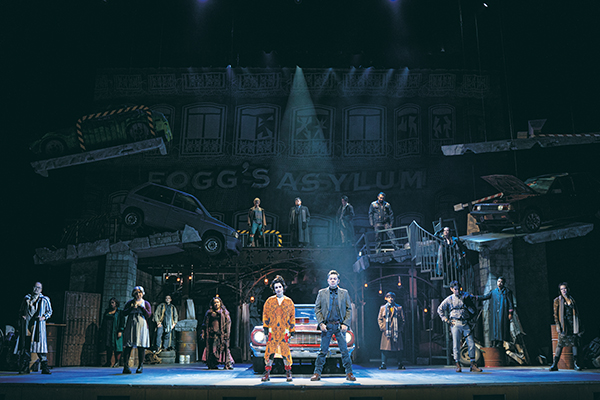
A production that borrows its vehicles from Grease and wardrobe from Rent. Set designer David Gallo then sprinkles the vehicles all over, while costume designer Rajo Laurel refashions the slum-dwellers as sloppy American teenagers—his idea of deconstructing Sweeney Todd.
The show then starts with the characters spending five full minutes exploring the set with torch lights only to remind the audience to put away their mobile phones—scary and suspenseful indeed.
Worse still, most of the major action is carried out on the back, the bonnet, or inside a utility vehicle. Mr Todd’s barbershop is on the back of a utility vehicle while Mrs Lovett’s pie shop is on the stage. Todd’s victims simply get up from the chair, slides off the side of the vehicle, and walks into cage-like oven on stage right.
As if that cannot get any worse, the utility vehicle has to be manually moved by the ensemble as the floorboards crackle, even in the quieter moments.
Vehicles borrowed from “Grease”, costumes borrowed from “Rent”
Continuing the theme of incoherence is Jett Pangan as Sweeney Todd. Rather than being hell-bent on revenge for his wrongful conviction and the loss of his wife, Pangan’s Todd comes across as a bored teenager in a math class. His sudden outbursts of anger are completely unmotivated. To top it all off, his accent zips across continents at a pace that would put the Concorde to shame. It varies between faux-British, American South, and a sprinkle of the Bronx. His only saving grace is that he could carry a tune, albeit in a very studied fashion.
This is in stark contrast to Lea Salonga’s vivacity as Mrs Lovett, and she maintains her cockney accent impeccably. Her eccentricities are endearing and the way she plays up the comical aspects of Mrs Lovett is refreshing. Mrs Lovett’s pies may be half-baked, but Salonga’s performance is anything but so. One feels sorry for her in “A Little Priest” as Mrs Lovett imagines the various victims that would be used in her pies. Salonga gives everything she got and hits every joke only for it to fall flat when it comes to Pangan—imagine trying to bounce a tennis ball off a soggy pile of mud.
An imperious baritone voice is quite suitable for Judge Turpin (Andrew Fernando), who sentenced Sweeney (then known as Benjamin Barker) while taking the latter’s daughter, Johanna Barker, as his ward. Unfortunately, Fernando cannot seem to shake off his opera training, resulting in some lyrics and spoken text being garbled by the plummy timbre of his operatic baritone voice.
Nyoy Volante’s Adolfo Pirelli, Todd’s competitor who knows of his past, is delightful dainty and one relishes his camp posturing.
Gerald Santos tries his best with the accent as Anthony Hope. He succeeds by delivering his lines with two different types of inflections, thereby giving us a forgettable performance. This is slightly improved when he is with his love interest, Johanna Barker (Mikkie Bradshaw-Volante), who has a pleasant singing voice, and Sondheim ought to be chastised for not giving her more music.
The ensemble as chorus commenting on the story is decent. They serve as the glue that is just about strong enough to prevent this slap-dash production from collapsing into a junk heap.
At the end of it all, one goes away not being spooked one bit, but wishing Mrs Lovett and Pirelli got together and do a thigh-slapping revue instead.
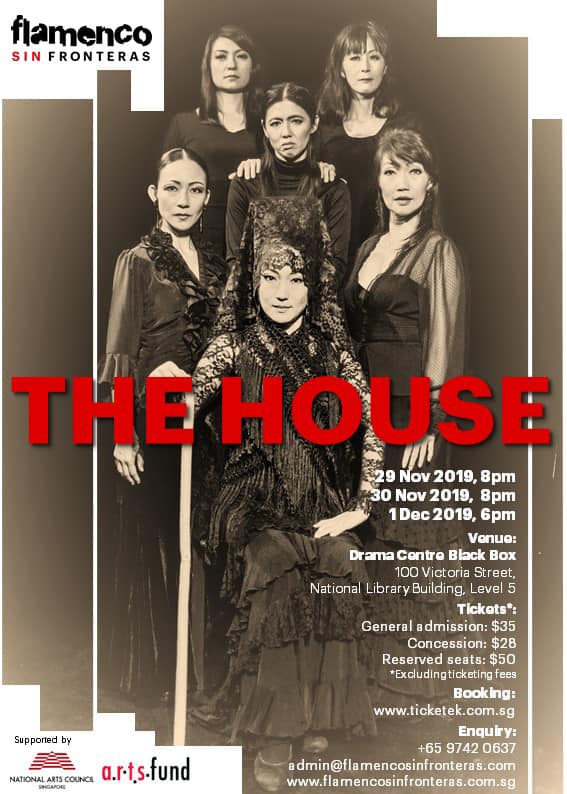
The House Flamenco Sin Fronteras 1 December 2019 Drama Centre Black Box 29 November–1 December 2019 Part of Singapore Flamenco Festival 2019
On the surface, adapting Lorca’s The House of Bernarda Alba as a flamenco dance theatre piece may seem like a natural choice given that it is a famous Spanish play. But it dawned on me that it is quite difficult to do so.
Unlike classical ballet adaptations, or the Greek myths that companies like Ballet Nacional de España chooses, the play does not have a big sweep of action. It is really text heavy; not the most conducive element for dance.
But the pent-up frustration of the daughters in the Alba household offers an intensity and struggle that flamenco feeds on very well.
Of most interest to me is the intentional breaking of lines by the dancers to reveal the personality of the characters. I admire the attempt to go beyond stock characterisations that is present in most dance theatre.
Mamiko Nekane’s (Bernarda Alba) bending forward is not only an indication of age, but there is an ageing but powerful panther-like quality as she prowls about her household.
It is difficult to maintain one’s characterisation while doing flamenco because of the complex rhythms, and the need to signal to the musicians every time there is a change in the phase of the dance.
But on the occasions when it comes together, and the footwork and musical notes punches the air together, the soniquete is delicious.
La Mariposa Borracha (The Drunken Butterfly) Creatives Inspirit 27 July 2019, 3 p.m. Gateway Theatre Black Box 26‒28 July 2019
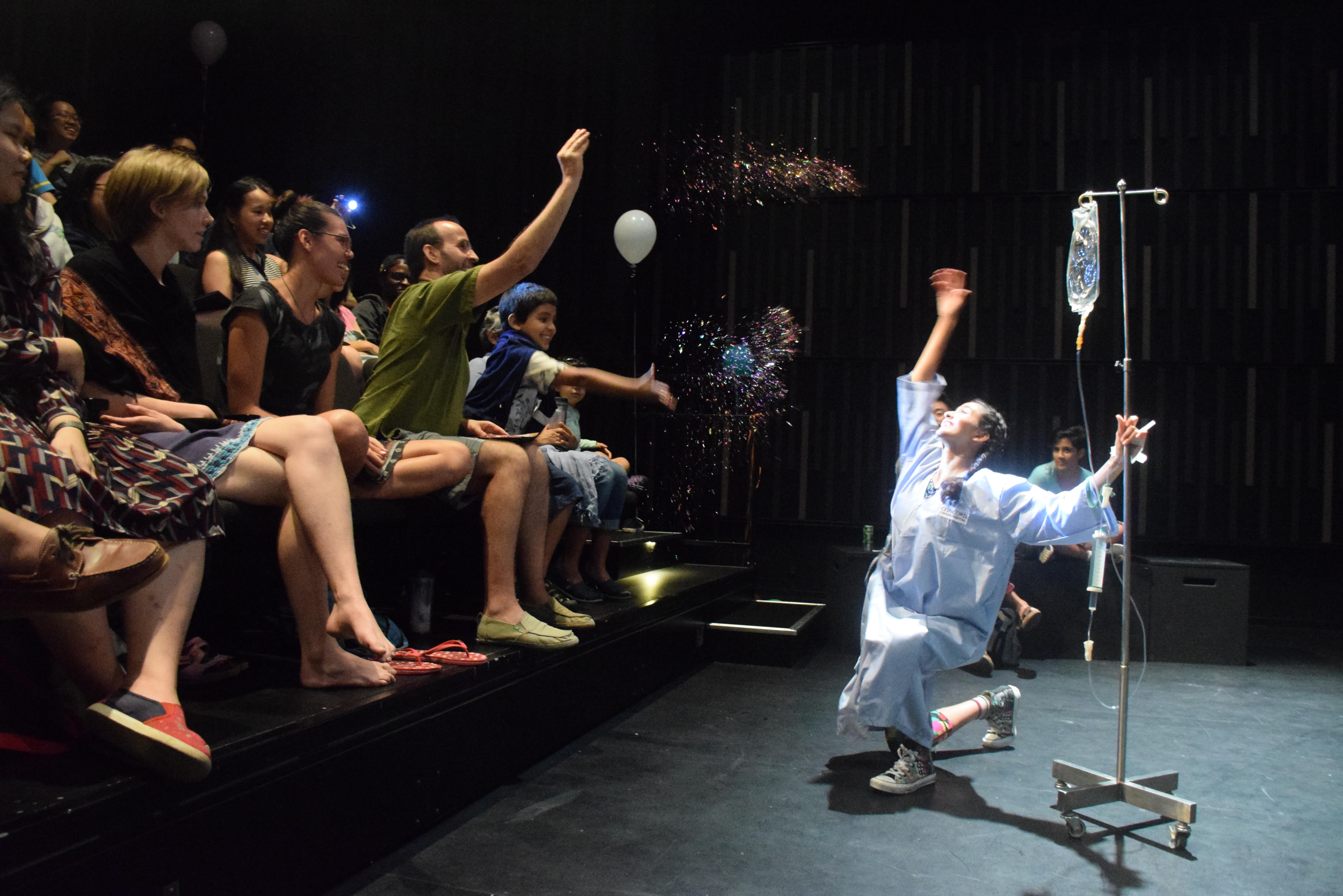
With a hospital hallway being projected onto a blank triptych, low beeps of medical machinery, and a digital display showing that a lift is out of order, one looks forward to how patient X (Shanice Stanislaus) will escape from the hospital and put on her final performance.
Unfortunately, the plot does not take much precedence after the prologue, and the show alternates between scenes when X is ill and a variety of dance sequences by the clown troupe (Snider played by Yazid Jalil, Tommy Wildfire played by Tan Rui Shan, and Z played by Dennis Sofian) as they try to carry on with the “show”. Thus, we see X struggling with different aspects of her sickness, and the dance sequences seem to cheer her up—to find the joy and love in laugh amidst life’s darkest moments.
Once the audience gets the basic premise, the show feels as if it is running on two tracks, and one learns to expect a fun bit, followed by a poignant bit, and that is it.
While it is enjoyable to watch the whimsical troupe and the larger ensemble (Krish Natarajan, Nicole Kong, Andrea Joy Alingalan, Alvyna Han, Zalifah Ibrahim, Carol Ee, Prema Latha) indulge in their inner disco divas; boy band heartthrobs; or Zumba junkies, these do not go beyond the idea of celebrating life.
Overall, Stanislaus, who also wrote this show, and director Alvin Chiam do have some good ideas: the heart-breaking phone call between X and her mother; and X perched on the ladder during a dance scene as Tommy passes her the balloons, making X the image of tragic clown as she bears the burdens of her illness. But they seem to be occasional moments of inspiration, rather than entry points into exploring an issue.
While the show could have been conceptually stronger, it is buoyed by the principal cast. The audience interaction with X is quite amusing, as Stanislaus has a wry sense of humour. Yazid Jalil puts on an engaging performance as Snider. While he may be the strict “master of punctuality” of the troupe, it is interesting to track his reactions throughout the show, as they betray a kind heart underneath a stern exterior. Tan Rui Shan’s Tommy is a ball of energy that keeps on giving. Dennis Sofian’s Z is endearingly earnest, and his sense of loss when X’s illness worsens does highlight the difficulty of caregiving.
Ultimately, the team needs to dig deeper and see what exactly it is about illness and caregiving they are trying to explore, while having both aspects of the show in a tighter weave. Apart from it being fun, what other potentials do the dance sequences have?
The drunken butterfly need not be in a hurry to take flight. It should take more time and consideration to plot its trajectory before doing so.







 Isaac Tan